





How Does a Safety Helmet Lateral Rigidity Tester Evaluate Helmet Strength?
2026/09/18
Share:

Why Is It Necessary to Test the Lateral Rigidity of Safety Helmets
The core value of the Safety Helmet Lateral Rigidity Tester lies in evaluating whether a safety helmet can effectively protect the head when subjected to lateral pressure through standardized and quantitative testing, helping ensure the essential safety performance of head protection equipment.
It primarily addresses three key issues:
1. Verifying Protective Performance
Safety helmets must provide protection not only against impacts from above but also against potentially hazardous lateral compression and impacts. The testing equipment applies a standardized force to both sides of the helmet shell to measure the maximum deformation and residual deformation, determining whether the shell undergoes excessive deformation that could compress the wearer's head or permanent deformation that compromises its protective function.
2. Ensuring Compliance with Safety Requirements
The test is conducted in strict accordance with applicable standards, with clearly defined acceptance criteria: when a load of 430 N is applied, the maximum deformation must not exceed 40 mm, and after unloading, the residual deformation must not exceed 15 mm. In addition, the helmet shell must remain free from cracking and fragment detachment. This test is an essential requirement for factory inspection, type testing, and quality supervision sampling inspections of safety helmet products.
3. Driving Product Quality Improvements
For manufacturers, test data can directly reveal weaknesses in material selection and structural design, providing an important basis for product development and manufacturing process improvements. By identifying and addressing insufficient lateral rigidity at the source, manufacturers can reduce the risk of secondary injuries caused by inadequate helmet structural performance.
Working Principle of the Safety Helmet Lateral Rigidity Tester
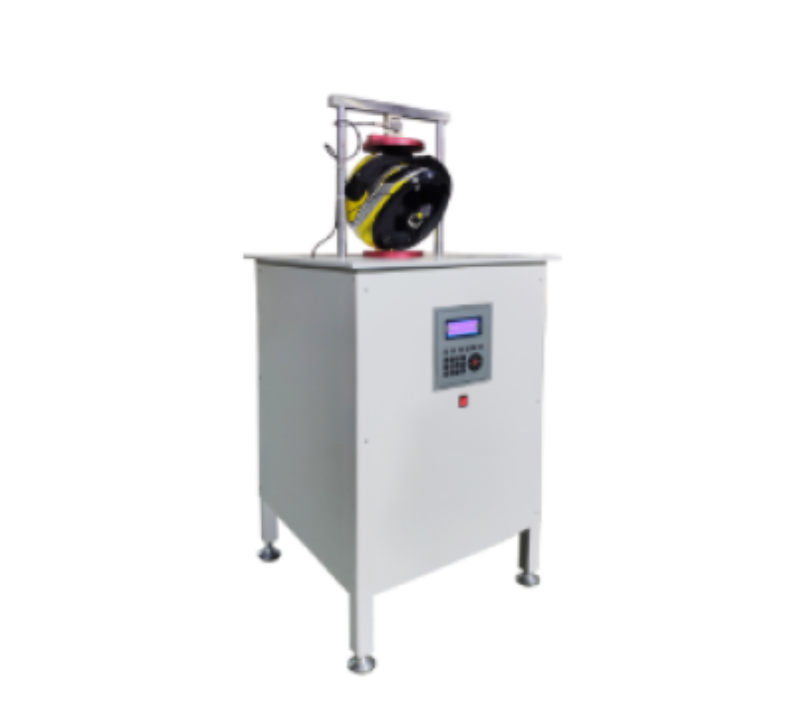
The Safety Helmet Lateral Rigidity Tester is, simply put, a machine specifically designed to "compress a helmet." The safety helmet is positioned sideways between two upper and lower flat plates, and pressure is gradually applied to observe how much the helmet deforms. The pressure is then released to determine how much the helmet recovers. This process helps evaluate whether the helmet has sufficient structural strength and can provide effective protection for the head when subjected to lateral impacts.
The working principle can be divided into three steps:
1. Clamping and Applying Pressure
Position the safety helmet sideways and secure the helmet shell between the upper and lower flat plates. The machine gradually moves the plates inward under controlled conditions to simulate lateral compression exerted on the helmet.
2. Measuring Deformation
During the loading process, sensors continuously monitor the deformation of the helmet, which refers to the extent to which the helmet is compressed. Once the specified force is reached, the load is maintained for a certain period to allow the helmet to undergo sufficient deformation. The value recorded at this stage is referred to as maximum deformation.
3. Releasing Pressure and Measuring Recovery
The machine then gradually releases the applied pressure, allowing the helmet to recover for a specified period. The deformation is measured again to obtain the residual deformation. This value represents the amount of deformation that remains after the pressure has been removed and the helmet has not fully returned to its original shape.
Evaluation Criteria
The evaluation criteria are straightforward: if the helmet's maximum deformation and residual deformation remain within the specified limits after compression, and no damage such as cracking or fracture occurs, its lateral rigidity is considered to meet the applicable requirements. This indicates that the helmet has the structural capability to help withstand and absorb lateral impacts. Otherwise, it fails to meet the specified test requirements.
How to Maintain a Safety Helmet Lateral Rigidity Tester
The maintenance of a Safety Helmet Lateral Rigidity Tester focuses on three key aspects: keeping the equipment clean, performing regular lubrication and calibration, and avoiding unauthorized disassembly when abnormalities occur. The following maintenance guidelines cover daily and periodic maintenance requirements.
1. Clean the Equipment After Each Test
Promptly remove dust, debris, and residue from the surfaces of the compression plates after each test. Keep the machine body and sensors clean to prevent foreign materials from affecting testing accuracy or entering moving components.
2. Check Fasteners
Regularly inspect the screws and fasteners on the compression plates, fixtures, limit devices, and other components for looseness. Tighten any loose fasteners promptly to ensure the equipment remains stable and operates safely.
3. Maintain a Clean Operating Environment
The tester should be installed in a dry environment free from corrosive substances and excessive dust. Avoid exposure to high temperatures and excessive humidity, which may affect the performance of electronic components and sensors.
4. Protection During Extended Periods of Inactivity
When the equipment will not be used for an extended period, switch off the main power supply. Apply anti-rust oil to components susceptible to corrosion, such as fixtures, pins, and exposed sections of lead screws, to help prevent rust.
Conclusion
In summary, lateral rigidity is a key safety performance indicator of safety helmets, directly influencing their protective capability under compression conditions. Through routine testing with this equipment, manufacturers can optimize helmet shell materials, structural thickness, and molding processes, thereby improving resistance to compression and deformation at the source and helping prevent nonconforming products from leaving the factory.Furthermore, standardized test data can be used for product quality records, customer factory audits, and performance comparisons. These practices help manufacturers identify potential safety risks in construction and other working environments while enhancing product quality and market competitiveness.
Previous: How do you use the Solid Auto-ignition Point Tester?
N e x t : the last page
