





What Does a Protective Clothing Thermal Conductivity Tester Evaluate?
2026/09/22
Share:

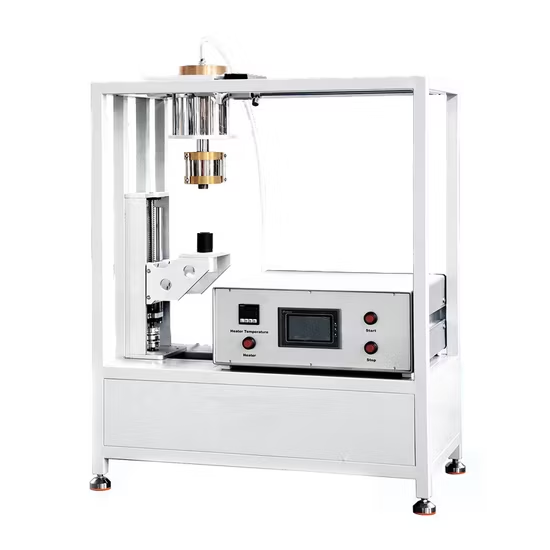
Working Principle of the Protective Clothing Heat Transfer Tester
The core purpose of the Protective Clothing Heat Transfer Tester is to simulate high-temperature environments and measure the rate and extent of heat transfer through protective fabrics. The instrument typically consists of a heat source system, sensor assembly, data acquisition system, and control software.
During testing, the heat source generates stable convective or radiant heat and applies it to a horizontally positioned specimen. A copper calorimeter located behind the specimen continuously monitors temperature changes and records the process of heat transferring from the outer layer of the fabric to the inner layer.
Contact Heat Transfer Testing
Contact heat transfer testing is an important part of the evaluation. It simulates heat transfer when protective clothing comes into direct contact with the wearer's skin.
During the test, the heating cylinder is heated to a specified high temperature. The calorimeter is then moved toward the specimen at a constant speed until it makes contact with the material. After a specified load is applied, the instrument accurately measures the time required for the calorimeter temperature to rise by a predetermined temperature threshold.
This testing process provides a direct indication of the material's ability to delay heat transfer under extreme high-temperature conditions. A longer heat-transfer delay generally means more time may be available for personnel to evacuate from a hazardous environment or for rescue operations to take place.
Main Functions of the Protective Clothing Heat Transfer Tester
The core function of the Protective Clothing Heat Transfer Tester is to simulate high-temperature or flame environments and evaluate the ability of protective clothing fabrics to resist heat transfer. It helps determine whether protective materials can provide effective thermal protection against burns during firefighting or high-temperature operations.In simple terms, the instrument exposes a fabric specimen to a controlled heat source and uses sensors to monitor the temperature rise on the opposite side, thereby evaluating the thermal insulation performance of the material.
1. Heat Source Simulation
Simulates Two Types of Heat:
The tester can simulate radiant heat—similar to heat emitted from a furnace or other hot surface—and convective heat, such as heat transferred directly from flames. This helps reproduce conditions encountered in fires and high-temperature workplaces.
Controllable Heat Sources:
Parameters such as flame conditions and radiant heat intensity can be adjusted to simulate different levels of thermal exposure and working environments.
2. Measurement and Evaluation
Temperature Rise Measurement:
A copper disc calorimeter positioned behind the specimen continuously records the temperature rise. The time required for the calorimeter to reach a specified temperature increase is measured. Generally, a longer time indicates better resistance to heat transfer.
Protective Performance Evaluation:
By combining the heat exposure conditions with the measured temperature-rise time, the test results can be used to evaluate and compare the thermal protective performance of different materials.
Temperature-Rise Curves:
The system can automatically generate temperature-versus-time curves. The test data can also be evaluated against applicable burn injury criteria or standard reference curves to assess the thermal protection performance of the material.
3. Operation and Data Output
Automated Operation:
The testing process can be controlled by a computer. After the test parameters are set, the instrument can automatically perform the programmed test procedure, reducing manual intervention.
Data Recording and Printing:
The system automatically records test results and generates test data and temperature curves, making it convenient to print, archive, and use the results for quality control and certification.
4. Application Scenarios
Quality Testing in High-Risk Industries:
The tester can be used for the R&D, production quality control, and certification testing of protective clothing used in industries such as firefighting, petrochemical operations, and electrical maintenance.
Material R&D and Improvement:
It helps material manufacturers compare the thermal insulation performance of fabrics with different material formulations and manufacturing processes, supporting targeted product optimization.
From Laboratory to Real-World Applications: Multi-Dimensional Value
The application of the Protective Clothing Heat Transfer Tester extends throughout the entire life cycle of protective equipment. During the R&D stage, researchers can use the instrument to compare the thermal barrier performance of different fiber materials, coating processes, and multilayer composite structures. This helps optimize material formulations and achieve a balance between lightweight design and high thermal protection.For example, testing may show that a new nano-insulation material can significantly extend heat transfer time while maintaining a thin and lightweight structure, supporting the development of a new generation of firefighting protective clothing.
Quality Control During Production
During the production and quality inspection stage, the tester serves as an important tool for controlling product quality. Protective clothing fabrics from each production batch can undergo rigorous heat transfer testing to verify whether their performance meets applicable national or industry standards.
Localized defects in thermal insulation performance, such as uneven coatings or gaps between bonded layers, may be revealed during testing, helping prevent non-conforming products from entering the market.
Integration with Infrared Thermal Imaging
In addition, with the integration of infrared thermal imaging technology, modern thermal performance testing is moving toward more visualized and dynamic analysis.
When combined with a thermal imaging camera, the testing system can provide not only temperature data at specific points but also visualize the overall thermal field distribution across the material surface. This makes it possible to identify localized hot spots and hidden defects more accurately, further improving the precision and scientific value of thermal performance evaluation.
Conclusion
Overall, the Protective Clothing Heat Transfer Tester is a professional testing instrument that plays an important role in protective clothing quality control, thermal protection performance evaluation, and the implementation of relevant safety standards.Whether used for product R&D, quality inspection, teaching, or scientific research, the instrument can provide effective testing support and reliable data for evaluating the thermal protection performance of protective materials.For more information about the Protective Clothing Heat Transfer Tester, please contact us for further technical details and product information.
Previous: Why Is Seat Ingress Egress Testing Important for Automotive Seat Quality?
N e x t : the last page
