





How to test fabric for pilling?
2026/09/23
Share:

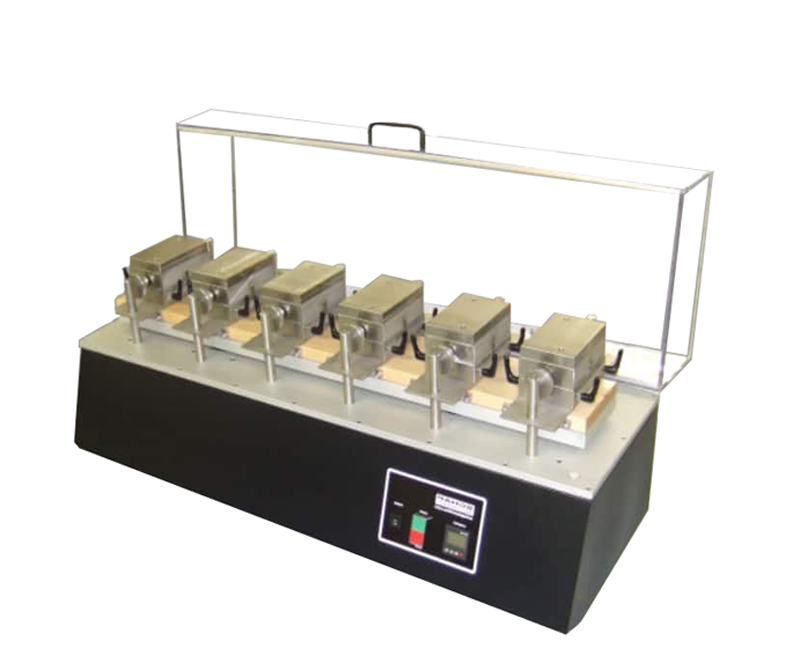
Core Functions of the Schap Pilling Tester
The core function of the Schap Pilling Tester is to simulate the friction that fabrics experience during daily wear and use, thereby evaluating their fuzzing, pilling, and abrasion resistance. The tester operates by rubbing specimens against standard abrasives, such as nylon brushes, sponges, and hook-and-loop fasteners (Velcro), for a preset number of cycles. The resulting appearance is then evaluated according to applicable industry standards to determine the pilling grade. It is mainly used for the quality testing of textiles and leather materials.
Specific Functional Features
Simultaneous Multi-Station Testing:
Equipped with 6 standard test stations, allowing multiple specimens to be tested simultaneously and improving testing efficiency.
Compatibility with Multiple Abrasives:
Supports various abrasives, including nylon brushes, sponges, and hook-and-loop fasteners (Velcro), to simulate different friction conditions. Different tool heads can be replaced to accommodate different testing standards.
Programmable Control:
Equipped with an automatic stop function and a programmable up-count controller, allowing the required number of test cycles to be preset. Adjustable low-speed and test-speed controls are available to meet different testing conditions.
Compliance with Multiple Standards:
Can be configured and operated in accordance with various industry testing standards and specifications.
Safe and Durable Design:
Features a ventilated protective cover to help protect the operator's hands during testing. Mechanical components are made of non-corrosive aluminum and stainless steel and are equipped with precision bearings, ensuring stable and reliable operation over long-term use.
Technical Features and Design Advantages of the Schap Pilling Tester
The Schap Pilling Tester focuses on three key aspects: ease of use, test result repeatability, and reliability. It is specifically designed for fabric testing in the automotive, aerospace, and high-end furniture and seating industries. Many early-generation instruments are still operating reliably in laboratories today.
Technical Features
Multi-Station Design:
For example, pilling testers commonly used by third-party testing laboratories are equipped with 6 test stations, allowing multiple groups of specimens to be tested simultaneously and improving testing efficiency.
Adaptability to Multiple Standards:
The tester can accommodate a variety of international testing standards for automotive interior materials, including specialized abrasion and perforated leather testing standards used by automotive manufacturers such as Toyota.
Focused on Seating and Interior Material Testing:
In addition to pilling and fuzzing evaluation, the equipment can be used as part of a broader testing program for friction and abrasion resistance, flexing fatigue, fogging, colorfastness, seam strength, and other performance characteristics of seating materials.
Design Advantages
Excellent Test Repeatability:
The tester provides stable test results with high consistency between different batches and operators, which is particularly important for laboratory testing and quality control.
Durable and Long-Lasting:
The brand's reputation for more than 30 years has been built on durability and reliable performance. Many early-generation instruments are still in operation, helping reduce the overall cost of ownership over the long term.
Easy Operation:
The instrument is designed with ease of use in mind, featuring a straightforward operating process that reduces the learning curve and training requirements for laboratory personnel.
Applications of the Schap Pilling Tester
The Schap Pilling Tester is primarily used to evaluate the abrasion resistance and degree of pilling of textiles and leather materials. By simulating the friction that materials experience during daily wear or use, it helps determine whether the surface of a material is likely to develop fuzzing or pilling.
Typical Applications
Textile Quality Testing:
Used to evaluate the pilling and fuzzing performance of woven fabrics, knitted fabrics, synthetic fiber blends, wool fabrics, and other textile materials. It helps manufacturers assess product quality and verify the effectiveness of production processes, making this one of its most common applications.
Automotive Interior Material Testing:
Automotive seats and interior fabrics have high requirements for durability and appearance retention. Pilling can affect the appearance of materials and may also generate fine particles. Therefore, automotive interior materials are an important application area for the Schap Pilling Tester.
Abrasion Resistance Testing of Leather and Synthetic Leather:
When equipped with the appropriate Ford leather abrasion attachment, the tester can be used to evaluate the wear resistance of leather and synthetic leather materials.
Home Textiles and Industrial Textiles:
The tester can also be used for bedding, upholstery fabrics, and other home textile products, as well as industrial textile materials such as filtration materials that are subjected to repeated friction.
Conclusion
With its professional mechanical performance and broad compatibility with testing standards, the Schap Pilling Tester is an important instrument for textile and leather testing laboratories. It helps manufacturers identify potential quality risks before products enter the market and provides scientific evidence for quality evaluation and dispute resolution within the supply chain.By accurately simulating the friction that materials experience under real-world conditions, the tester helps manufacturers continuously improve product durability and surface performance, while meeting consumers' expectations for high-quality textile products.
Previous: Why Is Scrub Resistance Testing Important?
N e x t : the last page
