





Why Does Rolling Pressure Matter in Peeling Tests?
2026/09/23
Share:

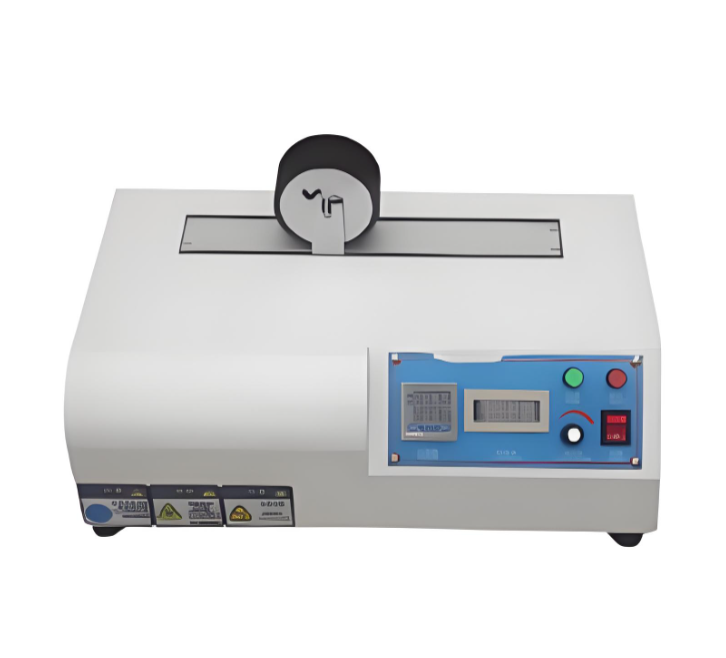
Appearance and Construction of the Electronic Roller Tester
The tape Electronic Roller Tester looks like a precision industrial assistant. Its overall body design is compact with smooth lines, typically constructed from high-strength metal materials, making it not only sturdy and durable but also effectively resistant to collisions and wear during daily use, thereby ensuring the stability of the testing process.
The tester is mainly composed of several key parts: the main unit, the control system, and the measurement system. The main unit serves as the "skeleton" of the entire equipment and is very stable. It is equipped with a high-precision roller mechanism. The roller is generally made of special materials with good wear resistance and uniform pressure distribution performance. In actual testing, it can simulate the pressure exerted on the tape under real-world usage scenarios, as if simulating the state of the tape being firmly pressed onto an object's surface, thereby ensuring that the test results are authentic and reliable.
The control system is the "brain" of the tester and is generally equipped with an intelligent operation interface, which may be a clear LCD screen or an advanced touch screen. On this interface, users can easily set various test parameters, such as pressure magnitude, roller speed, number of rolling passes, and rolling distance. With just a simple click or numerical input, one-touch startup can be achieved, and the tester will automatically complete the entire testing process, making operation extremely convenient.
The measurement system acts as the "sensory nerves" of the tester, consisting jointly of high-precision sensors and data processing software. During the testing process, the sensors can capture key data such as peel force and pressure in real time and quickly transmit them to the data processing software. The software will analyze and process these data and finally present them in intuitive charts or data forms, providing strong support for subsequent result analysis.
Technical Features of the Electronic Roller Tester
High Precision: The tape Electronic Roller Tester adopts an electronic control system, enabling precise control of rolling pressure, speed, and number of passes, thereby ensuring the accuracy of test results.
Versatility: This equipment is not only suitable for the production of adhesive tapes but is also widely used in the field of performance testing, featuring a broad range of applications.
Environmental Friendliness: With the growing awareness of environmental protection, the environmental performance of the tape Electronic Roller Tester has been further enhanced, reducing pollution to the environment.
Automation: Some advanced tape Electronic Roller Testers are equipped with a microcomputer control system and an LCD screen, allowing users to quickly and conveniently perform test operations and view data. After the test is completed, it can also automatically provide an alarm prompt, ensuring operational safety for users.
Core Advantages of the Electronic Roller Tester
The greatest advantage of the Electronic Roller Tester is that it transforms "manual pressing a few times" into standardized, repeatable machine rolling, making subsequent test results such as adhesion and peel strength more stable and more credible.
Core Advantages
Elimination of Human Error: During manual rolling, it is difficult for different operators to maintain consistent force, speed, and number of passes, which can lead to significantly different results when testing the same batch of materials. The Electronic Roller Tester rolls at a constant speed and fixed pressure according to a preset program, eliminating interference from human factors.
Adjustable and Controllable Parameters: Rolling speed, rolling distance, and number of rolling passes can all be set freely, enabling compatibility with different standards or company internal control requirements.
Simple and Efficient Operation: With a color touch screen and microcomputer control, one-touch startup automatically completes the rolling process, making it less troublesome than manual operation and more suitable for batch testing.
Consistent Bonding State: It ensures that the actual contact area between the tape and the specimen surface is uniform and consistent. When subsequently evaluating peel force or adhesion, differences in results can better reflect problems with the material itself rather than problems with specimen preparation.
Wide Range of Applications: In addition to ink layer adhesion testing for plastic color-printed and cellophane decorative printed materials, it is also suitable for pre-treatment in peel or adhesion performance testing of pressure-sensitive tapes, labels, protective films, medical adhesive tapes, vacuum aluminum-coated paper, electrode sheets, and other materials.
In summary, from "pressing by feel" to "digital standardized rolling," the Electronic Roller Tester uses technological means to solve the consistency challenge at the front end of testing. It not only improves the accuracy and reliability of test data but also provides solid technical support for production process optimization, product quality control, and industry standard formulation, making it a capable assistant in the pursuit of precision and efficiency in modern materials science experiments.
Previous: How to test fabric for pilling?
N e x t : the last page
