





Do Multi-Axis Tests Better Match In-Service Performance?
2026/09/23
Share:

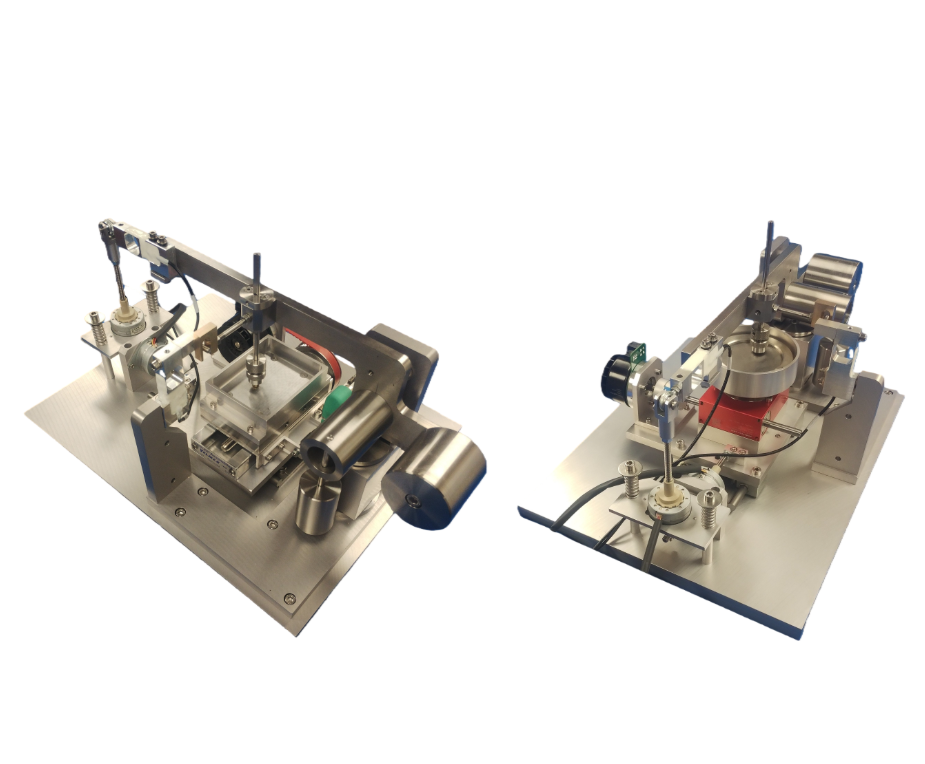
Core Working Principle of the Multi-Axis Tribometer
The operating logic of the Multi-Axis Tribometer can be summarized as the combination of "precise loading" and "multi-dimensional motion":
Multi-Dimensional Motion Simulation: Through independent drive devices, the equipment controls the friction pair (i.e., the two components rubbing against each other) to perform rotational, linear reciprocating, or composite motions combining both. For example, in pin-on-disc testing, the pin can not only rotate but also simultaneously reciprocate, forming a complex friction trajectory.
Precise Load Application: Using high-precision sensors and loading systems (such as spring-type, hydraulic, or electromagnetic), a stable normal pressure is applied to the contact surface to simulate the force conditions during actual operation.
Real-Time Data Acquisition: During the friction process, the equipment synchronously measures parameters such as friction force, friction coefficient, wear amount, temperature, and vibration noise. Advanced models can also monitor the temperature distribution at the friction interface through infrared thermal imaging cameras, or capture subtle wear signals through acoustic emission systems.
Why Is "Multi-Axis" Testing Needed
In many high-end manufacturing fields, single-axis testing has obvious limitations:
Anisotropic Materials: Some composite materials or coatings exhibit enormous differences in wear resistance in different directions, and single-axis testing cannot reveal this directional dependence.
Complex Motion Trajectories: For components such as aero-engine blade roots and artificial joints, their motion trajectories are not simple straight lines or circles but rather spatial curves. Multi-axis testing can more realistically reflect the wear mechanisms of these components.
Fretting Wear Research: Under small-amplitude multi-directional vibration, material surfaces are prone to fretting wear, leading to fatigue cracks. Multi-axis fretting testing is a key means of studying such failure modes.
Wide Application Fields of the Multi-Axis Tribometer
The Multi-Axis Tribometer has an extremely broad range of applications, covering almost all industries involving moving components:
Automotive Industry: Testing the wear resistance of key components such as brake pads, tires, engine piston rings, and camshaft tappets under complex forces to improve vehicle safety and durability.
Aerospace: Evaluating the tribological performance of landing gear bearings, engine blades, and hinge connection mechanisms under high temperature, high load, and multi-directional motion to ensure flight safety.
Medical Devices: Simulating the multi-directional motion of artificial joints and dental implants within the human body, evaluating the biotribological performance of materials, and extending the service life of implants.
New Material Research and Development: Used for evaluating the friction performance of nanomaterials, self-lubricating coatings, composite materials, etc., providing a scientific basis for material formulation optimization.
Electronics and Electrical Appliances: Testing the contact reliability and wear resistance of connector contacts and switch sliding parts during insertion, removal, and sliding processes.
Technology Trends and Future Outlook
With the advancement of industrial technology, Multi-Axis Tribometers are developing toward higher precision, greater intelligence, and more comprehensive environmental simulation:
Modularization and Multi-Functional Integration: Modern equipment typically adopts a modular design, allowing rapid switching between various friction pair configurations such as ball-on-disc, pin-on-disc, and ring-on-block, and integrating environmental simulation modules for high temperature, low temperature, vacuum, and corrosive atmospheres to enable testing under extreme working conditions.
Automation and Intelligence: Equipped with automatic loading systems and intelligent software, unattended operation of the testing process can be achieved. The software can automatically eliminate unstable data, generate detailed analysis reports, and compare the effects of different parameters on friction performance through big data analysis.
Online Monitoring Technology: By combining three-dimensional surface profilometers, infrared thermal imaging cameras, and acoustic emission detection systems, real-time online monitoring of wear morphology, temperature fields, and internal damage can be achieved, deeply revealing wear mechanisms.
In summary, the Multi-Axis Tribometer is not only a powerful tool for materials science research but also a solid guarantee for industrial product quality control. By reproducing the most realistic friction scenarios, it helps engineers design more wear-resistant, more efficient, and more reliable products, driving the manufacturing industry toward high-quality development.
Previous: Why Does Rolling Pressure Matter in Peeling Tests?
N e x t : the last page
