





Why Is an In-situ Expansion Analysis System Important for Material Research?
2026/09/28
Share:

From “Static Snapshots” to “Dynamic ECG”
To understand the value of the In-Situ Swelling Analysis System, it is first necessary to clarify its technical essence. Traditional testing methods often involve disassembling a battery and measuring it after a certain number of charge-discharge cycles, or performing a single thickness measurement at specific intervals. This is like taking a “static snapshot” of the heart: it cannot reveal continuous changes over time and may introduce additional errors caused by battery disassembly.
The In-Situ Swelling Analysis System, by contrast, continuously and dynamically monitors the dimensional changes (thickness/volume) and mechanical response (swelling force) of battery cells or electrodes during charge-discharge cycling without damaging the battery structure or interrupting its normal operating condition.
This technology is similar to equipping a battery with a “dynamic ECG”, continuously recording its “behavioral trajectory” under actual operating conditions. It can therefore capture transient abnormal deformation as well as gradual structural degradation that may otherwise be difficult to detect using conventional static testing methods.
Core Technical Principles and Functions of the In-Situ Swelling Analysis System
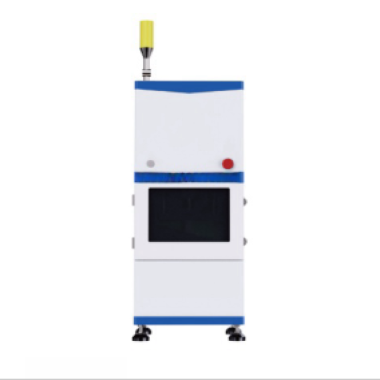
The In-Situ Swelling Analysis System typically consists of high-precision displacement/force sensors, a temperature control module, automated fixtures, and an electrochemical workstation. The high-precision displacement/force sensors capture dimensional changes and mechanical responses of the battery cell during charge-discharge cycling, down to the micrometer or even sub-micrometer level. The temperature control module maintains thermal stability throughout the testing environment, thereby minimizing the influence of temperature fluctuations on measurement results. Automated fixtures provide stable and repeatable clamping conditions for battery cells of different shapes and sizes, while the electrochemical workstation simultaneously controls the charge-discharge process and collects electrical signals. Its core capabilities can be summarized in two key areas:
Multi-Parameter Synchronous Monitoring
The system can not only accurately measure micrometer-level thickness changes or volumetric expansion, but also simultaneously record swelling force, voltage, current, temperature, and other parameters. This allows the mechanical and electrochemical behavior of the battery cell to be observed on the same time axis during each charge-discharge cycle.
By correlating these measurements with the differential capacity curve (dQ/dV), researchers can clearly identify the relationship between phase-transition points in electrode materials and sudden changes in cell volume. This enables in-depth analysis of the electrochemical mechanisms responsible for swelling and provides a better understanding of the relationship between material structural evolution and macroscopic deformation at different states of charge.
Flexible Testing Modes
For battery cells with different form factors, such as pouch cells and prismatic cells, the system supports both constant-pressure and constant-gap testing modes.
The constant-pressure mode simulates the actual constraint conditions encountered within a battery module and can be used to evaluate stress accumulation. It helps reveal the evolution of the mechanical behavior of battery cells during long-term cycling in confined spaces.
The constant-gap mode, on the other hand, is used to investigate the intrinsic volume-change characteristics of materials while minimizing the influence of external constraints on the measurement results. This provides a more accurate representation of the expansion and contraction behavior of materials during lithium-ion insertion and extraction.
Some advanced systems are also equipped with optical 3D reconstruction capabilities, which can visually characterize the non-uniform swelling morphology of cylindrical battery surfaces. This provides visual evidence for analyzing the non-uniform distribution of internal structural stresses within battery cells.
Application Value of the In-Situ Swelling Analysis System
The In-Situ Swelling Analysis System is more than a standalone testing tool. It serves as a core piece of equipment that supports the entire battery R&D process:
Material Screening and Modification
For high-expansion materials such as silicon-based anodes, the system can accurately quantify the volumetric expansion rate and irreversible expansion ratio during lithium-ion insertion. This helps researchers optimize binder formulations and pore structures to accommodate volume changes.
By comparing the swelling behavior of different formulations and structural designs, researchers can more efficiently identify material systems that combine high capacity with good dimensional stability, thereby shortening the material development cycle.
Process Window Optimization
In solid-state battery manufacturing and the production of thick electrodes, process parameters such as calendaring and drying directly affect the dimensional stability of electrode materials. In-situ data can provide a direct basis for process optimization, helping ensure that electrodes maintain structural integrity during subsequent use.
By conducting comparative in-situ swelling tests on electrodes prepared under different process conditions, engineers can determine more scientifically the appropriate ranges for key parameters such as calendaring pressure, drying temperature, and drying time, thereby reducing the risk of early failure caused by improper processing.
Early Assessment of Safety Limits
Battery swelling is an important factor that can contribute to internal penetration, bulging, and even thermal runaway within battery modules. By identifying the swelling trend of battery cells throughout their entire life cycle in advance, engineers can reserve appropriate structural margins and stress-relief space during the design stage, helping to address potential safety risks at their source.
This early-stage assessment shifts safety considerations from traditional “post-event testing” to “preemptive design,” enabling battery systems to achieve higher reliability and robustness during pack integration and actual operation.
Conclusion
The In-Situ Swelling Analysis System records more than just sets of data—it captures the dynamic behavior of batteries under real operating conditions. By transforming otherwise invisible microscopic structural evolution into visualized dynamic curves, it provides a solid scientific basis for improving battery energy density, cycle life, and safety performance.As the industry continues to pursue higher-performance batteries, this technology is playing an increasingly important and indispensable role in battery materials research, cell development, process optimization, and safety design.
Previous: How does the heat flow meter method measure thermal conductivity?
N e x t : the last page
