





How Can Fabric Wet Adhesion Testing Improve Sportswear Comfort?
2026/09/30
Share:

Addressing the Pain Point: Why Is It Necessary to Evaluate “Wet-State” Adhesion
Traditional dry-state testing often fails to accurately simulate real-world conditions. For example, does a bandage or medical adhesive tape easily peel off after the skin becomes sweaty? Will outdoor sportswear become uncomfortable because it absorbs water and adheres tightly to the skin after being exposed to rain? Does a waterproof and breathable membrane maintain stable bonding strength with other laminated materials in humid environments?
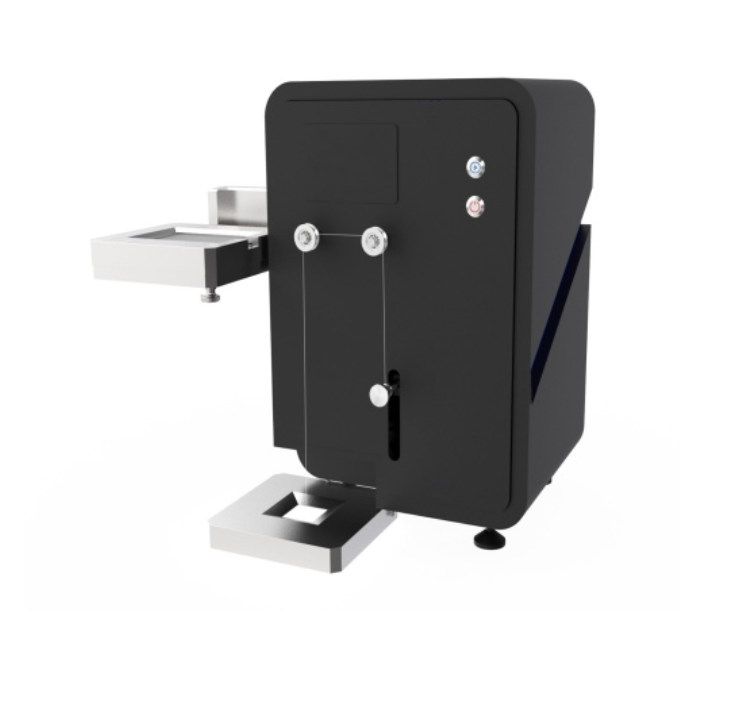
These issues are directly related to the safety, comfort, and durability of the product. The Fabric Wet Adhesion Tester is specifically designed to address the challenges of evaluating performance under these complex operating conditions. It fills the testing gap between the “dry laboratory environment” and actual wet conditions, providing a more realistic and quantitative basis for assessing adhesion performance in wet states.
Core Principle of the Fabric Wet Adhesion Tester
The Fabric Wet Adhesion Tester is based on precision mechanical force-sensing technology and an environmental simulation system. Under controlled humidity conditions or direct liquid wetting conditions, the instrument performs standardized peeling or tensile tests on fabric specimens to quantitatively evaluate their adhesion performance in a wet state.
Environmental Simulation System:
The instrument is equipped with a high-precision spraying or immersion module that accurately controls the amount of liquid present on the fabric surface. It can simulate wetting conditions caused by sweat, rainwater, or specific chemical liquids, ensuring highly reproducible testing conditions.
High-Precision Mechanical Measurement:
A highly sensitive load cell is used to continuously record changes in force during the separation of the wet fabric from other materials, such as skin simulants, another fabric layer, or a substrate. Both the initial adhesion force and sustained adhesion behavior can be accurately captured.
Intelligent Data Analysis:
The accompanying professional software automatically generates force-displacement curves and calculates key parameters such as maximum peel force, average adhesion force, and energy consumption. This minimizes errors caused by manual readings and provides objective, quantitative, and traceable test reports.
Key Advantages of the Fabric Wet Adhesion Tester
The core advantage of the Fabric Wet Adhesion Tester lies in transforming the subjective sensation of “whether clothing sticks to the skin after sweating” into an objective, repeatable, and quantitative evaluation. This makes it easier to benchmark product performance against relevant group standards and effectively control product quality.
Precise Testing Capabilities Closely Aligned with Real-World Conditions
Simulation of Real Wearing Conditions:
The tester is specifically designed to simulate the adhesion between fabric and human skin after the fabric becomes wet with sweat. It directly addresses the “wet fabric sticking to the skin” issue that is particularly important for sportswear and close-fitting garments. Compared with simply measuring moisture absorption or moisture permeability, this testing method is more closely related to the wearer’s actual experience.
Multi-Angle Evaluation:
The instrument can evaluate fabric-to-skin adhesion from multiple perspectives, covering actual performance under different body-contact areas and wearing conditions.
Intuitive Performance Classification:
Test results can be summarized into a comprehensive wet adhesion performance evaluation system and classified into different grades. This makes performance differences easy to understand and facilitates rapid comparison among different fabrics.
Strong Standard Compatibility and User-Friendly Operation
Preloaded Current Standards:
The instrument can be preconfigured with applicable group and industry standards, such as the Method for Determination of Wet Adhesion of Clothing. Users do not need to spend additional time searching for standards or developing testing procedures. Standardized testing can be performed directly after the instrument is started.
Easy-to-Use Software:
The software adopts a menu-based interface with a clear and intuitive layout and modular design, making it easy to operate. It supports real-time curve display, report printing, and data export, facilitating record keeping and traceability.
Rich Expansion Functions:
The software reserves various extended functions. It is not limited to providing a simple pass/fail result, but can also provide more useful data for analyzing fabric performance and identifying potential directions for material improvement during the R&D stage.
Reliable Hardware Configuration for Stable Test Results
Reliable Core Components:
The instrument uses advanced components such as a servo motor and servo drive, providing fast response and high control accuracy. These components help ensure smooth test operation and stable, accurate results, reducing variations between tests.
Convenient Operation and Control:
The instrument is equipped with a built-in touchscreen display and supports dual serial-port connection to a computer for complete software-based control. Both standalone operation and computer-connected operation are available, allowing the tester to adapt to different laboratory workflows and operating preferences.
Conclusion
As consumers place increasingly stringent demands on product comfort and performance, small details can make a significant difference. The Fabric Wet Adhesion Tester is more than just a testing instrument; it serves as a reliable tool for product R&D, innovation, and quality control.It helps brands and manufacturers gain a deeper understanding of how materials perform under challenging environmental conditions, enabling the development of textile products that are more comfortable, safer, and more durable.Choosing a professional wet adhesion testing solution helps ensure that every “wet” contact can withstand rigorous evaluation, supporting the development of higher-quality textile products and a more comfortable wearing experience.
Previous: What Does a Catheter Vacuum Leak Tester Actually Test?
N e x t : the last page
