





Why Should Aluminum Tube Manufacturers Test Internal Coating Continuity?
2026/09/30
Share:

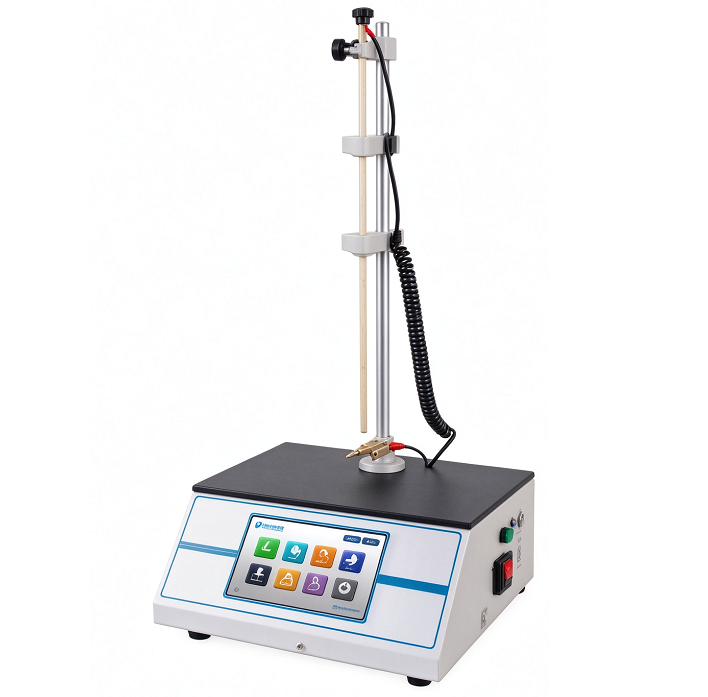
Technical Principle of the Aluminum Tube Inner Coating Continuity Tester
The Aluminum Tube Inner Coating Continuity Tester is a specialized instrument based on the principles of electrical conductivity and non-destructive coating continuity testing. It primarily evaluates the continuity of the inner coating by applying a controlled electrical potential across the aluminum tube and detecting electrical current through any exposed or defective areas of the coating.
During the test, defects such as pinholes, discontinuities, or breaks in the inner coating create conductive paths between the test solution and the aluminum substrate. By detecting and analyzing the resulting electrical current, the instrument can accurately determine the continuity and integrity of the inner coating.
In practical operation, the testing process generally consists of the following steps:
First, the aluminum tube with its inner coating is placed on the tester's sensor or V-groove base electrode, and a test solution containing copper sulfate is introduced into the tube. A sliding electrode is then immersed in the solution, while the aluminum tube itself is brought into electrical contact with the base electrode. A constant DC voltage, such as 5 ± 0.5 V, is applied between the sliding electrode and the tube.
Under these conditions, the conductive current is related to the exposed surface area of the aluminum substrate that is not adequately covered by the coating. If the inner coating is discontinuous, the copper sulfate electrolyte reacts under the applied electrical current, causing metallic copper to be deposited as a black deposit on the exposed areas. This provides a clear indication of the locations and approximate extent of areas where the inner coating is missing or defective.
Through this principle, the tester provides an effective method for evaluating the continuity and protective integrity of aluminum tube inner coatings, helping manufacturers identify coating defects and maintain the required quality and protective performance of packaged products.
Technical Highlights: The Perfect Integration of Intelligence and User-Friendly Design
To meet the requirements for efficient and precise testing, advanced testers have undergone comprehensive upgrades in both hardware design and software control.
First, the high-precision measurement system serves as the core of the instrument. It adopts a high-performance processing chip and a highly sensitive current sensor, achieving a test accuracy of ±0.1 mA with a measurement range of 0–200 mA. It can sensitively detect minute changes in electrical current, ensuring that even subtle coating defects can be identified.
Second, the intelligent operating interface significantly enhances the user experience. Equipped with a high-resolution color touchscreen, the instrument supports both Chinese and English interfaces, featuring an intuitive and user-friendly layout. The operator only needs to place the aluminum tube into the fixture and press the test button. The instrument can then automatically complete the entire process, including solution filling, pressurization, measurement, timing, and data recording, without manual intervention. This greatly reduces operational complexity and labor intensity.
Furthermore, versatility and flexibility are also important features of the instrument. The tester is equipped with an adjustable fixture that can accommodate various specifications of aluminum tubes and aerosol cans, including diameters of 8–45 mm and tube lengths of 35–250 mm. This makes it suitable for diverse packaging inspection requirements in industries such as pharmaceuticals and cosmetics.
In addition, the instrument is equipped with a built-in micro-printer and data storage module, which can automatically generate detailed test reports containing information such as the test time, test results, and operator details. This enables comprehensive traceability of quality data throughout the testing process.
Application Value of the Aluminum Tube Inner Coating Continuity Tester
1. Improving Product Quality
During the production of pharmaceutical ointment tubes, the continuity of the inner coating is directly related to the sealing performance and stability of the packaged product. By using an inner coating continuity tester, coating defects can be identified promptly, helping ensure that each ointment tube meets the required quality specifications and improving overall product quality.
2. Ensuring Medication Safety
For pharmaceutical packaging, even minor leakage or coating defects may result in drug contamination or loss of efficacy, potentially posing risks to patient health. The application of the Aluminum Tube Inner Coating Continuity Tester helps identify defects caused by discontinuous coatings and reduces the risk of leakage, providing an important safeguard for medication safety.
3. Improving Production Efficiency
The tester features rapid response and high-precision measurement capabilities, enabling a large number of samples to be tested within a relatively short period and significantly improving inspection efficiency. At the same time, its intelligent operating system simplifies the testing process, reducing operational complexity and the workload of personnel.
4. Supporting Product Research and Development
By continuously collecting and analyzing test data, manufacturers can gain a more precise understanding of the performance characteristics and service life of coating materials. This provides valuable data support for the development and optimization of new products.
Conclusion
The Aluminum Tube Inner Coating Continuity Tester is more than just an inspection instrument; it is an important component of a modern industrial quality control system. With the continued development of intelligent, multifunctional, and portable testing technologies, future testers are expected to provide more efficient and precise inspection solutions for the pharmaceutical, food, and high-end manufacturing industries.By ensuring the integrity of the inner coating, these testing solutions help each aluminum tube effectively perform its protective function, safeguarding the quality of the packaged contents and contributing to consumer health and safety.
Previous: How Can Fabric Wet Adhesion Testing Improve Sportswear Comfort?
N e x t : the last page
