





What is a carpet dynamic load tester used for?
2026/10/23
Share:

Why Does a Carpet Need a “Doctor for Physical Examinations”?
A carpet’s beauty comes largely from its plush pile. Those fine, soft fibers make walking on a carpet feel like stepping on clouds. Yet, this very feature is also one of its most vulnerable components.
When people walk on a carpet, the soles of their shoes exert more than just downward pressure. The heels and edges of the shoes also generate shear forces that act like scissors, repeatedly pulling and stressing the carpet pile. Under the combined effects of these forces, the pile gradually loses height, making the carpet look less full and significantly reducing its underfoot comfort.
The problem is that these changes occur slowly and are difficult to detect with the naked eye. By the time consumers notice that their carpet has become flattened, months or even years may have passed. For manufacturers, waiting for market feedback is simply too late: thousands or even tens of thousands of square meters of carpet may already have been sold before any problems become apparent.
So, how can manufacturers predict a carpet’s future wear and aging behavior before it reaches the market?
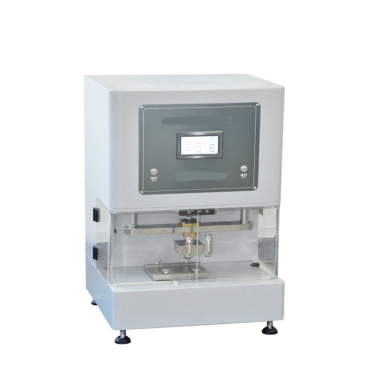
The Carpet Dynamic Load Tester was developed precisely to answer this question. Like an experienced doctor conducting a physical examination, it simulates, within a relatively short period, the repeated foot traffic that a carpet would experience over an extended period of everyday use. It helps manufacturers assess how well a carpet can withstand repeated loading and how much of its original pile structure it can retain.
How Does It “Step” Its Way to the Truth?
The working principle of this instrument can be summed up in one simple sentence: It uses a machine to replace the human feet.
The instrument is equipped with two rectangular steel feet that act like a pair of standardized, tireless shoes. They repeatedly strike the carpet specimen at a controlled frequency. Meanwhile, the specimen itself is gradually moved so that the feet strike different areas in a partially overlapping pattern, cycle after cycle.
As a result, the carpet is not subjected to identical pressure at exactly the same locations over and over again. Instead, the loading pattern more closely reproduces the varied forces experienced during actual walking, including repeated impacts and the grinding action of shoe edges.
More importantly, the test does not simply simulate the downward force of a foot landing on the carpet. It also reproduces the shearing action exerted by the edges of footwear when they come into contact with the pile. This is one of the reasons carpets in high-traffic areas, such as entrances and corridors, often show signs of flattening earlier than those in less frequently used spaces.
By combining these loading effects, the instrument provides a standardized way to reproduce key aspects of the mechanical stresses associated with everyday foot traffic.
After repeated cycles of dynamic loading, testers can measure changes in the carpet pile thickness to obtain meaningful, quantitative data. How much of its original pile thickness does the carpet retain after repeated loading? To what extent has the pile compressed or flattened? The answers can be expressed in measurable values, compared across different specimens, and verified through repeatable testing.
Whether a carpet performs well under repeated loading is no longer merely a matter of sales claims. It becomes a question that can be evaluated through documented test results.
Who Uses It, and What Is It Used For?
Do not assume that this instrument is useful only to researchers working in laboratories. Its practical applications are much broader.
For carpet manufacturers, it serves as a critical evaluation tool during product development. Do new yarns, redesigned pile structures, or improved backing-bonding processes actually enhance product performance? A round of dynamic load testing can help reveal differences in performance. It allows product development decisions to be based on measurable evidence rather than intuition alone.
For quality control departments, it acts as a gatekeeper before products leave the factory. Every batch of raw materials and every adjustment to a critical manufacturing process may affect the durability of the finished carpet. Regular sampling and dynamic load testing can help identify potential problems early, preventing nonconforming products from reaching the market and reducing the risk of damage to brand reputation.
Carpets designed for residential, commercial, and industrial applications, as well as area rugs, mats, and other textile floor coverings, face very different service conditions and durability requirements. A hotel lobby carpet may receive hundreds or even thousands of footsteps every day, while a carpet in a quiet living room may experience much lighter traffic.
With the help of dynamic load testing, manufacturers can evaluate the performance of products intended for different applications and determine whether they meet the relevant durability requirements. This helps match product performance to intended use, ensuring that each carpet offers appropriate value for its price.
It is also worth noting that this type of testing is associated with various national and international standards. Depending on the applicable test method and instrument configuration, relevant references may include ISO standards for carpet testing, British durability standards, Chinese textile floor-covering standards, and corresponding American test specifications.
Testing in accordance with the appropriate standards provides a recognized technical basis for evaluating carpet performance. This is valuable not only in the domestic market but also when manufacturers seek to demonstrate product quality to international customers.
Compact Design, Powerful Performance
In terms of size, the Carpet Dynamic Load Tester is relatively compact and occupies little space in a laboratory. Installation is also generally straightforward.
Despite its compact footprint, the instrument incorporates several important design features. Parameters such as impact frequency, specimen movement, and loading area are specified by the applicable test method. These requirements help ensure that different laboratories can conduct tests under comparable conditions and obtain results that can be meaningfully compared.
Of course, regular maintenance is essential to keep the instrument operating reliably and producing dependable results.
The steel feet should be kept clean and free of debris, as contamination can interfere with consistent contact between the loading components and the specimen. Moving parts, including shafts and cams, should be lubricated at the recommended intervals to maintain smooth operation. Moving components should also be inspected regularly for wear and replaced when necessary.
Periodic calibration and verification are equally important. Only when the instrument remains in proper working condition and its measurement performance is adequately verified can the resulting data withstand technical scrutiny and support reliable assessments against the applicable test standards.
A Good Carpet Is Proven Through Testing
Let us return to the question raised at the beginning: What makes it reasonable to believe that a carpet is durable?
The answer is now clear: scientific simulation, quantitative data, and recognized testing standards.
The significance of the Carpet Dynamic Load Tester extends far beyond that of an ordinary testing instrument. It compresses the effects of prolonged use, which consumers cannot directly observe, into a measurable laboratory testing process. It translates subjective impressions of comfort and appearance into objective measurements, such as changes in pile thickness and thickness retention.
It helps manufacturers that invest in product quality demonstrate the performance of their products while making it easier to identify weaknesses that might otherwise remain undetected until the carpet is in service.
Ultimately, this technology helps consumers make more informed purchasing decisions and encourages the production of carpets that can better withstand the combined effects of time and repeated foot traffic while maintaining their original appearance and comfort.
The next time you walk barefoot across a carpet in your home that still feels full and soft, take a moment to consider what may have happened before it reached you. It may already have undergone rigorous testing on a small but sophisticated instrument, enduring repeated loading designed to reveal how well it can withstand the demands of everyday life.That is the reassurance that modern textile testing technology provides: quality that may be invisible to the eye, but can be felt underfoot.
Previous: Why Should Aluminum Tube Manufacturers Test Internal Coating Continuity?
N e x t : the last page
