





Who gets to decide whether automotive wiring can withstand ozone?
2026/10/23
Share:

The Invisible Enemy: Why Does Ozone Attack Rubber?
Ozone is an allotrope of oxygen. Each ozone molecule contains three oxygen atoms, compared with the two found in an ordinary oxygen molecule. This different molecular structure makes ozone highly reactive.
In the atmosphere, ozone is continuously generated by natural lightning and electrical discharge processes, including corona discharge in automotive electrical systems. Areas near generators and high-voltage ignition systems can be particularly susceptible to ozone accumulation, and these are also areas where automotive wiring harnesses may be densely installed.
From a chemical perspective, automotive wire insulation has historically been made from polymeric materials such as natural rubber and chloroprene rubber, some of which contain unsaturated double bonds in their molecular chains. When ozone reacts with these double bonds, ozonolysis can break the molecular chains, damaging the polymer structure.
At the microscopic level, individual molecular chains are broken. At the macroscopic level, this damage can appear as cracks on the material surface, typically oriented perpendicular to the direction of tensile stress. These cracks are a characteristic sign of ozone-induced degradation.
Once the cracks penetrate the insulation layer, its insulating and dielectric performance may be compromised, increasing the risk of short circuits, electrical leakage, and even fire.
The difficulty is that this process can be extremely slow, potentially continuing for years. By the time a product develops visible cracks in the hands of a customer, millions of meters of wiring may already have left the production line.
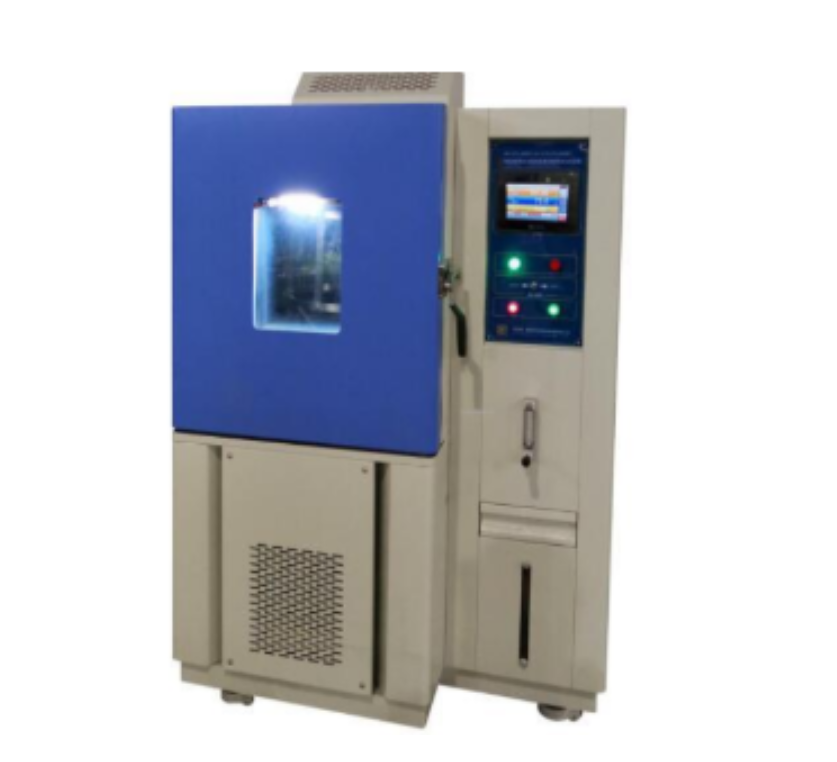
What can manufacturers do?The solution is to compress time. In the laboratory, accelerated aging conditions are used to reproduce, within a matter of days, some of the degradation that might otherwise take years to develop under service conditions.The instrument designed for this purpose is the Automotive Wire Ozone Aging Test Chamber.
Compressing Time Inside a Test Chamber: How Does It Work?
The operating principle of this test chamber can be summarized in three essential functions: generating ozone, controlling the environment, and applying mechanical stress.
1. Generating and Controlling Ozone
The chamber uses a corona-discharge ozone generation system. Its operating principle resembles the process by which lightning generates ozone in nature: under a high-voltage electric field, oxygen molecules undergo electrical excitation and chemical transformation, producing ozone.
The generated ozone concentration can be adjusted across a suitable range to meet the requirements of different test standards and severity levels.
More importantly, the chamber is equipped with a high-precision ozone sensor that continuously monitors the concentration and works with the control system to maintain the specified level.
This is essential because ozone concentration directly affects the severity of the test. If the concentration is too high, a material that would otherwise pass under the specified test conditions may fail prematurely. If the concentration is too low, a material with inadequate ozone resistance may appear to perform better than it actually does.
Real-time monitoring and closed-loop concentration control are therefore fundamental to the reliability and credibility of the test results.
2. Precise Environmental Control
Temperature acts as an important factor influencing the rate of ozone-induced degradation. In general, increasing the temperature can accelerate the chemical reactions involved, although the actual degradation behavior also depends on the material and test conditions.
The test chamber uses a precision temperature-control system managed by a microprocessor. It maintains a stable temperature within the specified operating range, with minimal fluctuations and good temperature uniformity throughout the working chamber.
Without adequate uniformity, a specimen placed in a corner might experience a different thermal history from one positioned near the airflow outlet. Such differences could undermine the comparability of the test results.
Depending on the applicable standard, testing may also require controlled humidity or other atmospheric conditions. Environmental parameters are recorded throughout the test by a data logging system, allowing the records to be exported, traced, and reviewed whenever necessary.
This ensures that each test report is supported by documented test conditions rather than relying solely on the operator's observations.
3. Applying Mechanical Stress with a Rotating Specimen Rack
The third feature is easy to overlook, yet it plays an important role in the test: the rotating specimen rack.
Under applicable test methods, specimens may need to be maintained in a specified strained condition, such as being bent around a mandrel of a prescribed diameter. This is because ozone-induced cracking tends to initiate more readily on surfaces subjected to tensile strain.
The specimen rack rotates slowly at an adjustable speed, helping expose the specimens uniformly to the ozone-containing atmosphere and reducing differences caused by their positions within the chamber.
The rotation mechanism also introduces specimen movement during testing. However, rotation alone does not necessarily reproduce the actual vibration loads experienced by a wiring harness in a vehicle; such simulation requires an appropriate mechanical loading system.
The rotation speed can be adjusted through the touchscreen interface, allowing the operator to configure the test without opening the chamber and unnecessarily disturbing the controlled environment.
Together, ozone generation, environmental control, and specimen conditioning create a standardized testing environment for evaluating the ozone resistance of automotive wire insulation and other relevant polymeric materials.
Its Test Results Can Support Access to Global Markets
Ozone resistance testing is governed by established national and international standards. Depending on the material, product type, and intended application, relevant references may include ISO standards for road-vehicle electrical cables, SAE standards for low-voltage automotive wires, applicable Chinese industry standards for ozone resistance of automotive wiring harnesses, and Japanese automotive standards addressing the ozone resistance of rubber and plastic materials.
Automotive manufacturers and their global suppliers use applicable standards and internal specifications to evaluate wiring harness products and establish acceptance criteria.
An ozone aging test chamber that maintains the specified ozone concentration, temperature, and environmental uniformity can provide reliable test data to support quality evaluation across international supply chains, provided that the complete test procedure complies with the applicable requirements.
The instrument serves several important groups of users.
Wire and cable manufacturers can use it during material development to compare the ozone resistance of rubber and polymer insulation formulations and identify promising materials before mass production.
Automotive manufacturers and component suppliers can incorporate ozone resistance testing into incoming material inspection and routine quality control to help maintain consistent product quality across production batches.
Testing laboratories and research institutes can use the chamber for standards-compliance verification, material characterization, and research into new insulation materials and protective formulations.
Its applications are not limited to automotive wires. It can also be used to evaluate ozone-induced aging in other suitable elastomeric components, including rubber seals, hoses, and protective sleeves, provided that the chamber configuration and test method are appropriate for the specimens concerned.
Working with a Hazardous Gas: Safety Comes First
It is important to recognize that ozone is harmful to human health. When a sealed chamber containing elevated ozone concentrations is opened, residual gas may escape and irritate the respiratory tract.
Consequently, safety must be an integral part of the instrument's design and operation.
An ozone-resistant viewing window allows operators to observe the specimens without opening the chamber. Depending on the equipment configuration, additional protective features may include ozone leak detection, over-temperature protection, appropriate personal protective equipment, and a remote emergency shutoff system.
These measures help keep potential hazards under control, although they do not replace proper ventilation, safe operating procedures, and the manufacturer's requirements for handling ozone.
Routine maintenance is equally important for both safety and reliable testing.
The chamber and specimen rack should be kept clean to prevent contamination. Ozone sensors and temperature-control systems should be calibrated or verified at appropriate intervals. Door seals and rotating mechanisms should be inspected regularly for wear. The data export and recording functions should also be checked before each test to ensure that the test records can be retained and retrieved successfully.
These routine procedures may seem unremarkable, but they are essential to the credibility of every test report and the safety of everyone working with the equipment.
Conclusion
Let us return to the question raised at the beginning: How does the insulation of an electrical wire quietly age in the air?We now know that ozone can gradually damage susceptible polymer materials by breaking molecular chains and initiating surface cracks.
The solution is to create a controlled laboratory environment in which the damaging agent can be generated, the testing conditions can be precisely regulated, and the effects of aging can be evaluated under accelerated conditions. In this way, degradation that might otherwise take years to become apparent can be investigated over a much shorter testing period.The Automotive Wire Ozone Aging Test Chamber serves precisely this purpose. It allows wiring insulation to undergo accelerated ozone exposure before the product enters service, helping manufacturers identify potential weaknesses before they develop into failures on the road.The wires hidden deep inside an engine compartment may never attract anyone's attention, yet they must continue to perform reliably amid elevated temperatures, electrical activity, and demanding operating conditions.Behind that reliability stands a combination of specialized testing equipment, established standards, and meticulous testing professionals.Vehicle reliability is not achieved by chance. It is built and verified, detail by detail, long before the car reaches the road.
Previous: Why does adhesion testing involve both "pulling" and "impacting"?
N e x t : the last page
