





Who will test the abrasion resistance limits of the fabric in advance?
2026/10/26
Share:

Why Rotary Motion
There are numerous abrasion testing methods on the market, each with its own advantages. The Martindale method follows a figure-eight rubbing pattern, while the Wyzenbeek method applies linear reciprocating friction along the warp and weft directions. The distinctive value of rotary abrasion testing lies in the different characteristics of the friction it produces.
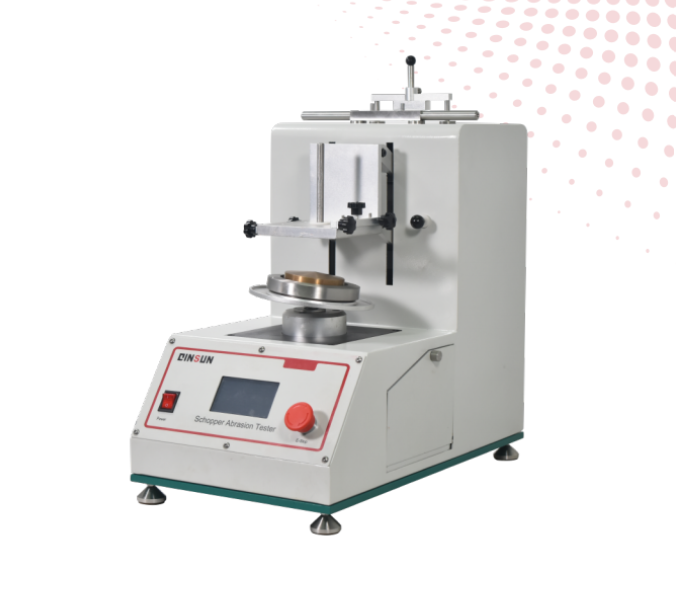
In the Schopper method, the test specimen is stretched and secured onto a conical rotating head with a specified obtuse cone angle. The specimen makes line contact with the abrasive paper positioned beneath it. Once testing begins, the specimen head rotates at a constant speed while the abrasive medium presses against the specimen surface under a predetermined load. The combination of rotary motion and normal pressure produces continuous tangential friction, creating a circular wear track on the specimen surface.
Unlike linear reciprocating friction, rotary friction continuously changes direction. This more closely resembles the complex frictional forces generated when occupants turn or shift their positions on a seat, causing their clothing to rub against the upholstery in a combination of rotational and sliding movements.
For materials engineers, a material's ability to withstand friction from multiple directions can provide a more comprehensive understanding of its durability than abrasion data obtained from a single direction alone.
For this reason, rotary abrasion testing has been incorporated into various automotive manufacturers' testing requirements and relevant testing specifications, and it is used to evaluate upholstery fabrics, carpet materials, and other interior components. For suppliers seeking to enter high-end automotive supply chains, this instrument can be an essential part of the material qualification process.
The Precision Behind a High-Performance Testing Instrument
The Schopper abrasion testing principle is straightforward: the material's abrasion resistance is quantified by the number of abrasion cycles required for the specimen to develop a hole or reach a specified level of mass loss. To ensure reliable results, however, every stage of the testing process must be precisely controlled. This is where the instrument's engineering capabilities come into play.
Specimen clamping: The obtuse-angle conical clamping head works with a dedicated mounting support to secure the specimen firmly to the rotating head. This helps prevent specimen slippage during rotation. The degree of specimen tension directly affects the validity of the frictional conditions, making secure and consistent clamping essential for reliable testing.
Load application: The load can be adjusted by combining dedicated weights, allowing the applied force to be matched to different materials. From lightweight, delicate functional fabrics to thick carpets and coated leather, the tester can accommodate a variety of specimens by applying an appropriate load.
Intelligent control: The touchscreen interface provides an intuitive way to configure the test parameters. Rotational speed, abrasion cycle count, and applied load can all be programmed, while the rotation direction and switching conditions can also be preset. By changing the direction of rotation, the instrument can produce different frictional patterns while maintaining a consistent wear track on the specimen surface.
Additional deformation measurement: After testing, the integrated arc-height measuring device can be used to measure specimen deformation, providing an additional reference for evaluating material resilience and structural integrity.
Another notable advantage is its compact design. The instrument has a small footprint and relatively low overall weight, making it suitable for installation on an ordinary laboratory workbench. Its low power consumption allows it to operate using a standard mains power supply.
For quality control departments with limited space and laboratories working within tight budgets, these features mean that extensive site modifications or a dedicated testing room may not be necessary. The instrument is designed for convenient installation and straightforward operation.
One Laboratory, Multiple Testing Possibilities
The applications of the Schopper Abrasion Tester extend far beyond textile abrasion testing.
Textile industry: It provides abrasion resistance data to support fabric and carpet structural design, curtain development, and the optimization of finishing processes.
Automotive interiors: It helps evaluate the abrasion and scuff resistance of seat fabrics, headliner materials, door panel coverings, and other interior components.
Footwear and leather: It can be used to simulate frictional wear when evaluating footwear materials and to assess the abrasion resistance of leather surface coatings, provided the relevant fixtures and test procedures are suitable.
Scientific research and education: It supports standardized abrasion testing for new material development, experimental research, and engineering education.
Other industries: Plastic packaging, paint coatings, wood flooring, and electronic and communication products may also be evaluated when their surface abrasion requirements are compatible with the instrument's testing method.
Wherever a material surface must withstand friction, the Schopper Abrasion Tester may offer a useful testing solution, subject to the applicable material requirements and test standards.
For third-party testing laboratories, the instrument can also expand testing capacity for automotive interior material evaluations and inspection services. When a customer specifies a rotary abrasion test, the laboratory's ability to perform the required procedure can directly influence whether it secures the testing contract.
Conclusion
A fabric's ability to withstand years of friction should not remain unknown until consumers have worn out their clothes or their seat upholstery has deteriorated.The Schopper Abrasion Tester brings rotary friction into the laboratory, using circular wear tracks to generate abrasion performance data before materials reach the market.With secure specimen clamping, flexible load adjustment, intelligent control, and a compact design, it offers a practical testing solution for textile manufacturers, automotive interior suppliers, and testing laboratories seeking to meet the demands of high-end markets.For businesses aiming to strengthen product quality and enter premium supply chains, the Schopper Abrasion Tester is more than just a testing instrument. It can be an important tool for demonstrating material durability and meeting customer qualification requirements.
Previous: What Determines Whether Upholstery Fabric Can Withstand Ten Years of Friction?
N e x t : the last page
