





How Does a Perspiration Tester Evaluate Fabric Colorfastness?
2026/10/27
Share:

Core Principle: Simulating the Human Body's Microenvironment
Human sweat has a complex composition, containing sodium chloride, lactic acid, urea, various amino acids, and other substances. Its pH value can fluctuate between acidic conditions (approximately pH 5.5) and alkaline conditions (approximately pH 8.0), depending on individual differences and metabolic conditions. The Perspiration Tester is designed to reproduce these complex chemical and physical processes under controlled laboratory conditions.
Rather than functioning as a simple soaking device, the tester is an integrated system that combines soaking, pressure application, and constant-temperature conditioning. The operating principle involves stitching a textile specimen together with standard adjacent fabric to form a composite specimen, which is then immersed in artificially prepared acidic and alkaline perspiration solutions until thoroughly wetted.
The wetted specimen is subsequently placed between two resin or glass plates, and a constant pressure is applied using specified weights or a spring mechanism, typically at 12.5 kPa or with a 5 kg load. Finally, the entire loaded assembly is placed in a constant-temperature oven and maintained at 37 ± 2°C for 4 hours.
This procedure simulates real-world conditions in which sweat penetrates textile fibers during garment wear, causing dyes to dissolve and migrate, potentially staining adjacent fabrics under the combined effects of body temperature and pressure.
Equipment Structure and Key Technical Features
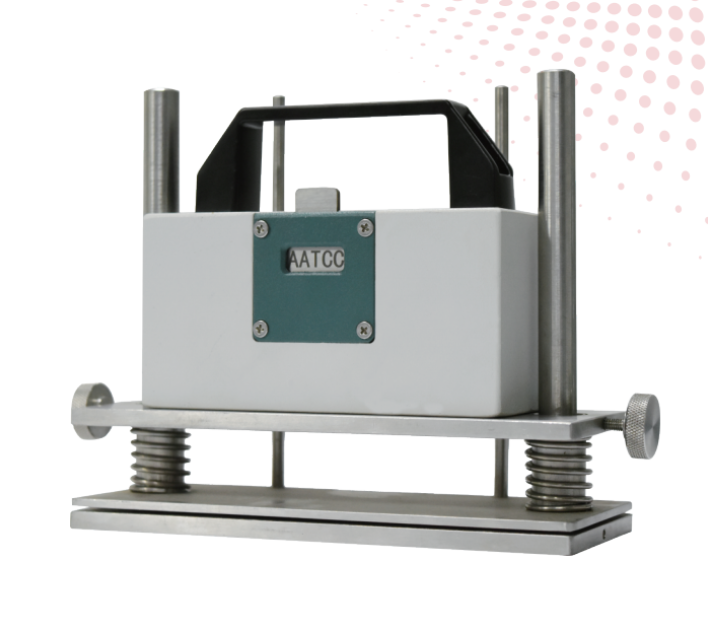
Modern Perspiration Testers feature highly standardized designs to ensure the comparability of test results between different laboratories. Their main components include a stainless steel specimen holder, acrylic separator plates, loading weights, and a base.
1. Standardized Specimen Loading System
Mainstream models are typically equipped with a stainless steel specimen holder capable of accommodating up to 20 specimens. Specimen dimensions generally follow international standards, typically measuring 10 cm × 4 cm. To prevent cross-contamination between specimens and ensure uniform pressure distribution, the instrument is equipped with acrylic resin separator plates that comply with ISO, AATCC, or GB standards.
2. Precise Pressure Control
Pressure is a key variable affecting the rate of dye migration. The instrument uses carefully calibrated weight sets, such as 4.08 kg for ISO testing and 3.63 kg for AATCC testing, or a spring-loading mechanism to ensure that uniform vertical pressure is applied to each specimen. Some advanced models employ lever-based or pneumatic loading systems to further improve pressure stability and repeatability.
3. Corrosion-Resistant Materials
Because the testing media consist of acidic and alkaline solutions, the instrument's contact components are often made of 316L stainless steel or high-quality engineering plastics. These materials provide excellent chemical resistance, extend the equipment's service life, and help prevent metal-ion interference with test results.
4. Multi-Function Compatibility
In addition to basic perspiration colorfastness testing, the instrument can often be used for water, seawater, and saliva colorfastness tests. By changing the test solutions and adjusting the relevant parameters, a single instrument can support multiple testing requirements under applicable national and international standards.
Operating Procedure for the Perspiration Colorfastness Tester
The Perspiration Colorfastness Tester is suitable for evaluating the perspiration colorfastness of various textile materials, including dyed and colored fabrics. Depending on the applicable test method and equipment configuration, it may also be used for evaluating resistance to water, seawater, saliva, chlorine bleaching, and other specified chemical exposures.
Perspiration colorfastness testing is conducted according to relevant international standards, such as ISO 105-E04. AATCC 15. and JIS L 0848. The procedure involves immersing textile or leather specimens in synthetic perspiration solutions containing specified concentrations of salts and acids to simulate the composition of human sweat.
The specimens are then placed under the prescribed test conditions for a specified period, commonly 4 hours for standard perspiration colorfastness tests, at the temperature and other conditions required by the applicable standard. After the exposure period, the specimens are treated as prescribed, dried, and evaluated for color change and staining using a gray scale or an appropriate color-measuring instrument.
The test assesses both the transfer of color from the specimen to adjacent materials and any fading or discoloration of the specimen itself.
Test results are generally evaluated using standardized gray scales, commonly rated from 1 to 5. with higher ratings indicating better colorfastness. The precise rating scale and evaluation procedure depend on the applicable standard and whether color change or staining is being assessed.
This test is widely used in the textile and leather industries to help ensure that products maintain their appearance and quality during use.
Industry Value and Application Prospects
As consumers become increasingly concerned about textile safety and the sportswear and athleisure markets continue to expand, perspiration colorfastness testing is becoming more important.
Poor-quality dyes may migrate or bleed when exposed to sweat, affecting garment appearance and potentially increasing the risk of skin irritation or exposure to harmful substances, depending on the dyes and chemicals involved. As a key quality-control instrument, the Perspiration Tester helps manufacturers and brands identify potential problems during raw material procurement, production monitoring, and finished-product inspection. This helps reduce product recall risks and protect brand reputation.
Looking ahead, advances in intelligent testing technologies are driving the development of Perspiration Testers toward greater automation and digitalization. The integration of automatic solution dispensing, intelligent pressure monitoring, and image-recognition-based grading systems can further reduce human error and improve testing efficiency, providing stronger technical support for quality assurance and sustainable development in the textile industry.
Previous: Who will test the abrasion resistance limits of the fabric in advance?
N e x t : the last page
