





How to Test Wire and Cable Insulation?
2026/10/28
Share:

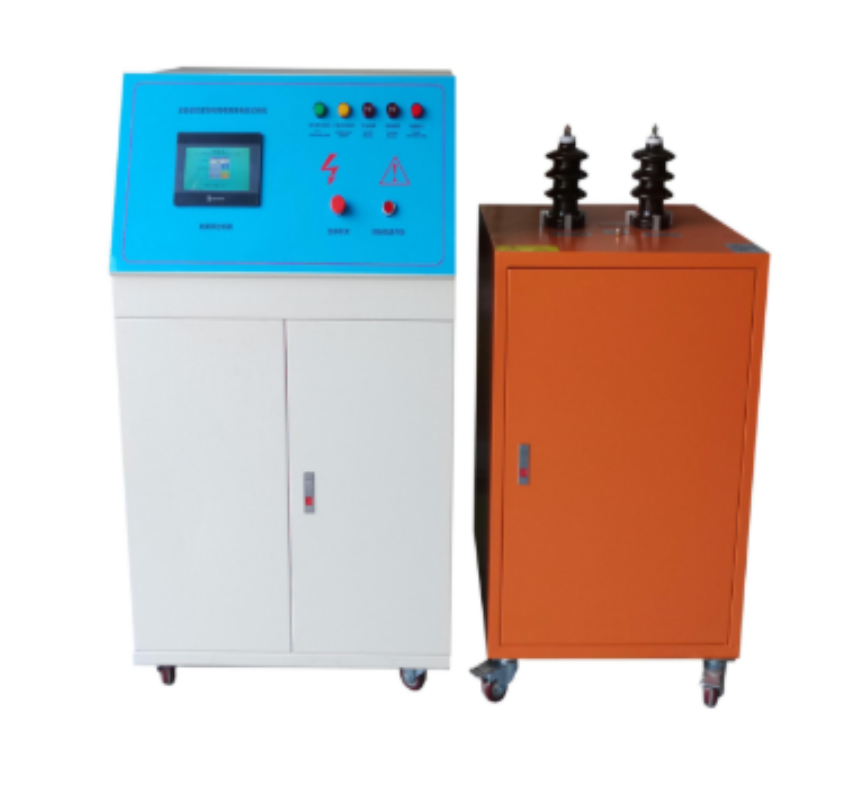
Working Principle and Main Components
The AC/DC High-Voltage Tester for Wires and Cables primarily operates on the principles of electromagnetic induction, rectification, and filtering. Its main components include a voltage regulator, a high-voltage test transformer, a high-voltage silicon rectifier stack for DC output, and a control and measurement system.
In AC mode, the input voltage is adjusted by an autotransformer and then stepped up by the high-voltage transformer to generate power-frequency high voltage directly across the test specimen.
In DC mode, the high-voltage AC output is converted into smooth high-voltage DC through rectification by the high-voltage silicon rectifier stack and subsequent capacitor filtering.
Advanced models often employ series resonance technology. By adjusting the power supply frequency, the reactor is brought into resonance with the capacitance of the cable under test. This allows high test voltages to be generated with a relatively low power supply capacity. The advantages include low waveform distortion, compact size, and reduced weight.
Main Applications and Testing Objectives
Insulation Strength Evaluation: Verifies whether the main cable insulation and its accessories can withstand specified overvoltages, helping ensure that electrical breakdown does not occur under lightning or switching overvoltage conditions.
Defect Detection: By monitoring changes and trends in leakage current, the tester helps identify localized insulation defects, such as voids, impurities, moisture ingress, and mechanical damage.
Aging Assessment: Periodic withstand voltage testing of in-service cables can help assess insulation deterioration and support the estimation of remaining service life.
Research and Development Verification: During the development of new cable materials and structures, destructive breakdown tests can be conducted to determine the ultimate dielectric strength of insulation materials.
Guidelines for Selecting AC or DC Testing2
Although the tester supports both AC and DC testing, the appropriate test method must be selected carefully according to the cable type and applicable standards.
AC Withstand Voltage Testing
AC withstand voltage testing more closely simulates the power-frequency AC electric field encountered under normal operating conditions. It provides a more representative assessment of insulation performance and is effective in identifying certain bulk insulation defects.
For extruded-insulation cables, such as cross-linked polyethylene (XLPE) cables, international standards and domestic technical specifications generally recommend AC withstand voltage testing using variable-frequency series resonance systems where applicable. This helps avoid the potential adverse effects of space-charge accumulation and associated insulation damage that may result from inappropriate application of DC voltage.
DC Withstand Voltage Testing
DC withstand voltage testing equipment is relatively portable and is suitable for certain high-capacitance cable tests conducted in the field. However, the voltage distribution within insulation under a DC electric field differs from that under an AC electric field. Space-charge effects may also occur, potentially masking certain defects or accelerating insulation degradation.
Therefore, DC withstand voltage testing is mainly applicable to oil-impregnated paper-insulated cables or as a preliminary screening method where permitted by the relevant standards and testing procedures. Prolonged application of DC high voltage for withstand testing of important high-voltage XLPE cables should be avoided because of the potential risk of irreversible insulation degradation.
Operating Procedures and Safety Precautions
The AC/DC High-Voltage Tester for Wires and Cables must be operated in strict accordance with applicable safety procedures to prevent personal injury and equipment damage.
Grounding Protection: Before testing, ensure that the equipment enclosure, non-tested cable phases, and cable shielding layers are reliably grounded as required by the applicable test procedure. Grounding resistance must meet the relevant standards and safety requirements.
Current-Limiting Protection: During DC testing, an appropriate current-limiting resistor must be connected in series where required by the test circuit to limit surge current in the event of specimen breakdown and protect the test transformer and rectifier components.
Controlled Voltage Ramp-Up: The test voltage should be increased gradually and smoothly to avoid sudden voltage changes. AC testing generally starts from zero voltage, while DC testing may require staged voltage increases with leakage current recorded at each specified stage.
Thorough Discharge: Cables have significant capacitance and can retain a substantial amount of electrical charge after testing. After the test, use a dedicated discharge rod and follow the prescribed discharge procedure, including staged or indirect discharge where required. Once the voltage has fallen to a safe level, complete the grounding discharge according to the approved procedure. Confirm that no residual voltage remains before disconnecting the test leads.
Environmental Monitoring: Monitor ambient temperature and humidity during testing. High humidity may increase the risk of surface flashover and affect the accuracy and reliability of test results.
Technological Development Trends
With the development of smart grids, AC/DC high-voltage testing equipment is evolving toward greater automation, intelligence, and the integration of multiple physical measurement techniques.
Next-generation equipment may integrate partial discharge detection, dielectric loss measurement, and fiber-optic temperature monitoring to capture signals associated with early-stage insulation deterioration in real time.
In response to the growing demand for offshore wind power and long-distance deep-sea power transmission, test platforms capable of simulating combined electrical stresses, such as AC voltage superimposed on DC voltage, are also being developed. These technologies provide more comprehensive testing capabilities and support more accurate life-cycle assessment and management of extra-high-voltage DC cables.
Conclusion
The proper use of an AC/DC High-Voltage Tester for Wires and Cables, combined with scientifically appropriate testing methods and strict adherence to safety procedures, is essential for maintaining power system safety and improving cable inspection and maintenance practices. By evaluating insulation withstand capability and identifying potential defects, this equipment plays a vital role in cable quality assurance, preventive maintenance, and the reliable operation of electrical power systems.
Previous: How Does a Perspiration Tester Evaluate Fabric Colorfastness?
N e x t : the last page
