





How does the smoke test apparatus for aerospace wire and cable operate?
2026/10/28
Share:

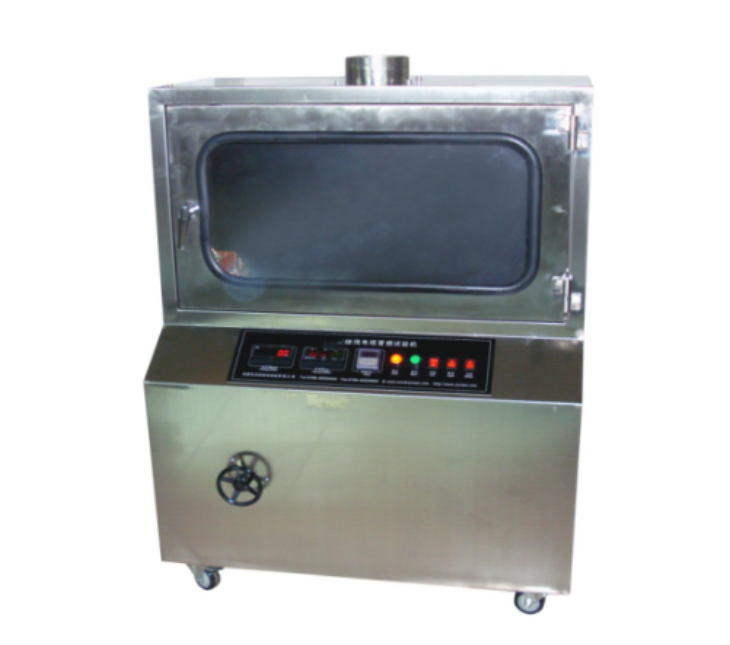
Working Principle and Core Functions
The Aerospace Wire and Cable Smoke Test Apparatus is more than a conventional combustion testing device. It is a precision testing system that integrates electrical heating, temperature monitoring, and visual observation. Its operating principle is based on the heating effect of electric current, with the primary objective of determining whether aerospace wires and cables release visible smoke when exposed to specified temperatures.
The equipment mainly consists of the main test unit, a DC constant-current power supply control cabinet, a data acquisition system, and an observation window.
During testing, a cable specimen of a specified length is secured at both ends, and an adjustable high DC current is passed through its conductor. As current flows through the conductor, Joule heating causes the cable temperature to rise gradually.
The equipment uses a high-precision voltage-drop measurement instrument and a resistance calculation system to monitor changes in the specimen's electrical resistance in real time. These measurements are used to determine and precisely control the cable conductor temperature. Once the temperature reaches the threshold specified by the applicable standard and remains stable, the operator observes the specimen through a transparent acrylic viewing window several meters long to determine whether visible smoke is released from the cable surface.
This test method directly simulates the heating conditions that cables may experience during current overloads or short-circuit faults. It provides a direct assessment of the thermal stability and smoke emission tendency of cable insulation materials and serves as an important basis for determining whether cables comply with applicable military and civil aviation standards.
Operating Procedure
The basic operating sequence of the Aerospace Wire and Cable Smoke Test Apparatus is as follows:
Specimen preparation → Initial resistance measurement → Specimen mounting and tensioning → Current parameter setting → Electrical heating → Smoke observation and recording.
Detailed Test Procedure
1. Specimen Preparation
Prepare a cable specimen approximately 4.5 m long. Strip approximately 10 cm of insulation from one end to expose the conductor for clamping. Then strip another 10 cm section at a point 3 m from the first stripped section for resistance measurement.
The total specimen length is approximately 4 m, with a measured section of 3 m.
2. Initial Resistance Measurement
Use a DC resistance meter to measure the initial resistance of the specimen. Connect the red and black test clips to the exposed conductor sections at the two stripped locations. Wait until the reading stabilizes, then record the resistance value for the 3 m measured section.
3. Specimen Mounting and Tensioning
Secure the stripped section at one end of the specimen in the fixture. Tighten the clamping screws and electrical terminals to ensure reliable electrical contact. Avoid clamping the insulation, as this may result in poor electrical contact.
Secure the other end of the specimen in the same manner.
Position the cable over the pulley and attach a weight to the end to keep the cable straight and under tension. Ensure that the distance between the clamping point and the pulley-side measurement point is 3 m, in accordance with the test setup.
4. Thermocouple Installation
Secure the thermocouple tightly against the cable conductor using insulating tape to monitor the conductor temperature during testing.
5. Startup and Parameter Configuration
Connect the equipment to the power supply, including the three-phase live power connections as required by the equipment configuration, and switch on the power switch at the bottom of the controller. Confirm that the display is illuminated.
Enter the settings interface and check the voltage and temperature correction parameters.
Set the current increment rate. The typical setting is 500 mA, adjustable within a range of 500–2000 mA.
Set the maximum current limit based on the estimated maximum current the cable can withstand, helping prevent excessive current from burning through or breaking the conductor.
Select the cable type and enter the test identification number and initial resistance value.
6. Test Execution
Press the Run button to start the test. The equipment begins supplying current to the specimen, and the test timer starts. The voltage and current are automatically controlled and displayed.
When the measured resistance under heating reaches or exceeds the calculated resistance value, the current stabilization timer starts automatically. The current increase stops, and the current is maintained at the corresponding level.
After the current has remained stable for 900 seconds (15 minutes), the test ends automatically.
7. Smoke Observation and Evaluation
During the test, continuously observe the cable specimen for visible smoke.
If smoke appears while current is being applied, press the Smoke Test End button to terminate the test.
The acceptance criterion is that no visible smoke should be emitted from the specimen during the 15-minute period after the conductor temperature has stabilized at the specified test temperature.
8. Data Recording
After the test is completed, access the historical records interface to review, save, or delete the test data as required.
Industrial Applications and Value
The Aerospace Wire and Cable Smoke Test Apparatus is primarily used to determine whether aerospace wires and cables release visible smoke when exposed to specified temperatures. It is an important piece of equipment for aerospace cable safety certification and quality control.
1.Industrial Applications
Aerospace Wire and Cable Manufacturing and R&D
Cable manufacturers use this apparatus to verify the smoke emission characteristics of insulation and sheath materials before products leave the factory. The test results support compliance verification against applicable aerospace standards and serve as a reference for new product development and incoming material inspection.
Aircraft Manufacturing, Operation, and Maintenance
Aircraft manufacturers and airlines use the apparatus to evaluate cable selection and conduct periodic sampling inspections. The objective is to ensure that onboard cables do not generate visible smoke under specified thermal conditions in a way that compromises visibility, passenger evacuation, or flight safety.
Third-Party Testing and Certification Laboratories
Independent testing laboratories use the equipment to generate objective and scientifically supported test reports for product safety certification, quality dispute resolution, engineering project tenders, and related applications.
2.Core Value
Enhancing Flight Safety
During an aircraft fire, smoke can cause breathing difficulties and severely impede evacuation. By evaluating the smoke emission characteristics of cables, the apparatus provides important data for aircraft fire safety design and helps reduce risks to passengers and crew members.
Verifying Compliance with Applicable Standards
The equipment supports testing in accordance with applicable military and international specifications, helping manufacturers demonstrate that their products meet stringent industry requirements.
Supporting Quality Control and Product Development
By precisely controlling current and temperature, the apparatus simulates the thermal conditions that cables may encounter during overloads or exposure to high temperatures. The resulting data supports improvements in material formulations and manufacturing processes, making the equipment a valuable tool for validating low-smoke aerospace cable designs.
Conclusion
Although the Aerospace Wire and Cable Smoke Test Apparatus may appear relatively simple in structure, it plays an important role in safeguarding aviation safety.Through systematic and controlled testing, the apparatus helps make the potential risks associated with cable smoke emissions measurable and observable. It provides essential technical support for material selection, product quality assurance, and safety evaluation in the aerospace industry, contributing to the development and use of safer, more reliable aerospace wiring systems.
Previous: How to Test Wire and Cable Insulation?
N e x t : the last page
