





What is the value of a stain resistance tester for architectural coatings?
2026/10/28
Share:

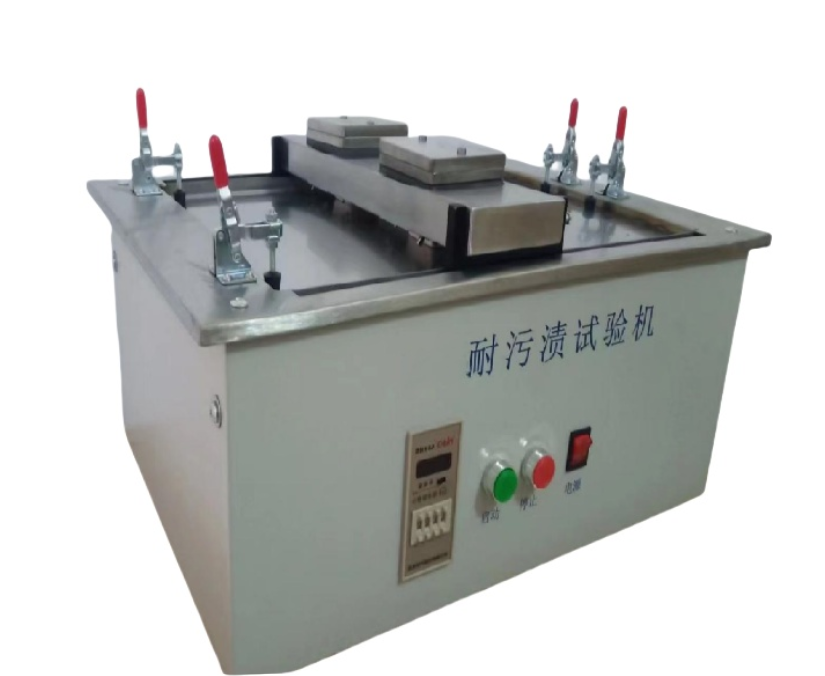
Testing Principle of the Stain Resistance Tester
The testing logic of a stain resistance tester is based on a closed-loop process of “contamination, stabilization, cleaning, and evaluation.” By controlling variables to simulate real contamination scenarios and using quantitative indicators, such as changes in reflectance and residual stain levels, the tester determines the stain resistance performance of materials.
The testing process can be divided into four key stages.
1.Contamination Simulation and Application
First, a contaminant medium similar to the actual source of contamination is selected, such as a carbon black suspension, cooking oil, fly ash solution, or dust. A precision application system, such as a rotary spray head, scraper, or roller, is then used to distribute the contaminant evenly over the surface of the material being tested.
Contaminant Type: The contaminant is selected according to the material's application scenario. For example, architectural coatings commonly use the fly ash aqueous solution specified in GB/T 9780-2013. while textiles may be tested using artificial perspiration or mixtures containing oils and fats.
Application Method: Mechanical devices, such as spraying, blade coating, or immersion systems, are used to ensure that the contaminant is applied to the specimen under controlled conditions, minimizing human error.
Variable Control: The contaminant concentration, applied quantity, and application uniformity directly affect the repeatability of the test results.
2.Contamination Exposure and Stabilization
After the contaminant has been applied, the specimen must be left undisturbed for a specified period, typically 24 hours, under controlled environmental conditions, including temperature and humidity. This allows the contaminant to penetrate or adhere sufficiently to the material's surface.
Environmental Control: High temperatures and humidity may accelerate the setting or hardening of oily stains, while dry conditions may cause particulate contaminants to adhere loosely to the surface.
Standard Environment: Test conditions commonly require a temperature of 23°C ± 2°C and relative humidity of 50% ± 5%, as specified in relevant GB/T standards. Some tests must be conducted in a temperature and humidity chamber.
3.Cleaning Process and Performance Evaluation
The cleaning stage simulates routine maintenance. Mechanical forces, such as brushing and rinsing, or chemical agents, such as cleaning solutions, are used to remove the contaminants and evaluate the stain resistance of the material.
(1) Cleaning Methods
Mechanical Cleaning: Methods include high-pressure water rinsing at 0.1–0.5 MPa, brushing at 1–10 cycles per minute, and wiping with a soft cloth.
Chemical Cleaning: Neutral cleaning agents are used to simulate practical cleaning conditions.
(2) Evaluation Methods
Changes in Optical Properties: A gloss meter or reflectance meter is used to measure the difference in surface reflectance before and after cleaning. A smaller decrease in reflectance generally indicates better stain resistance.
Visual Assessment of Residual Stains: The surface is inspected directly to determine whether stains have been completely removed, or the result is compared against a standard color reference chart, such as the 1–5 rating scale referenced in ASTM D4828.
Color Difference Analysis: A colorimeter is used to measure the color difference before and after testing. A smaller color difference generally indicates better stain resistance.
Core Value of the Building Coating Stain Resistance Tester
The core value of the Building Coating Stain Resistance Tester lies in converting the question of whether a wall surface can be cleaned easily into quantifiable and repeatable test data. It provides an objective basis for coating research and development, quality control, and project acceptance, eliminating reliance on subjective impressions or visual judgment alone.
1. Simulation of Real Contamination and Cleaning Processes
Standardized contaminants, such as fly ash, carbon black, and oily stains, are applied to coating surfaces. Specified cleaning procedures are then used to simulate everyday cleaning activities, reproducing real-world scenarios in which wall surfaces accumulate dust or are marked by graffiti and subsequently cleaned.
2. Quantitative Evaluation of Stain Resistance
Indicators such as reflectance and color difference convert stain resistance into measurable numerical values. These results can be used to assess coating performance levels and compare the performance of different formulations.
3. Support for Product Development and Quality Control
Manufacturers use the tester to screen raw materials and verify performance during formulation development, as well as to control batch quality before products leave the factory. Third-party testing institutions use it to issue impartial test reports, providing a reliable basis for project acceptance and material selection.
Key Testing Procedures and Evaluation Criteria
Evaluation Indicators: Changes in the reflectance of the coating before and after contamination are commonly measured to calculate the stain resistance rate or reflectance recovery rate. A lower stain contamination rate generally indicates better stain resistance.
Testing Process: Prepare the test panel → condition the specimen → measure the initial reflectance → apply the standardized contaminant → allow it to dry → clean using the specified number of wiping cycles → rinse and air-dry → measure the final reflectance → compare the results.
Applicable Standard: A commonly used standard is GB/T 9780-2013. Test Method for Dirt Pickup Resistance of Film of Architectural Paints and Coatings. Interior wall coatings are commonly evaluated using stain wiping methods, while exterior wall coatings are often assessed by simulating rainwater washing.
Selection and Operating Considerations
1.Distinguishing Between Interior and Exterior Wall Applications
Interior wall stain resistance testers focus on household stains and wiping with neutral detergents. Exterior wall dirt pickup resistance testers focus on fly ash contamination and water rinsing. Because their testing principles and structural configurations differ, the two types of equipment should not be used interchangeably.
2. Supporting Equipment Requirements
A stain resistance tester generally needs to be used together with a reflectance meter or colorimeter. Without these supporting instruments, changes in reflectance or color difference cannot be measured accurately, making quantitative evaluation difficult.
3. Standardized Operating Procedures
Parameters such as the weight of the rubbing head, wiping speed, number of wiping cycles, and number of gauze layers must comply with the applicable test standard. Otherwise, the results may not be comparable.
For example, the BGD 527 recommends a wiping speed of 37 cycles per minute and a total rubbing head weight of 1.500 g.
Conclusion
As an important link between laboratory data and real-world user experience, the Building Coating Stain Resistance Tester is helping the coatings industry move from subjective assessments of stain resistance toward quantitative and controllable evaluation.It helps manufacturers control product quality more precisely and reduce subsequent maintenance and after-sales costs. It also provides end users with clear, measurable indicators of coating stain resistance, helping ensure the long-term appearance and durability of architectural wall surfaces.
Previous: How does the smoke test apparatus for aerospace wire and cable operate?
N e x t : the last page
