





Why is it essential to measure the strength of a urinary catheter?
2026/11/02
Share:

Why Is Catheter Strength Testing Necessary
Urinary catheters are typically manufactured from flexible polymer materials such as silicone, latex, or thermoplastic polyurethane (TPU) to minimize irritation to the urethral mucosa. However, “flexible” does not mean “fragile.” During actual clinical use, urinary catheters must withstand multiple mechanical challenges:
Insertion and removal resistance: During insertion or withdrawal, the catheter shaft must withstand axial tensile forces. Insufficient strength may cause the catheter to break, leaving fragments inside the patient's body.
Balloon inflation pressure: Balloon catheters are filled with sterile water to maintain their position. If the balloon material has inadequate pressure resistance, it may rupture, resulting in loss of retention.
Bending and pulling during use: When patients turn over or move, catheters may be subjected to bending stress or accidental traction. The eyelets and connection points are particularly vulnerable to mechanical stress.
Prolonged exposure to fluids: During long-term indwelling use, continuous exposure to urine may cause material aging or swelling, potentially affecting mechanical properties.
Core Functions and Technical Principles of the Catheter Strength Tester
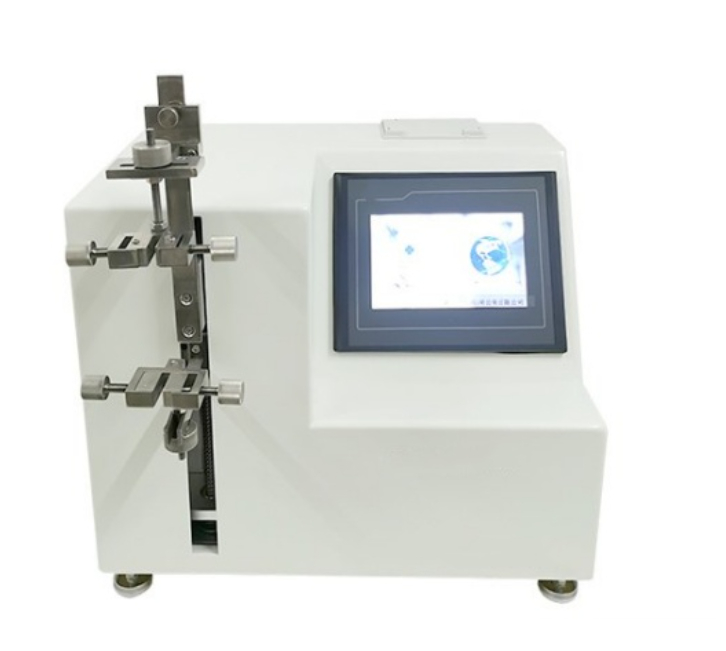
Modern catheter strength testers are no longer simple mechanical loading devices. Instead, they are intelligent testing systems integrating programmable controllers, high-precision force sensors, touchscreen human-machine interfaces, and automatic printing modules.
Their principal testing functions include:
1.Tensile Strength Testing
This is the core test for evaluating the resistance to breakage of catheter shafts and critical connection points, such as the junction between the catheter tip and shaft.
The instrument secures both ends of the catheter using fixtures and applies a constant or progressively increasing tensile force until the specimen breaks or reaches the specified load.
For catheters with eyelets, the test focuses on whether the eyelets tear under tension. For catheters without eyelets, the primary concern is the connection strength between the catheter shaft and the tapered connector.
2.Balloon Reliability Testing
For balloon catheters, the tester can simulate the inflated balloon condition and apply static tensile loads or dynamic impact forces to evaluate the balloon's resistance to rupture and deformation under inflation.
Some advanced models are also equipped with hydraulic systems that accurately control internal pressure, simulate the clinical balloon inflation process, and determine the critical pressure at which balloon rupture occurs.
3.Connection Separation Force Testing
This test evaluates the connection integrity between the drainage-end tapered connector of the catheter and the drainage bag.
By suspending specified weights or applying reverse tensile forces, the instrument verifies whether the connection remains secure under gravity or slight pulling forces, preventing accidental disconnection that could lead to urine leakage or infection risks.
4.Simulated Body Fluid Conditioning
Considering the effects of urine on catheter materials, standard testing procedures require catheters to be immersed in simulated urine and conditioned at a controlled temperature, typically 37 ± 2°C, for a specified period, such as 14 days, to simulate the material condition after prolonged indwelling use.
Mechanical testing is then performed on the conditioned specimens.
This conditioning process helps ensure that test results more closely reflect actual clinical conditions.
Intelligent Operation and Data Compliance
To meet the requirements of Good Manufacturing Practice (GMP) for medical devices and export certification, modern catheter strength testers have undergone significant improvements in software functionality and data processing.
Interactive operation: Equipped with a color touchscreen and Chinese-English menus, the instrument allows users to conveniently configure testing parameters, such as nominal capacity, displacement speed, and test duration.
Automated testing and evaluation: The equipment supports automatic test operation and displays load curves in real time. When test results exceed preset limits, the system automatically activates an audible alarm and identifies nonconforming specimens, reducing the risk of human error.
Data traceability and security: Users can enter information such as manufacturer details and production batch numbers. Test results are automatically generated into PDF reports containing pressure-time curves, peak values, and testing environment information. Reports can also be printed immediately using the built-in printer. Some models feature three-level password protection to prevent unauthorized modification of test data and support data integrity requirements.
Multi-station parallel testing: Certain models support simultaneous testing across multiple stations, allowing specimens of different specifications or batches to be tested concurrently, significantly reducing quality inspection time.
Application Scenarios and Industry Value
The catheter strength tester is used throughout the entire life cycle of medical devices.
Quality control in manufacturing: Used for incoming raw material inspection, in-process quality monitoring, and finished product inspection before shipment. It helps manufacturers identify material defects or process deviations promptly and reduce defective product rates.
Third-party testing laboratories: Serves as an important instrument for regulatory inspections, quality surveillance, and market access evaluations, ensuring that urinary catheters comply with applicable national standards.
Clinical evaluation in hospitals: Some major hospitals also use these instruments for independent evaluation when introducing new urinary catheter products, particularly for verifying the safety of catheters intended for long-term indwelling use.
With the introduction of innovative technologies such as antimicrobial coatings and hydrophilic lubricious coatings, catheter strength testers must also evaluate whether coating processes affect the mechanical properties of the underlying materials.
For example, certain coatings may alter the friction coefficient of the catheter surface or cause localized stress concentrations. Through precise mechanical testing, critical data can be obtained to support product development and drive improvements from basic functionality toward enhanced usability and durability.
Conclusion
Although urinary catheters are small medical devices, they carry the responsibility of protecting patients' health and well-being.As an essential quality control instrument, the catheter strength tester acts as an unsung safeguard, ensuring that every catheter possesses sufficient flexibility and mechanical strength through scientifically rigorous testing and intelligent technical solutions.As the medical manufacturing industry continues to advance toward higher-quality development, continuously optimizing testing technologies is not merely a matter of complying with standards, but also a commitment to respecting and protecting human life and dignity.
Previous: What is the value of a stain resistance tester for architectural coatings?
N e x t : the last page
