





How does a catheter burst pressure tester work?
2026/11/02
Share:

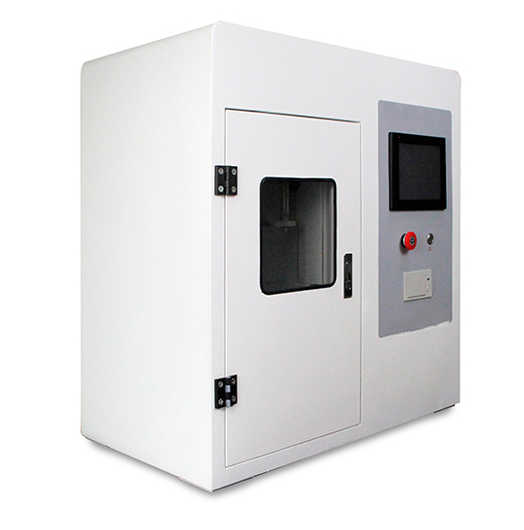
Testing Principle: Using Pressure as a Measure to Determine the Ultimate Strength of Catheters
The fundamental principle of catheter burst pressure testing is to simulate extreme internal pressure conditions and evaluate the pressure resistance of the catheter.
During testing, the catheter is secured in a dedicated fixture, and its interior is filled with physiological saline or air. The internal pressure is then gradually increased at a constant rate. A high-precision pressure sensor acts like an electronic eye, continuously monitoring subtle changes in the internal pressure of the catheter in real time.
When the pressure reaches the structural or material limit of the catheter, the catheter ruptures or develops a leak. The tester immediately captures and records the pressure at the moment of rupture. This value represents the catheter's burst pressure and serves as the ultimate benchmark for evaluating its pressure resistance and safety performance.
This process is far more than a simple sequence of pressurization, rupture, and recording. It involves sophisticated technical principles and precise control requirements.
The pressure application rate must strictly comply with applicable international standards. If the rate is too high, the catheter may rupture prematurely due to pressure impact, preventing an accurate assessment of its actual pressure resistance. If the rate is too low, potential problems such as material fatigue may be obscured, resulting in distorted test data.
The sensitivity of the pressure sensor must be exceptionally high. Even pressure fluctuations as small as one-thousandth of the measured value should be accurately detected to prevent safety risks caused by measurement errors.
The control system must function like a symphony conductor, coordinating the pressure pump, sensors, fixtures, and other components to ensure standardized and repeatable testing procedures.
For example, during testing of cardiac interventional catheters, the pressure is gradually increased from the initial condition to a high-pressure environment significantly exceeding normal operating pressures. The pressure ramp rate must remain highly stable to accurately evaluate the catheter's safety under extreme conditions.
Operating Procedure for the Catheter Burst Pressure Tester
When using a catheter burst pressure tester, operators must strictly follow standardized procedures to ensure the accuracy of test results and personnel safety.
The basic operating procedures are as follows:
Preparation
First, inspect the safety devices of the tester to ensure that they are in good working condition. Particular attention should be paid to the safety mechanisms of ultra-high-pressure testing equipment.
Check the power cord, tubing connections, and computer operating status to ensure that the entire system is functioning normally.
Sample Installation
Select the appropriate catheter and pressure sensor according to the testing requirements. Install the catheter in the dedicated fixture of the tester and ensure that all connections are properly sealed.
For balloon dilation catheters, special attention should also be paid to balloon pretreatment, such as pre-soaking the balloon in physiological saline to achieve a condition representative of clinical use.
Parameter Configuration
Start the tester and configure the test parameters according to the applicable testing standards, such as YY 0285.4.
The parameters should include the pressure ramp rate, test pressure range, and other relevant settings.
Test Execution
Activate the pressurization system and gradually increase the pressure according to the preset program until the catheter ruptures or the specified test conditions are reached.
During the test, the instrument automatically records and displays the pressure value at the moment of rupture, namely the rated burst pressure (RBP).
Result Analysis
After the test is completed, organize and analyze the test data to determine whether the catheter's burst pressure meets the applicable standard requirements.
Safety Precautions
When operating a catheter burst pressure tester, strict safety precautions must be implemented to protect both operators and equipment.
Pretreatment Preparation
Perform clinically relevant pretreatment of the test catheter, such as immersion in physiological saline, to simulate its actual usage conditions.
Temperature Control
Ensure that the fluid temperature in the test chamber reaches and remains at (37 ± 2) °C to simulate the human physiological environment.
Seal Inspection
Carefully inspect the sealing integrity of the catheter and fixtures before testing to prevent fluid leakage.
Hydraulic Circuit Inspection
Check the hydraulic circuit to ensure that it is intact and free from leakage, thereby maintaining stable pressure transmission throughout the testing process.
Safety Device Inspection
Regularly inspect all safety devices of the tester, including overpressure protection mechanisms and emergency stop buttons, to ensure that they are functioning properly.
Standardized Operation
Strictly follow the operating procedures and avoid improper operation that could result in equipment damage or personal injury.
Application Scenarios: Comprehensive Protection from Research and Development to Clinical Use
The catheter burst pressure tester is used throughout the entire life cycle of catheter products. It plays an indispensable role in performance evaluation during research and development, quality control during manufacturing, and safety verification before clinical application.
Research and Development Stage
During the development of new catheter materials or structural designs, the tester serves as a performance verification instrument.
By comparing the burst pressure of different design solutions, researchers can optimize material formulations, adjust structural parameters, and even explore new manufacturing processes.
For example, a research team discovered through testing that vascular catheters manufactured using a specific braiding process exhibited significantly higher burst pressures. This finding enabled the development of safer interventional medical devices.
Production Quality Control
During large-scale catheter manufacturing, the tester serves as a quality assurance instrument.
Manufacturers conduct sampling inspections or full inspections of each production batch to ensure that the burst pressure of their products complies with applicable industry standards.
After introducing an automated testing line, one medical device manufacturer significantly improved its inspection efficiency while maintaining an extremely low defect rate, effectively ensuring product quality.
Preclinical Verification
Before a catheter is introduced to the market, third-party testing laboratories use the tester to conduct comprehensive evaluations and verify compliance with regulatory requirements.
Through rigorous testing, potential safety hazards can be identified and eliminated, preventing nonconforming products from entering the market.
For example, testing of a new neurological catheter revealed a decrease in burst pressure after prolonged pressure holding. Based on these findings, the research and development team improved the material formulation, and the catheter ultimately passed clinical validation and was successfully commercialized.
Failure Analysis
When adverse events such as catheter rupture occur during clinical use, the tester can assist in failure analysis.
By simulating rupture scenarios and reproducing the failure process, investigators can identify the underlying causes and provide valuable information for product improvement.
For example, a manufacturer once encountered catheter rupture during transportation. Analysis using the tester revealed that friction between the packaging material and the catheter surface had caused microscopic cracks.
The problem was ultimately resolved by optimizing the packaging design.
Conclusion
As an essential instrument in the field of medical device testing, the catheter burst pressure tester plays an indispensable role in ensuring medical device safety.With the continuous advancement of medical technology, performance requirements for medical devices are becoming increasingly stringent. Therefore, selecting a catheter burst pressure tester with high precision and reliability is essential for manufacturers, testing laboratories, and research institutions.In the future, with continuous technological advancement and innovation, catheter burst pressure testers will become increasingly intelligent and automated, providing stronger support for medical safety and technological innovation.
Previous: Why is it essential to measure the strength of a urinary catheter?
N e x t : the last page
