





What is the operating procedure for the guidewire tip flexibility tester?
2026/11/03
Share:

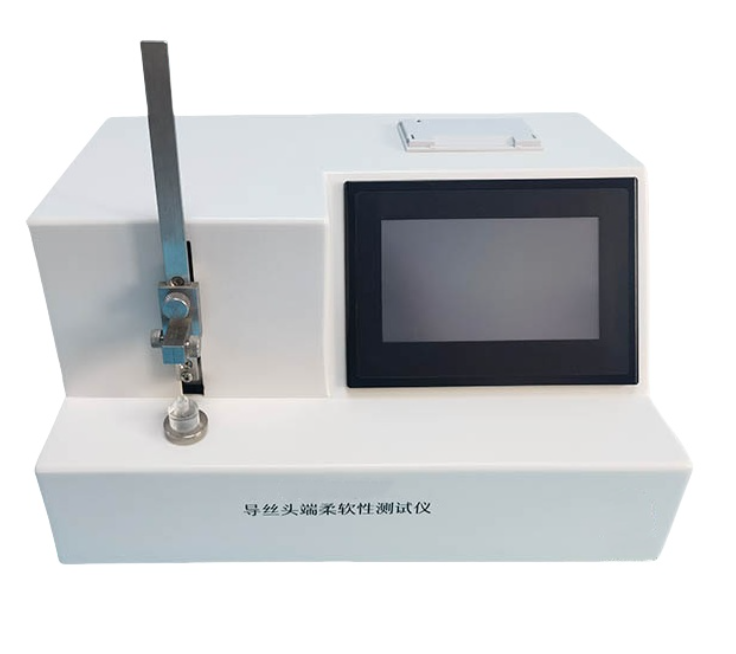
Working Principle of the Guidewire Tip Flexibility Tester
The Guidewire Tip Flexibility Tester is generally designed based on mechanical principles. It simulates the actual forces experienced by guidewires within human blood vessels by applying a specific bending force or torque to the guidewire tip. Meanwhile, high-precision sensors are used to monitor parameters such as tip deformation and applied force in real time.
The tester collects, analyzes, and processes these data, ultimately presenting guidewire tip flexibility indicators in the form of intuitive numerical values or charts, providing a quantitative basis for evaluating guidewire quality.
For example, by simulating different bending angles and loading conditions that guidewires may encounter within blood vessels, the tester can comprehensively evaluate the flexibility of the guidewire tip. This helps manufacturers and medical institutions accurately determine whether guidewires meet clinical requirements.
Testing Procedure of the Guidewire Tip Flexibility Tester
1. Pre-Test Preparation
In accordance with applicable domestic and international standards, first ensure that the testing environment meets the required conditions. Testing is generally conducted under ambient temperature and humidity conditions, with the temperature typically controlled at 23 ± 2°C and the relative humidity maintained at 50%–80%.
Prepare a sufficient number of representative guidewire samples. The samples should be randomly selected from the same production batch to ensure the reliability of the test results.
At the same time, perform a comprehensive calibration of the tester to ensure that all sensors and measuring components meet the required accuracy specifications, thereby ensuring that the instrument is in optimal operating condition.
2. Sample Fixation
Securely mount the guidewire samples onto the tester's fixtures according to the method specified in the applicable standard.
The fixation process must be strictly controlled to ensure that the installation position and angle of the guidewire tip comply with the actual usage conditions, thereby preventing improper fixation from affecting the test results.
For example, different types and specifications of guidewires may require corresponding dedicated fixtures to ensure that the guidewire remains stable and is subjected to uniform loading throughout the test.
3. Test Parameter Setting
Set the appropriate test parameters according to the requirements of the applicable standard, including bending angle, applied force, and loading rate.
These parameters must precisely match the values specified in the standard to ensure the standardization and consistency of the testing process.
For example, for certain specific types of guidewires, the standard may specify a bending angle of 90°, an applied force of 1 N, and a loading rate of 0.1 mm/s. Test operators must strictly follow these specified parameters when configuring the tester.
4. Test Execution
Start the tester to apply the specified force to the guidewire tip according to the preset parameters.
During the test, the tester continuously collects various data related to the guidewire tip in real time, such as bending deformation and resistance to applied force.
Operators must closely monitor the testing process to ensure that no abnormal conditions occur. If issues such as guidewire slippage or tester component malfunction arise during the test, the test must be stopped immediately, and the problem must be investigated and resolved.
5. Result Recording and Analysis
After the test is completed, the tester automatically records and stores the test data.
Operators analyze the test results according to the acceptance criteria specified in the applicable standard to determine whether the guidewire tip flexibility meets the requirements.
If the test results fall outside the specified range, further investigation is required to identify the underlying causes, such as material issues or manufacturing process defects.
For example, if the guidewire tip fractures during testing, this may be caused by insufficient material toughness or stress concentration during manufacturing. Manufacturers should implement corresponding improvements to address these issues.
Clinical Applications and Industry Significance
The Guidewire Tip Flexibility Tester plays an important role throughout the entire lifecycle of guidewire products, offering significant clinical and industrial value.
Quality Control During Manufacturing
During production, this instrument serves as a critical quality control tool. Through batch testing, manufacturers can monitor the stability of production processes and identify defective products with inconsistent tip stiffness or material defects, thereby ensuring product consistency before shipment.
Product Research and Development
During the R&D stage, test data provide engineers with a scientific basis for optimizing guidewire tip structural designs and material selection, helping them achieve the optimal balance between maneuverability and safety.
Compliance Verification and Performance Evaluation
For third-party testing laboratories and hospital research departments, this instrument is used for compliance verification and performance evaluation of new types of guidewires.
During product registration and submission, detailed guidewire tip flexibility test reports serve as important technical documentation demonstrating product safety and effectiveness.
Improving Clinical Safety and Procedural Outcomes
From the perspective of clinicians, guidewires that have undergone rigorous testing can provide reliable tactile feedback, reduce surgical risks and patient complications, and improve the success rate of interventional procedures.
Conclusion
As medical technology continues to advance and surgical requirements become increasingly demanding, the importance of the Guidewire Tip Flexibility Tester will become even more prominent.In the future, the performance of this testing instrument will continue to be optimized and improved, making greater contributions to the development of the medical device industry. Meanwhile, the integration of intelligent and automated technologies will make testing instruments more convenient and efficient.In conclusion, the Guidewire Tip Flexibility Tester plays a vital role in the medical device industry. It not only improves the quality and safety of guidewire products but also provides essential technical support for the research, development, and innovation of medical devices.
Previous: What is an infusion pump flow rate tester?
N e x t : the last page
