





Do you know what functions a water leak detector has?
2026/11/03
Share:

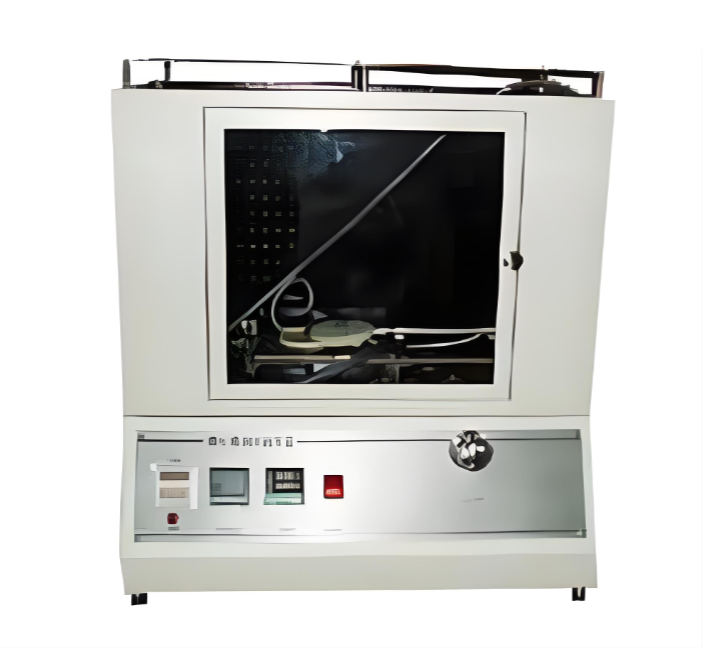
Detailed Features of the Gas Evolution Test Apparatus
1. Precise Detection Principle
The instrument is built around a pressure-balancing detection system. High-precision pressure sensors continuously monitor pressure changes inside the test chamber. Combined with a precision motion control mechanism, the system directs all gases released during the reaction between the substance and water into the collection system and converts them into gas evolution rates and total gas volumes.
Compared with traditional water displacement gas collection methods that rely on manual readings, the entire process, from data acquisition to calculation, is completed within an integrated closed-loop system. Human-induced errors are minimized, and the resulting data can be directly used for classification assessments and report preparation.
2. Visualized Data Presentation
During testing, two key sets of indicators are displayed simultaneously on the screen: the maximum gas evolution rates measured over minute-level and hour-level intervals, as well as the cumulative gas collection volume.
The system also generates gas evolution rate curves in real time, making it easy to identify whether the reaction is characterized by an initial rapid release followed by a slower rate or by a relatively steady release throughout the test.
For testing personnel, the curve profile itself provides valuable information, as certain abnormal reactions may not be identifiable from final numerical results alone.
3. Traceable Calibration Assurance
Traceability is an essential prerequisite for test data to be accepted by regulatory authorities and customers.
The instrument incorporates a traceable calibration function and is supplied with calibration tools, allowing users to periodically verify the instrument's condition independently without sending the entire unit for external calibration every time.
Once calibration records are properly maintained, the requirements for metrological compliance can also be effectively addressed.
4. Leak-Free Test Design
One inherent challenge in gas evolution testing is that the reaction begins immediately upon water injection. Any gas released during sample addition or immersion cannot be recovered afterward.
This instrument automatically immerses the sample under sealed conditions. The water addition volume is fixed, and the operation is precisely controlled, ensuring that all gases released during water injection and sample introduction are completely captured by the collection system.
The integrity of the test data is ensured precisely through these design details.
5. Stable Temperature Control System
Gas volume is highly sensitive to temperature, and even fluctuations of several degrees can cause data distortion.
The instrument uses a thermostatic circulation bath and specially designed metal plates to transfer heat through conduction, maintaining a stable temperature inside the test chamber. Temperature control stability can reach ±0.5°C, and the target temperature can be set through the software.
By effectively controlling temperature as a variable, test results obtained from different batches and at different times become comparable.
6. Corrosion-Resistant Pipeline Design
Certain samples may generate acidic or alkaline gases when reacting with water. Conventional pipelines may become corroded after only a few tests.
The instrument's gas pipelines are made of acid- and alkali-resistant materials and feature reliable sealing performance. Even when handling corrosive samples over extended periods, the gas-tightness of the system remains unaffected.
This design directly determines the service life of the equipment in hazardous chemical testing applications.
7. Automatic Gas Path Cleaning Function
After each test, residual gases from the previous test may remain inside the gas pathways.
The instrument features an automatic cleaning function that quickly removes residual gases from the internal system, preventing carryover into subsequent tests and avoiding cross-contamination.
During continuous batch testing, this function eliminates the need for manual purging and also reduces the exposure risks faced by operators.
8. Support for Additional Gas Analysis
In some classification assessments, it is necessary not only to determine how much gas is released but also to identify the composition of the evolved gas.
The instrument is equipped with a gas collection bag that can automatically collect gases released during the reaction for subsequent compositional analysis or combustion testing.
This enables the instrument to support both quantitative measurement and qualitative analysis.
9. Visual Observation of the Test Process
In certain cases, visual observation is necessary to assess the intensity of a reaction.
The test door is equipped with an observation window and lighting, allowing operators to directly observe the reaction state of the sample without opening the door or interrupting the test.
If an abnormal reaction occurs, operators can respond promptly.
10. Compatibility with Multiple Test Modes
Different standards specify different testing procedures.
With dedicated accessories installed, the instrument can perform three test modes: immersion testing, standstill testing, and dripping water testing.
These modes cover different requirements specified in the United Nations N.5 Test and GB series standards.
One instrument can accommodate multiple testing scenarios, reducing both equipment procurement costs and laboratory space requirements.
11. Fully Automatic Testing Process
From parameter setting and sample reaction to data recording, the entire testing process operates automatically without requiring manual intervention during the test.
The system displays the test status in real time and automatically saves raw data in the background. Reports can be accessed and retrieved whenever required.
For testing institutions, a single setup can complete test cycles lasting dozens of hours, with complete original records retained to support traceability and subsequent analysis.
12. Convenient Operating Experience
The instrument adopts an embedded processor and the Windows CE operating system, providing fast, stable, and reliable operation.
For user interaction, it is equipped with a 7-inch LCD touchscreen and a Chinese intelligent input system, making parameter entry and function switching convenient and intuitive.
New employees can become familiar with the instrument after basic training, without relying on operators with specialized experience.
Conclusion
In conclusion, the Gas Evolution Test Apparatus has become a key component in hazardous chemical safety management, thanks to its precise measurement capabilities, intelligent operating procedures, and strict safety-oriented design.With continuous advancements in testing technology, the instrument will continue to evolve in terms of testing efficiency and analytical capabilities, contributing to the efficient and safe transportation and circulation of hazardous chemicals worldwide.
Previous: What can a Nasal Oxygen Cannula Tester do?
N e x t : the last page
