





How to Test Film Heat Shrinkage Using a Film Heat Shrinkage Tester?
2026/11/04
Share:

Understanding the Testing Principle and Equipment Selection
The essence of thermal shrinkage is the process in which polymer chains recover their natural curled state from a frozen state after being heated. The core of the test is to create a uniform and stable high-temperature environment, allowing the film to relax sufficiently.
1.Core Testing Principle
Constant-Temperature Heating Using a Liquid Medium
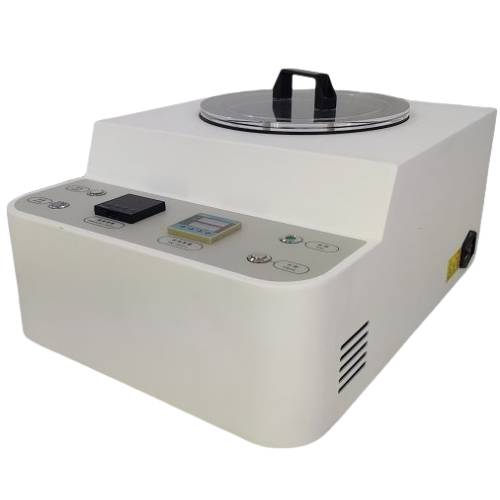
The instrument is equipped with a high-precision constant-temperature oil bath/glycerin bath chamber. The specimen is completely immersed in the constant-temperature heat-transfer medium at a preset temperature. By accurately controlling the heating duration, the film completes the thermal shrinkage process in a free state without external interference.
Data Calculation Principle
Based on the physical characteristics of heat-shrinkable materials, whose molecular chains extend and return to their original state after heating, the dimensional changes in the longitudinal and transverse directions of the specimen before and after heating are measured. The thermal shrinkage rate is then automatically calculated to accurately quantify the differences in the thermal shrinkage performance of different heat-shrinkable films.
Core Temperature Control Advantages
The instrument is equipped with digital temperature control technology, with the temperature fluctuation of the bath chamber controlled within ±0.3°C and excellent overall temperature uniformity. This effectively eliminates uneven specimen shrinkage caused by local temperature differences and ensures the repeatability of test data.
2.Selection of Heating Medium
Constant-Temperature Water Bath Method: Suitable for most conventional packaging films, such as POF and PVC. Its advantages include excellent temperature uniformity and rapid heating, making it suitable for quick screening in laboratories. The water temperature is usually set at 105°C ±1°C.
Hot Air Oven Method: Suitable for heat-resistant films or films sensitive to moisture, such as certain PETG films or special shrink labels. Air heat transfer is relatively slow, so attention should be paid to the uniformity of air circulation in the airflow channels to avoid local overheating.
3.Preparation of Key Tools
A high-precision constant-temperature water bath or forced-air drying oven, with temperature control accuracy within ±0.5°C.
A vernier caliper or dedicated image measurement instrument, with a resolution of at least 0.1 mm.
A marking pen (a waterproof permanent marker is recommended to prevent ink bleeding in the water bath).
Standardized Testing Procedures and Acceptance Criteria
In actual operation, procedural standardization directly determines the reliability of test data. The following is a general testing procedure and self-check criteria.
1.Specimen Preparation
Cut a square specimen, usually with a side length of 100 mm ±5 mm.
Acceptance Criteria: The cuts must be smooth and free of burrs. Otherwise, stress concentration at the edges may cause premature tearing or uneven deformation.
2.Marking and Measurement
Draw a 100 mm × 100 mm square grid in the central area of the specimen, or make marks at the midpoints of the four sides.
Acceptance Criteria: The marking lines should not be too thick. A width of less than 0.5 mm is recommended to reduce measurement errors.
3.Suspension and Immersion/Placement
Water Bath Method: Suspend the specimen vertically using a thin wire or dedicated fixture, ensuring that it does not come into contact with the tank walls. Slowly immerse it in the preheated water.
Oven Method: Place the specimen flat or suspend it vertically in the middle of the oven, avoiding direct exposure to the heating elements or airflow from the fan.
4.Constant-Temperature Heating and Removal
Maintain the specimen under constant-temperature conditions for 60–180 seconds. The specific duration depends on the film thickness. The heating time for thicker films may be appropriately extended to 3 minutes.
Acceptance Criteria: When the specified time is reached, remove the specimen quickly but gently and immediately immerse it in cold water to terminate the reaction, preventing excessive shrinkage caused by residual heat.
5.Cooling and Re-measurement
After the specimen has completely cooled to room temperature, measure the distance between the marked points.
Calculation:
Shrinkage Rate = [(Initial Length − Final Length) / Initial Length] × 100%
Common Misjudgments and Troubleshooting of Data Deviations2
If the measured shrinkage rate is abnormally high or low, the problem is usually caused by the following factors:
Temperature Not Reaching the Required Level: This is the most common cause. The actual temperature of the water bath may be lower than the displayed value, particularly when using older equipment with significant temperature differences. Solution: Regularly compare the instrument temperature with an independently calibrated thermometer.
Insufficient Heating Time: The molecular chains inside the film may not have fully relaxed, resulting in insufficient shrinkage and a lower measured value. Solution: For materials from unknown batches, preliminary tests can be conducted using different heating durations, such as 60 s, 90 s, and 120 s, to identify the time point at which the data become stable.
Residual Mechanical Stress: If the stretching ratio during film production is improperly set, the film itself may contain residual internal stress, resulting in abnormal shrinkage during testing. Solution: Compare specimens from different positions within the same batch. If the differences are substantial, this indicates instability in the raw materials or production process.
Conclusion
In general, the key to accurately measuring thermal shrinkage lies in three factors: accurate temperature, sufficient heating time, and rapid handling. When abnormal data occur, first check the temperature calibration records and then investigate the operating procedures.The Film Heat Shrinkage Tester converts abstract thermal properties of materials into quantifiable data through standardized testing procedures and high-precision hardware configurations. It not only helps manufacturers implement comprehensive quality monitoring, from raw material incoming inspection to finished product release, but also provides a scientific basis for the development of new materials and process improvement.In today's pursuit of high quality and safety, selecting professional and stable thermal shrinkage testing equipment is an important step toward improving product competitiveness.
Previous: Do you know what functions a water leak detector has?
N e x t : the last page
