





What is a blood collection needle sheath resilience tester?
2026/11/04
Share:

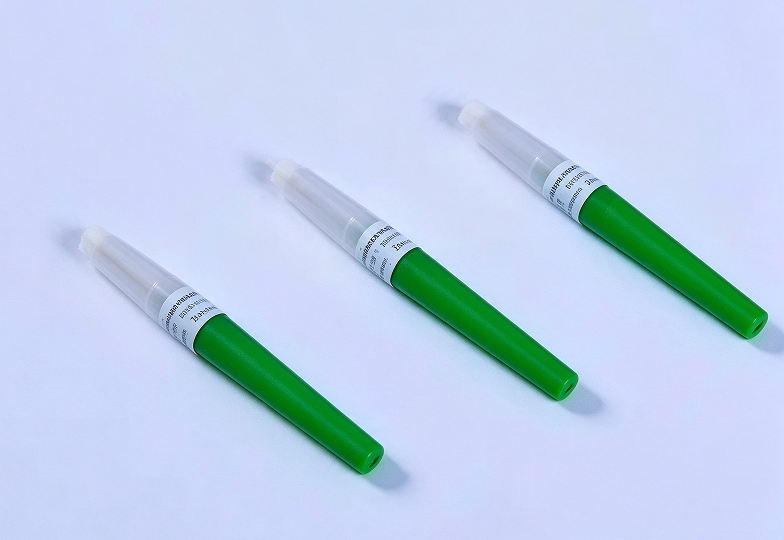
Definition and Principle of the Blood Collection Needle Rubber Sleeve Rebound Force Tester
The Blood Collection Needle Rubber Sleeve Rebound Force Tester is a core instrument for evaluating the elastic recovery performance of rubber sleeves. By quantifying force changes during the compression and release processes, it ensures functional reliability in medical, industrial, and other applications. Its primary function is to verify whether the rubber sleeve can maintain stable rebound performance after repeated use, preventing sealing failures or operational risks caused by elastic degradation.
The instrument is designed based on the principle of dynamic mechanical testing. By simulating the actual stress conditions experienced by the rubber sleeve during application, it measures the restoring force generated when the sleeve returns from a compressed state to its original shape. During testing, the rubber sleeve is fixed in an adjustable fixture and subjected to a preset pressure for a specified duration before being released. The sensor continuously captures force fluctuations during the rebound process, generating a complete elastic recovery curve.
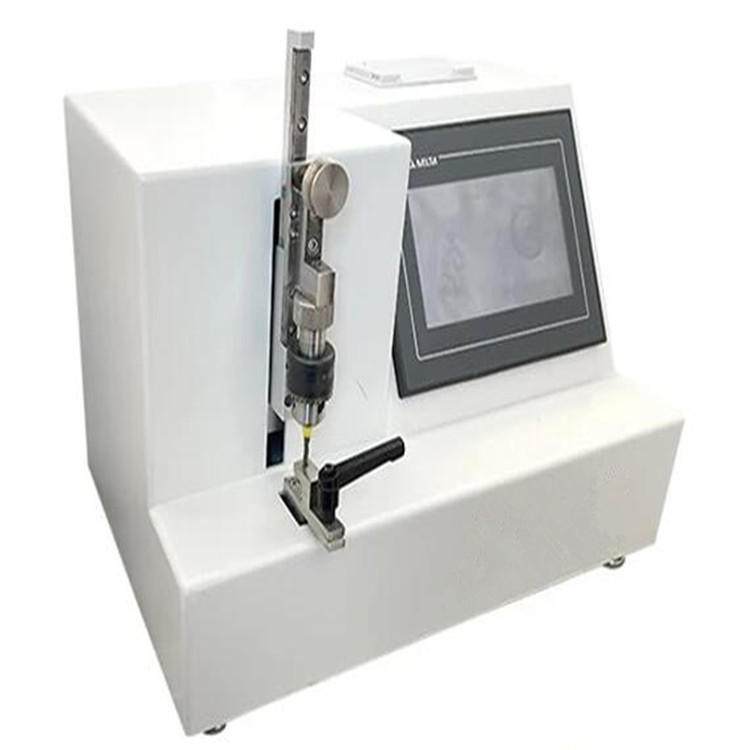
Operating Procedures for the Blood Collection Needle Rubber Sleeve Rebound Force Tester
The test must be performed strictly according to the following steps to ensure that each procedure complies with standard requirements and that the test results are standardized and reliable.
1. Sample Preparation: Select representative rubber sleeves to be tested and ensure that their appearance is free from defects such as flash, damage, and particles. Ensure that the rubber sleeves are firmly fitted to the blood collection needle hubs without detachment.
2. Equipment Setup: Start the testing device, adjust the linear driving speed to 100 mm/min, and calibrate the force sensor to ensure that the equipment operates normally and the displayed data are accurate.
3. Sample Installation: Expose 2 mm of the needle at the blood collection needle's connecting end and insert it into the mold hole of the mold-hole fixture. Ensure that the needle tube is perpendicular to the plane of the mold hole and that the rubber sleeve is installed in a position consistent with its actual use condition.
4. Test Measurement: Start the testing device to compress the rubber sleeve and accurately measure the rebound force at a position (11 ±1) mm from the fitting point at the open end of the rubber sleeve. Record the measurement data.
5. Result Evaluation: If the measured rebound force is ≤10 N and the rubber sleeve shows no damage or abnormal deformation during the test, the rebound force of the rubber sleeve is considered to meet the standard requirements. If the rebound force is >10 N, or if the rubber sleeve is damaged or unable to rebound normally during the test, the sample is considered nonconforming.
Main Features of the Blood Collection Needle Rubber Sleeve Rebound Force Tester
High-Precision Mechanical Testing
Equipped with a high-resolution force sensor, the instrument accurately measures the rebound force and recovery time of the rubber sleeve, ensuring the accuracy and repeatability of test data.
Intelligent Data Analysis
Equipped with a touch-screen operating interface, the instrument can display rebound curves in real time, automatically calculate rebound force, and generate test reports, facilitating quality traceability and analysis.
Multi-Mode Testing
The instrument supports testing under different pressure levels, including static compression testing, dynamic rebound testing, and repeated puncture rebound testing, meeting the testing requirements of different products.
Compliance with Industry Standards
The equipment is designed in accordance with medical device standards such as YY/T 0242 and ISO 7864. ensuring that test results meet industry regulatory requirements.
Strong Stability and Wide Applicability
The instrument adopts a high-rigidity frame structure to reduce the influence of external environmental factors on test data. It is suitable for testing blood collection needle rubber sleeves of different specifications and materials.
Application Significance of the Blood Collection Needle Rubber Sleeve Rebound Force Tester
Quality Control: By quantifying the rebound force of rubber sleeves, nonconforming products can be screened out, reducing clinical risks, such as blood leakage caused by insufficient rubber sleeve rebound.
R&D Support: Provides data support for improvements in blood collection needle materials, such as optimization of silicone rubber hardness, and shortens the R&D cycle.
Compliant Production: Helps enterprises meet medical device registration requirements and successfully pass regulatory reviews.
Conclusion
The rebound force of blood collection needle rubber sleeves is crucial to medical safety. It not only affects sealing performance but also directly relates to contamination prevention and service life. With its high-precision measurement, intelligent analysis, and wide applicability, the Blood Collection Needle Rubber Sleeve Rebound Force Tester provides a reliable quality testing solution for the medical device industry, helping enterprises improve product performance, meet stringent industry standards, and provide solid assurance for medical safety.
Previous: How to Test Film Heat Shrinkage Using a Film Heat Shrinkage Tester?
N e x t : the last page
