





What are the advantages of a suture needle cutting force tester?
2026/11/04
Share:

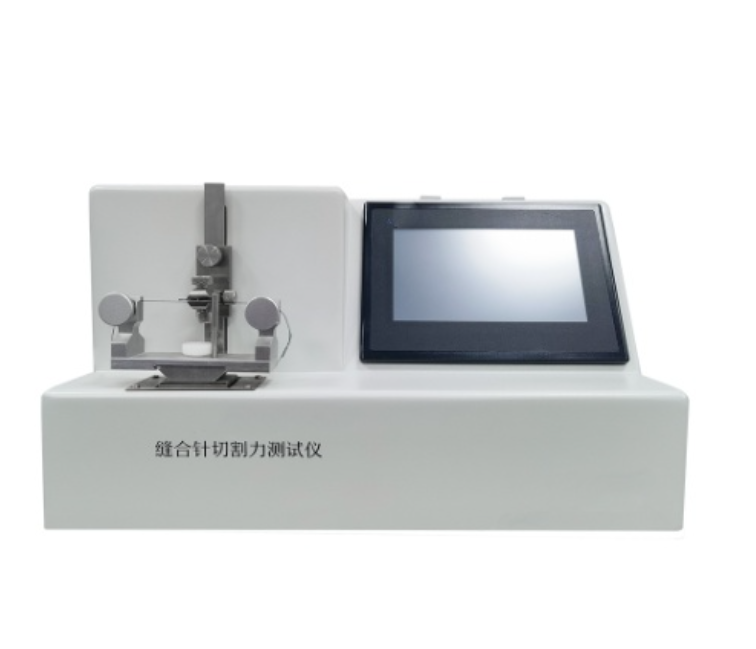
Components of the Suture Needle Cutting Force Tester
Testing Platform: Used to fix the suture needle and simulated tissue material. The platform must remain stable to ensure accurate mechanical measurements throughout the testing process.
Sensor System: High-precision force sensors are used to monitor the cutting force applied to the suture needle in real time and record force variations during the puncture process.
Force Application System: The force application system controls the insertion speed and puncture force of the suture needle, simulating actual operating conditions during surgery.
Control System: Includes a computer or intelligent system used to set test parameters, monitor the testing process, and generate test data reports.
Data Analysis System: Used to analyze test data and generate detailed test reports, helping users understand the performance and cutting capability of suture needles.
Working Principle of the Suture Needle Cutting Force Tester
The Suture Needle Cutting Force Tester measures the cutting force of a suture needle during the puncture process by simulating the actual conditions under which a suture needle penetrates tissue. Specifically, the tester fixes the suture needle onto the testing device and then applies an external force similar to that encountered during actual surgery, causing the suture needle to penetrate simulated skin or tissue materials. Through precision sensors, the instrument monitors and records in real time the maximum cutting force required during the puncture process.
Common testing methods include:
Static Puncture Method: This method is used to measure the force required for a suture needle to puncture skin or simulated tissue under static conditions. The tester applies pressure at a constant speed until the suture needle penetrates the target tissue.
Dynamic Puncture Method: This method simulates the dynamic mechanical characteristics of a suture needle during puncture in surgical procedures. It typically simulates the relative movement between the needle tip and the tissue and measures the continuously changing cutting force during needle penetration.
Key parameters during the testing process include puncture force, puncture depth, puncture time, and maximum cutting force. Through these data, manufacturers can analyze the performance of suture needles, ensure that they comply with quality standards, and optimize product design.
Advantages and Importance of Suture Needle Cutting Force Testing
1. Advantages
Accurate Measurement: High-precision sensors and control systems can accurately measure the cutting force during suture needle penetration, avoiding errors caused by manual operation.
Efficient Testing: Modern testing instruments are generally equipped with automation functions, enabling multiple tests to be completed within a short period of time, improving work efficiency and saving time and costs.
Versatile Functions: In addition to cutting force testing, some Suture Needle Cutting Force Testers also provide functions for testing puncture depth, puncture time, and other parameters, offering more comprehensive quality data.
Data Analysis and Reporting: Automated data analysis and report generation help manufacturers quickly understand product performance and conduct quality control and improvement.
Compliance with International Standards: Testing instruments generally comply with international standards such as ISO and ASTM, helping manufacturers maintain their competitiveness in international markets.
2. Importance
Improving Product Quality: Through accurate cutting force testing, manufacturers can ensure that suture needles can smoothly penetrate skin or other tissues during actual application without causing tissue damage, thereby improving product quality and safety.
Ensuring Surgical Safety: Nonconforming suture needles may cause difficulty in penetration or excessive tissue damage, increasing surgical risks. With the help of the tester, medical device manufacturers can verify whether suture needles are suitable for clinical use and ensure patient safety.
Optimizing Product Design: By testing suture needles of different models and materials, manufacturers can optimize product design and select the most suitable materials and structures to ensure cutting performance during actual application.
Compliance with Industry Standards: The Suture Needle Cutting Force Tester helps manufacturers ensure that their products meet the requirements of international standards such as ISO and ASTM, improving product market recognition and competitiveness.
Enhancing Brand Image: Quality control is a core competitive advantage of medical device enterprises. By using the Suture Needle Cutting Force Tester, enterprises can manufacture reliable products, enhance their brand image, and gain customer trust.
Conclusion
In summary, the Suture Needle Cutting Force Tester is a high-precision and highly stable testing device that plays a crucial role in surgical applications. By using this equipment, the cutting force required for suture needles to penetrate different materials can be measured quickly and accurately, thereby effectively controlling product quality and improving surgical efficiency.Therefore, when conducting product manufacturing or R&D, enterprises must strictly follow relevant specifications and standards, ensuring that the equipment and test specimens are clean and intact, so as to guarantee the accuracy and stability of test results and ultimately achieve optimization and upgrading of the entire production process.
Previous: How does a syringe needle flow tester work?
N e x t : the last page
