





What is a pressure-transmission flow meter test instrument?
2026/11/12
Share:

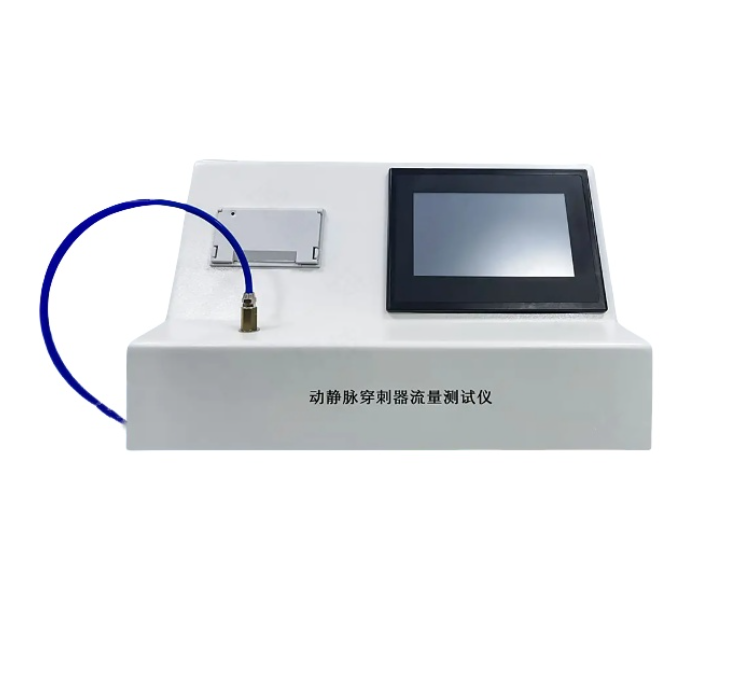
Principles of the Arteriovenous Puncture Device Flow Tester
The Arteriovenous Puncture Device Flow Tester is a specialized instrument designed to measure the flow performance of arteriovenous puncture devices under specific conditions. Its operating principle is based on fluid mechanics and electronic measurement technology. By simulating the human vascular environment, the instrument performs flow tests on puncture devices.
During the testing process, the instrument records flow data from the puncture device under different pressures, flow rates, and liquid properties, thereby evaluating its performance.
Functions of the Arteriovenous Puncture Device Flow Tester
1. Flow Measurement: The Arteriovenous Puncture Device Flow Tester can accurately measure flow rates under different test conditions, providing reliable data for evaluating the performance of puncture devices.
2. Pressure Monitoring: Built-in pressure sensors can monitor pressure changes in real time during testing, helping ensure the accuracy of test data.
3. Data Recording and Analysis: The tester features data recording capabilities, automatically stores test data, and supports data analysis and processing through software to generate detailed test reports.
4. Quality Control: Testing puncture devices with a flow tester enables quality inspection and helps ensure that product quality complies with relevant standards and requirements.
Operating Procedures for the Arteriovenous Puncture Device Flow Tester
Operating Procedure
1. Preparation: Connect the tester to the puncture device and ensure that all connections are secure. Prepare the appropriate test liquid and pressure source according to the testing requirements.
2. Test Parameter Setting: Set the test parameters on the tester according to the test requirements, such as the pressure range and flow rate range.
3. Start Testing: Start the tester to begin the test. During the testing process, the instrument automatically records the flow data of the puncture device and monitors pressure changes in real time.
4. Data Analysis: After the test is completed, analyze and process the test data using the software to generate a detailed test report.
Precautions for Use
1.Correct Connection: Ensure that the tester and the puncture device are connected correctly and securely to prevent leakage or disconnection during testing.
2.Calibration and Warm-Up: Calibrate and warm up the tester before testing to ensure the accuracy of the test results.
3.Data Monitoring: During testing, monitor the tester's display to ensure that the test data remain within the normal range. If abnormal data are detected, stop the test immediately and investigate the cause.
4.Cleaning and Maintenance: After testing, clean and maintain the tester to keep it in good working condition.
Applications of the Arteriovenous Puncture Device Flow Tester in the Medical Field
1. Quality Control in Puncture Device Manufacturing: During the manufacturing process, the flow tester can be used to inspect the quality of puncture devices and ensure that products meet relevant standards and requirements, thereby improving product reliability and safety.
2. Clinical Use in Medical Institutions: Medical institutions can use flow testers to conduct regular inspections of puncture devices to ensure that they can deliver liquids accurately and safely during use. This is of great significance for improving medical quality and ensuring patient safety.
3. Scientific Research: The flow tester can also be used in scientific research, such as investigating the effects of different materials and structural designs on the flow performance of puncture devices. Such research can continuously optimize puncture device designs and manufacturing processes, improving their performance and effectiveness.
Future Development Trends of the Arteriovenous Puncture Device Flow Tester
With the continuous development of medical technology and the growing demand for medical services, the Arteriovenous Puncture Device Flow Tester is expected to demonstrate the following development trends:
1. Intelligence: Future flow testers will place greater emphasis on intelligent design. By integrating more sensors and advanced data processing technologies, they will enable more accurate and intelligent flow testing.
2. Versatility: To accommodate different clinical requirements, future flow testers will support more testing modes and parameter settings, meeting the testing needs of puncture devices with different specifications and models.
3. Portability: To facilitate clinical use, future flow testers will focus more on portable designs, reducing equipment size and weight to enable medical personnel to perform tests conveniently whenever and wherever needed.
4. Environmental Protection and Energy Efficiency: Future flow testers will place greater emphasis on environmentally friendly and energy-efficient designs, adopting more sustainable materials and energy-saving technologies to reduce energy consumption and environmental impact.
Conclusion
The Arteriovenous Puncture Device Flow Tester is an important testing instrument in the medical field and plays a significant role in ensuring the flow performance of puncture devices. With the continuous advancement of medical technology and the growing demand for medical services, future flow testers will increasingly emphasize intelligent, versatile, portable, and environmentally friendly energy-efficient designs, providing more reliable and efficient support for the development of the medical industry.
Previous: What are the advantages of a vacuum blood collection tube suction volume tester?
N e x t : the last page
