





How Does a Blood Bag Drainage Tester Ensure Safety?
2026/11/16
Share:

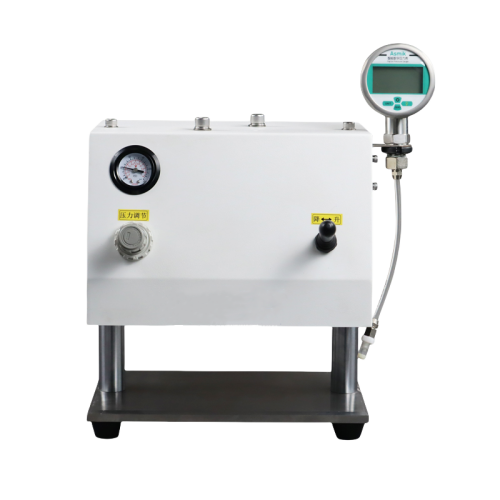
Working Principle: Accurate Testing Through Realistic Simulation
The testing process of the Blood Bag Pressure and Drainage Tester consists of four major steps: sample preparation, pressure loading, drainage verification, and data recording. The entire process simulates the actual pressure conditions encountered during clinical blood transfusion.
1. Sample Preparation
Fill the blood bag under test with water at (23 ± 5)°C to its nominal capacity to simulate blood. Connect the blood transfusion outlet to a transfusion set complying with GB 8369 and ensure that the tubing is unobstructed.
2. Pressure Loading
Place the blood bag inside the transparent pressure chamber of the tester. The pneumatic system introduces compressed air into the chamber, gradually increasing the pressure applied to the blood bag to the preset value, typically 50 kPa to 100 kPa above atmospheric pressure, to simulate pressure variations during blood transfusion.
3. Drainage Verification
Maintain the pressure at a stable level and observe the drainage of liquid from the blood bag. If the blood bag can be completely drained within the specified time, such as 2 minutes, without residual air bubbles or liquid leakage, it is considered to meet the specified requirements.
4. Data Recording
The tester continuously monitors pressure variations through a high-precision pressure sensor and records the pressure-time curve. It automatically determines whether the test results meet the applicable requirements and stores the test data for subsequent printing or export.
Key Technical Features: Accuracy, Safety, and Intelligence
1. High-Precision Pressure Control
The instrument adopts a pressure sensor with an accuracy class of 0.1 or better, with a pressure measurement error of ≤ ±0.5% FS (full scale), ensuring accurate pressure loading.
It supports adjustable pressure loading rates, such as 1–500 mm/min, to simulate the pressure variation profile encountered during actual blood transfusion.
2. Visual Drainage Observation
The tester is equipped with a transparent pressure chamber, such as one made of polycarbonate, allowing operators to directly observe liquid drainage from the blood bag and check for air bubble leakage at sealing areas, including bag welds and tubing connections.
This enables both qualitative and quantitative evaluation of blood bag performance.
3. Intelligent Data Management
The instrument features a 7-inch touchscreen human-machine interface, supporting parameter configuration, including pressure values, holding time, and drainage time, as well as real-time data display and historical data retrieval.
It is equipped with an onboard printer that automatically generates test reports containing pressure curves, drainage results, testing time, and other relevant information, supporting quality management practices in accordance with GMP/GSP requirements.
4. Multiple Safety Protection Functions
The tester incorporates multiple safety protection mechanisms, including:
Overpressure protection: Automatically releases pressure when it exceeds the preset value by 10%.
Safety door interlock: Prevents accidental pressurization of the chamber when the safety door is not properly closed.
Protective enclosure: Protects operators from potential hazards caused by blood bag rupture during testing.
These features ensure operational safety throughout the testing process.
Main Technical Parameters: Suitable for Different Testing Requirements
Technical parameters may vary slightly among manufacturers. The following specifications represent a typical configuration of a mainstream model.
|
Parameter |
Specification |
|---|---|
|
Operating Interface |
Chinese / English |
|
Pressure Range |
0–100 kPa (higher pressure ranges, such as 200 kPa, can be customized for special blood bags) |
|
Pressure Accuracy |
±0.5% FS |
|
Pressure Plate Dimensions |
200 × 200 mm (for conventional blood bags) or 360 × 260 mm (for larger blood bags, such as apheresis bags) |
|
Test Time |
0.1 s–999.9 min, adjustable |
|
Air Supply Requirement |
Compressed air, 0.5–0.8 MPa |
|
Power Supply |
AC 90–240 V, 50 Hz |
|
Net Weight |
19 kg (compact model with good portability) |
|
Overall Dimensions |
430 × 390 × 270 mm |
|
Total Power |
70 W |
|
Programmable Controller |
PLC + ARM |
|
Touchscreen |
7-inch K600+ core, dot-matrix display, 65 colors, 800 × 480 resolution |
|
Sensor |
High-precision pressure sensor |
|
Pressure Measurement Mechanism |
Built-in |
|
Printer |
Onboard dot matrix printer |
Applicable Standards and Testing Scenarios: Ensuring Compliance and Comprehensive Quality Control
1. Applicable Standards
The instrument is designed with reference to the following standards:
GB 14232.1-2020: Plastics Containers for Human Blood and Blood Components — Part 1: Conventional Blood Bags
YY/T 0636.1-2013: Medical Suction Equipment — Part 1: Safety Requirements for Electrically Powered Suction Equipment (related to suction pressure testing in certain applications)
ISO 10079-1:2015: Medical Suction Equipment — Part 1: Electrically Powered Suction Equipment
These standards provide relevant technical references for ensuring the compliance and reliability of testing results.
2. Application Scenarios
Blood Bag Manufacturers
Used for sampling inspection or full inspection of the pressure-assisted drainage performance of blood bags to ensure that products meet applicable quality requirements and prevent nonconforming products from entering the market.
Hospital Transfusion Departments
Used for acceptance testing of purchased blood bags and periodic sampling inspection of stored blood bags to help ensure the safety of clinical blood transfusion.
Third-Party Testing Laboratories
Used for quality evaluation and testing of blood bag products, supporting certification activities such as ISO 9001 and CE certification and providing objective and reliable testing data.
Application Value: A Safety Barrier from Manufacturing to Clinical Use
1. Benefits for Manufacturers
By implementing rigorous blood bag quality control using the tester, manufacturers can reduce product returns and recalls caused by poor drainage performance or insufficient pressure resistance, enhance corporate reputation, and optimize manufacturing processes.
The testing results can also help manufacturers improve production processes, including blood bag material selection and welding techniques, thereby reducing production costs and improving product quality.
2. Benefits for Hospital Transfusion Departments
Testing helps ensure that blood bags used in clinical practice are free from leakage and provide smooth drainage, reducing the risk of air bubbles or residual blood during transfusion and helping safeguard patient safety.
It also improves transfusion efficiency by minimizing delays caused by blood bag quality issues, allowing medical personnel to provide timely treatment and potentially saving valuable time in emergency situations.
3. Benefits for Industry Development
The Blood Bag Pressure and Drainage Tester promotes standardized and regulated blood bag manufacturing, improves overall industry quality levels, and provides technical support for regulatory authorities in supervising blood bag quality and ensuring medical blood safety.
Previous: What is a prefilled syringe plunger force tester?
N e x t : the last page
