





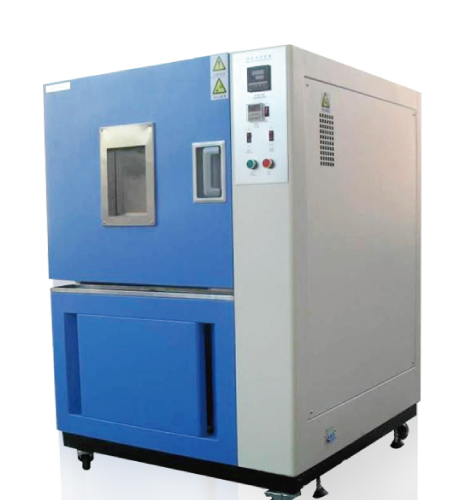
Xenon Arc Weathering Test Chamber for Material Aging Tests
2025/11/25
Share:

Product Applications (Applications)
A Xenon Lamp Aging Test Chamber is designed to simulate full-spectrum sunlight using a xenon arc lamp, enabling accelerated aging evaluation of materials exposed to outdoor environments. It helps manufacturers assess color stability, aging resistance, and durability under light, temperature, humidity, and rain conditions.
Typical Applications
Lightfastness & Weathering Tests
Evaluate color fading, gloss loss, cracking, and mechanical degradation under long-term light exposure.
Automotive Materials
Testing automotive textiles, plastic trims, dashboards, rubber seals, coatings, and interior parts.
Plastics & Rubber
PE, PP, PVC, ABS, silicone rubber, sealing rings, outdoor plastic parts.
Coatings & Paints
Powder coatings, automotive coatings, industrial coatings, wood coatings.
Textiles & Dyes
Lightfastness testing for fabrics, upholstery fibers, dyed materials.
Construction Materials
PVC boards, exterior wall panels, flooring, waterproof materials.
Electronics & Optical Components
Plastic housings, light-transmitting materials, lenses, display covers.
Compliant Standards (Standards)
The Xenon Lamp Aging Test Chamber meets a wide range of international weathering standards, including:
ISO Standards
ISO 4892-1 / 4892-2 — Plastics—Methods of exposure to laboratory light sources
ISO 105-B02 / B04 — Textiles—Tests for colorfastness to light
ISO 11341 — Paints and varnishes—Artificial weathering using xenon arc lamps
ASTM Standards
ASTM G155 — Xenon arc light exposure of non-metallic materials
ASTM D2565 — Weathering of plastics
ASTM D4459 — Xenon-arc exposure of plastics
ASTM D7869 — Weathering for transportation coatings
GB / Chinese National Standards
GB/T 16422.1 / 16422.2 — Plastics—Lab light source exposure
GB/T 8427 — Textiles—Colorfastness to artificial weathering (Xenon-arc lamp)
GB/T 1865 — Coatings—Xenon lamp weathering test
Frequently Asked Questions (FAQ)
Q1: What is the purpose of using a xenon arc lamp?
A xenon arc lamp simulates the full spectrum of natural sunlight, including UV, visible, and infrared radiation. This enables accurate prediction of outdoor product aging.
Q2: What materials can be tested in a xenon aging chamber?
It is suitable for plastics, rubber, textiles, leather, coatings, automotive parts, packaging materials, and construction materials.
Q3: How long is one standard test cycle?
Test cycles vary depending on the standard:
ISO 4892: typically 102 minutes of light + 18 minutes of light & spray
ASTM G155: multiple cycle options
The testing period can range from 24 hours to 1,000+ hours depending on aging requirements.
Q4: Is water spray necessary during testing?
Yes. Many weathering standards require water spray or rain simulation to replicate natural erosion, thermal shock, and humidity cycling.
Q5: What type of filters are used in xenon lamps?
Different filters simulate different natural environments:
Daylight filters — outdoor exposure
Window glass filters — indoor sunlight exposure
Extended UV filters — special accelerated tests
Q6: How often should the xenon lamp be replaced?
Typically every 1,500–2,000 hours, depending on the model and intensity.
Q7: Do xenon chambers require external water purification?
Yes. Most chambers require deionized (DI) or purified water to ensure accurate humidity and spray functions.
<script src="chrome-extension://lmnganadkecefnhncokdlaohlkneihio/enable.js"> </script>
Previous: What is the role of the xenon lamp aging test chamber in accelerated aging testi
N e x t : Cable Abrasion Resistance Tester for Quality Control and R&D
