





What is Anatomy Cloth Burling Machine?
2026/01/05
Share:

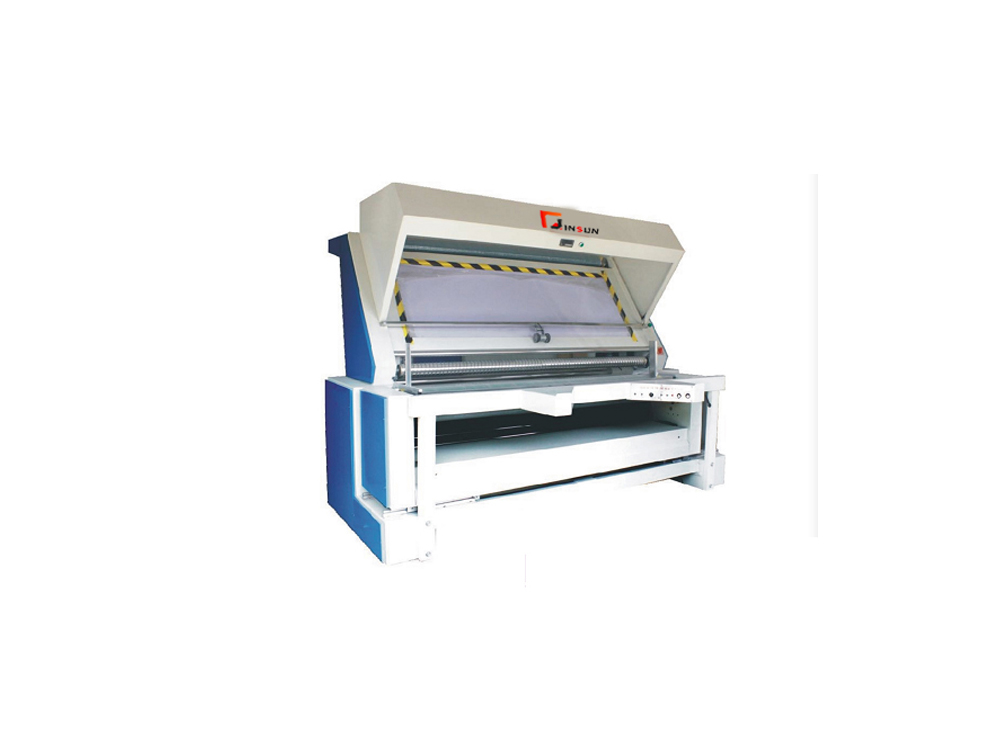
Equipment Structure
The structural design of the cutting and finishing machine fully embodies the balance between functionality and flexibility in industrial equipment. Its main frame is welded from high-strength steel, with overall dimensions of 2700×2400×2000 mm (length×width×height) and a total weight of 650 kg, ensuring stability during high-speed operation. The core modules of the equipment include:
Cutting System: Equipped with an adjustable-diameter circular cutter head, the cutter head speed is controlled by a variable frequency motor, reaching a maximum of 50 m/min. It can precisely cut cylindrical fabrics (such as knitted fabrics, seamless underwear, etc.), flattening them after cutting. A negative pressure adsorption device is installed below the cutter head to prevent fabric displacement during cutting, ensuring that the straightness error of the cutting line is less than 1 mm. Finishing System: Consists of two sets of pressure rollers, the upper roller being made of rubber and the lower roller of metal. The pressure is regulated by air pressure to ensure the fabric remains smooth and wrinkle-free during the finishing process. The roller surfaces are specially treated to have a low coefficient of friction, preventing fabric fuzzing.
Take-up System: Employs friction-based automatic take-up technology. A motor drives the take-up rollers to rotate, working in conjunction with a tension control system to achieve uniform fabric take-up. The maximum take-up diameter is 500 mm, and it supports forward and reverse rotation for easy operation in subsequent processes.
Inspection System: Integrates an infrared edge detection device to monitor the fabric edge position in real time and automatically adjust the inspection line position, ensuring the inspection width error is controlled within 5-8 mm. It also features LED lighting boxes; the upper and lower light boxes utilize a composite structure of high-transmittance acrylic panels and frosted glass, providing uniform, shadow-free lighting for easy inspection of fabric surface defects.
Features
The design of the cutting and finishing machine closely aligns with the textile industry's dual demands for efficiency and quality. Its core features can be summarized as "three automatics and one intelligent feature":
Automatic Cutting and Rewinding: The equipment supports one-button start, automating the entire process from fabric feeding, cutting, finishing to rewinding. Taking knitted cylindrical fabric as an example, the machine can complete the cutting and finishing of a roll of fabric with a diameter of 500 mm and a length of 50 meters within 2 minutes, improving efficiency by 8 times compared to manual operation.
Automatic Edge Detection and Correction: Infrared sensors monitor the fabric edge position in real time. When edge deviation is detected, the system automatically adjusts the cutter head position to ensure that the cutting line always unfolds along the fabric's center line. Actual test data from a factory shows that this function increases fabric utilization from 92% to 98%, significantly reducing raw material waste.
Automatic Encoding and Traceability: The equipment is equipped with an encoder that records information such as production time, batch, and cutting parameters for each roll of fabric. Data can be exported via a USB interface for easy production management and traceability. Some high-end models also support integration with the factory's MES system, enabling real-time uploading of production data.
Intelligent Tension Control: The system monitors the winding tension in real time via pressure sensors, automatically adjusting the motor speed to ensure constant tension. For example, when processing elastic fabrics, tension fluctuations can be controlled within ±0.5 Newtons, preventing fabric deformation due to uneven tension.
Technical Advantages
The technical advantages of the cutting and finishing machine lie in its precise solutions to pain points in textile production:
High-Precision Cutting: The cutter head achieves a cutting accuracy of ±0.5 mm, far exceeding the industry average (±2 mm), making it particularly suitable for cutting high-count, high-density fabrics. For example, when processing combed cotton fabrics of 60 count or higher, the equipment ensures straight, serrated cutting lines, preventing thread breakage in subsequent processes due to uneven cutting.
High Efficiency and Energy Saving: The equipment consumes only 2.0 kW, saving 30% more energy than traditional models. Its variable frequency motor automatically adjusts its speed according to the fabric material and thickness. For example, when processing thin fabrics, the motor speed can be reduced to 10 m/min, ensuring cutting quality while reducing energy consumption.
Safety Protection: The equipment casing is coated with an anti-static coating, and the internal wiring is equipped with a grounding device to prevent safety hazards caused by static sparks. Additionally, the cutter head cover is equipped with a safety lock; if the cover is opened during operation, the system immediately stops to prevent accidental contact with the cutter head.
Easy Maintenance: The equipment adopts a modular design, allowing for quick disassembly and replacement of key components (such as the cutter head, pressure rollers, and sensors). For example, if the cutter head wears out, operators can replace it within 5 minutes without specialized tools, minimizing downtime.
Industry Applications
The application scenarios of the cutting and finishing machine are widely covered throughout the entire textile industry chain. Its technical characteristics make it a core piece of equipment in many production stages:
Apparel Manufacturing: In knitwear production, the machine can quickly cut and flatten cylindrical fabrics, providing smooth greige fabric for subsequent cutting and sewing processes. Actual test data from a large garment factory shows that after introducing this equipment, cutting efficiency increased by 40%, and the defect rate due to uneven greige fabric decreased from 5% to 1%.
Home Textiles: For large-sized fabrics such as bed sheets and duvet covers, the machine can achieve high-speed cutting and finishing, ensuring stable fabric width. After adopting this equipment, a home textile company reduced product width deviation from ±3 cm to ±1 cm, and customer complaint rate decreased by 60%.
Industrial Textiles: In the production of products with high cleanliness requirements, such as automotive interiors and medical protective clothing, the machine's LED lighting box and anti-static design ensure a clean production environment. For example, tests conducted by a medical supplies company showed that this equipment can reduce the concentration of airborne dust in the workshop from 15 mg/m³ to 5 mg/m³, meeting GMP certification standards.
Technological Upgrade Trends
With the advancement of Industry 4.0 and sustainable development concepts, lining and finishing machines are upgrading towards "intelligent and green" technologies. Some high-end models have integrated AI vision inspection systems, which can automatically identify fabric surface defects (such as holes, oil stains, etc.) and mark the location of defects for easy subsequent repair. Simultaneously, equipment manufacturers are exploring the use of solar power and energy recovery technologies to further reduce equipment energy consumption. For example, a new type of equipment can power its lighting system by recovering the kinetic energy generated during the winding process, achieving energy self-sufficiency.
The Anatomy Cloth Burling Machine, through its modular design, integration of automated functions and intelligent technologies, has become a key tool for the textile industry to improve production efficiency, ensure product quality, and reduce production costs. Its high-precision lining inspection, high energy efficiency, and safety protection features not only solve the problems of low efficiency and poor accuracy of traditional lining inspection methods but also drive the industry's transformation towards intelligent and green manufacturing through technological upgrades. In the future, with the continuous breakthroughs in materials science and IoT technology, this equipment will play a greater role in the clean production and intelligent management of the textile industry, helping the global textile industry move towards a higher level of sustainable development.
Previous: What is the core value of the Fat End Type of Thread EndSuction Machine?
N e x t : Fold Tester,Chrysler LP-463KB-13-01
