





Fold Tester,Chrysler LP-463KB-13-01
2026/01/06
Share:

Technical Principle
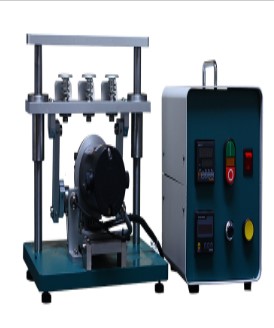
The core working principle of the folding tester is based on a "bidirectional repeated folding under fixed tension" mechanism. Taking the MIT-type folding endurance tester as an example, it applies a periodic, constant-speed folding force to the sample through a mechanical transmission system. The sample reciprocates at a fixed angle of 135° or 180° until it breaks. The instrument's built-in counter automatically records the number of folds before breakage; this value directly reflects the material's folding endurance. Modern equipment generally adopts a dual-servo drive system, achieving multi-angle linkage through synchronous movement of the upper and lower molds, accurately simulating more than 20 real-world usage scenarios, including U-shaped folds within the 0-180° range and dynamic stops within the 30°-150° range.
In terms of structural innovation, the new equipment adopts a four-way staggered motion mechanism design, achieving four-axis linkage (up, down, left, and right) through dual electric servo cylinders. This architecture can simultaneously apply composite loads of shear force, bending moment, and torque, more realistically replicating the multi-dimensional stress state experienced by flexible displays during opening and closing compared to traditional unidirectional bending equipment. One model of the equipment, through orthogonal force field superposition technology, supports 12 complex stress condition combinations, meeting the stringent testing requirements of aerospace-grade flexible devices.
Technological Breakthroughs and Performance Improvements
1. Dynamic Compensation and Precision Control
The latest generation of equipment introduces dynamic staggered motion compensation technology. By collecting pressure and displacement data in real time and combining it with AI algorithms, it completes micro-displacement compensation at the ±0.05mm level within 0.1 seconds. A micro-stress sensing module developed by a research team improves stress acquisition accuracy to ±0.001N, accurately capturing potential loss risks at screen edges and hinge connections. In terms of displacement control, the combination of a precision lead screw and a photoelectric encoder achieves micron-level control accuracy, with a displacement resolution as high as 0.001mm.
2. Environmental Simulation and Scenario Expansion
Environmental adaptability testing has become a key development direction. One model of equipment integrates a high and low temperature environment simulation system, enabling wide temperature range control from -70℃ to 150℃, accurately simulating the material's performance under extreme climatic conditions. For the actual use scenarios of foldable screen phones, the equipment has developed a dynamic dwell function, allowing users to arbitrarily set the dwell angle within the range of 30°-150°, and supporting freely adjustable dwell time from 0.1 seconds to 10 minutes.
3. Efficiency Optimization and Data Intelligence
Multi-station testing systems have become standard. One model of equipment supports simultaneous testing of 6 groups of samples, with each group counted independently, improving testing efficiency by 300%. The intelligent closed-loop control system collects data in real time through force sensors, dynamically adjusting the applied force to compensate for stress changes during material deformation. In terms of data processing, the equipment is equipped with intelligent analysis software that automatically generates detailed reports containing parameters such as stress-strain curves and fatigue life distribution, and supports integration with MES systems for data traceability.
Application Scenarios
1. Flexible Display Material Testing
In ultra-thin flexible glass (UTG) testing, the equipment needs to simulate hundreds of thousands of folding cycles. One model of equipment, through a three-dimensional staggered bending architecture, controls the angle error within ±0.2°, significantly improving bending consistency. Test data shows that equipment using dynamic compensation technology can reduce the repeatability error of UTG material bending life test results from 15% to within 3%.
2. Wearable Device Development
For components such as smartwatch straps, the equipment has developed a miniature testing fixture that can accommodate samples with a width of 5-50mm. By adjusting the folding speed (5-65 times/minute) and tension (0.5-20N), fatigue damage under different motion conditions can be simulated. A research institution used this equipment to optimize the strap material formula, increasing the product's folding resistance from 50.000 cycles to 200.000 cycles.
3. Development of New Packaging Materials
In corrugated cardboard testing, the equipment establishes a material performance database by adjusting the folding angle (90°/135°/180°) and humidity control (30%-90%RH). One company used the test data to optimize its production process, increasing the edge crush strength of cartons by 18% while reducing raw material consumption by 12%. In plastic film testing, the equipment can simultaneously monitor parameters such as force changes and energy consumption, providing a basis for film thickness design.
Standards
ISO 5626. "Determination of folding endurance of paper and paperboard (MIT folding endurance tester method)," developed by the International Organization for Standardization (ISO), is an industry-standard standard. It specifies the test conditions as follows: temperature 23±1℃, humidity 50±2%RH, folding angle 135°±2°, and folding speed 175±10 times/minute. For flexible electronic materials, JIS C6471 requires 50.000 folding cycles, while UL 817 specifies functional integrity testing after 5.000 folds.
The domestic standard GB/T 457-2008 provides detailed specifications for the folding endurance test of cardboard: the sample size is 15×100mm, the pretreatment conditions are equilibration for 48 hours at 23±1℃ and 65±2%RH, and the test tension is divided into two levels based on the material's basis weight: 7.55N (<150g/m²) and 9.81N (≥150g/m²). A new type of equipment, while adhering to the standard, extends the testing speed range to 10-300 times/minute to meet the testing needs of different materials.
Development Trends
With the advancement of materials science, folding testers are developing towards intelligence and modularity. The introduction of AI algorithms enables the equipment to have self-learning capabilities, automatically optimizing test parameters based on historical data. Modular design supports quick replacement of fixtures and sensors, allowing a single device to perform multiple mechanical tests such as bending, puncture, and impact. In the field of flexible electronics, equipment manufacturers are collaborating with end-user manufacturers to develop integrated "testing + data analysis" solutions, accelerating new product development cycles by establishing material performance databases.
Industry forecasts predict that the global folding tester market will exceed $800 million by 2027. with a compound annual growth rate of 12.5%. Technological breakthroughs are not only driving the development of emerging industries such as flexible displays and wearable devices, but also providing technological support for product upgrades in traditional industries such as packaging and textiles. Under the "Made in China 2025" strategy, domestically produced equipment has achieved breakthroughs in key technologies such as precision control and environmental simulation, and is gradually replacing imported products to occupy the high-end market.
From the laboratory to the production line, folding testers, as a "quality benchmark" for assessing material durability, are redefining the reliability standards of flexible products. With the accelerated pace of technological iteration, this type of equipment will continue to inject core momentum into material innovation and industrial upgrading, propelling human society towards a more flexible and durable future.
Previous: What is Anatomy Cloth Burling Machine?
N e x t : How to measure clamping force?
