





How to measure clamping force?
2026/01/06
Share:

Technical Principles
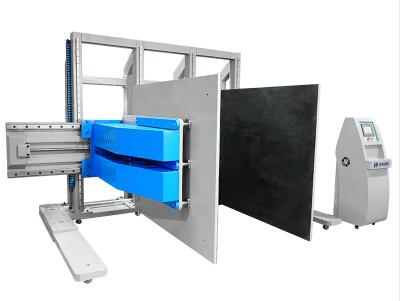
The core principle of a clamping force testing machine is to apply controllable pressure to the object being tested by simulating clamping actions under actual working conditions and to collect force data in real time. Its technical implementation can be divided into three main modules:
Power System
Electric servo drive is the mainstream solution. A high-precision motor drives the clamp to perform linear or rotary motion, achieving precise pressure application. For example, one model of equipment uses dual servo motors for synchronous control, achieving a force resolution of 0.1N, meeting the testing needs of micro-parts. In the field of packaging testing, hydraulic systems are widely used due to their high-tonnage output capacity. One device has a maximum clamping force of 3000kg, capable of simulating the stacking pressure of heavy goods in automated warehousing.
Sensing System
Pressure sensors are the core component for data acquisition. Strain gauge sensors dominate general testing due to their low cost and fast response; while piezoelectric sensors, with their high rigidity and nanometer-level resolution, are the preferred choice for threaded fastener testing. A research team developed a bolt clamping force testing device that, by machining a plane in the middle section of the screw and attaching a uniaxial strain gauge, combined with the NI DAQ data acquisition system, achieves dynamic monitoring of clamping force under real-world working conditions, with testing errors controlled within ±2%.
Control System
Modern equipment generally uses a combination of touchscreen and PLC control, supporting programming of multiple parameters such as force, displacement, and speed. For example, a packaging testing machine can be set to a clamping speed of 10-300 mm/min and maintain constant pressure within a range of 15 seconds to 1 minute, simulating continuous loads under different transportation scenarios. Some high-end equipment also integrates AI algorithms, automatically optimizing test parameters through learning from historical data, improving testing efficiency by 40%.
Equipment Classification
Based on different application scenarios and test objects, clamping force testing machines can be subdivided into the following four categories:
Packaging Material Testing Machine
Focusing on simulating the stacking pressure of goods during warehousing and transportation, testing standards cover ASTM D6055. ISTA 6 Amazon, etc. One device uses a large 48-inch × 48-inch clamping platform, supporting sample testing up to 600kg, and evaluates the fatigue resistance of packaging materials through 10-cycle clamping experiments. Its key features include adjustable clamping width (200-2000mm) and height (0-1000mm), adaptable to various types of packaging from electronics to furniture.
Threaded Fastener Testing Machine
Designed according to ISO 16047 standards, it verifies the preload effect of bolts through a torque-clamping force conversion model. A new type of equipment uses a piezoelectric force sensor linked with a torque sensor to simultaneously measure the friction coefficient and clamping force attenuation rate between threaded pairs. Experimental data shows that this equipment can accurately capture torque fluctuations of 0.1 N·m in 5000 cycles of testing, providing crucial data support for high-reliability fields such as wind power and automobiles.
Automated Warehouse Testing Machine
Developed for the gripper performance of forklifts, AGVs, and other equipment, this machine simulates impact loads during the gripping and releasing of goods. One device uses dual electric cylinders to drive the rapid opening and closing of the grippers and integrates a high-speed camera to record the deformation process of the goods. Tests show that at a gripping speed of 0.5 m/s, the equipment can clearly capture the transient stress distribution of packaging materials, providing a visual basis for gripper design optimization.
Micro-parts Testing Machine
Utilizing microscopic sensing technology and nanometer-level displacement control, this machine meets the precision testing needs of fields such as electronic components and medical devices. One device uses a laser interferometer to achieve displacement monitoring of 0.001 mm. Combined with a piezoresistive sensor, it can complete tests within a micro-force range of 0.01-10 N, with a resolution of 0.001 N, suitable for verifying the clamping force of micro-parts such as spring sheets and fiber optic connectors.
Testing Standards
Several standards developed by the International Organization for Standardization (ISO) and the American Society for Testing and Materials (ASTM) provide a general framework for clamping force testing:
ASTM D6055: Specifies a test method for packaging materials under horizontal pressure, requiring the clamping force to be applied for at least 15 seconds, and the specimen to be aligned with the leading edge of the clamp.
ISO 16047: Defines test conditions for the torque-clamping force relationship for threaded fasteners, including control requirements for parameters such as lubrication status and assembly speed.
ISA 6 Amazon: Simulates e-commerce logistics scenarios, requiring packaging to remain undeformed under 300 kg pressure for 1 hour and undergo 6 cycles of clamping tests.
Industry-specific standards further refine the testing requirements. For example, the automotive industry requires bolt clamping force testing to be conducted in a temperature-varying environment from -40°C to 150°C to verify connection reliability under extreme conditions; the food packaging industry requires testing machines to be equipped with sterile clamps to avoid cross-contamination.
Industry Applications
Packaging Industry
A company optimized the structure of corrugated cardboard boxes using a clamping force testing machine, increasing edge crush strength by 18% while reducing raw material usage by 12%. In e-commerce logistics, the equipment helped the company reduce packaging damage rate from 3% to 0.5%, saving over ten million yuan annually in return costs.
Automotive Manufacturing
Precise control of bolt clamping force directly affects vehicle safety. A car manufacturer adopted a dynamic torque-clamping force testing system, reducing the preload fluctuation range of engine connecting bolts from ±15% to ±5%, significantly improving NVH performance.
Electronics Manufacturing
The folding test of flexible displays relies on the coordinated control of clamping force and bending angle. A device achieved 0.1° angle accuracy through a four-way staggered mechanism, reducing the repeatability error of UTG glass bending life test results from 15% to 3%, accelerating product iteration cycles.
Aerospace
The tiny bolts of satellite components need to withstand extreme temperature differences in a vacuum environment. A certain testing machine integrates a thermal vacuum simulation system, capable of performing clamping force tests under conditions ranging from -70℃ to 150℃ and 10⁻⁶ Pa, providing data assurance for the reliability of spacecraft connections.
Technological Trends
With the advancement of Industry 4.0. clamping force testing machines are evolving in the following directions:
Intelligent Compensation: Real-time correction of errors such as fixture deformation and sensor drift through machine learning algorithms, making test data closer to real-world operating conditions.
Modular Design: Supporting rapid replacement of fixtures, sensors, and other components, enabling a single device to perform various mechanical tests such as bending, shearing, and impact.
Digital Twin: Combining finite element analysis (FEA) to construct virtual test models, reducing the number of physical prototype tests and shortening the R&D cycle.
From packaging materials to aerospace components, from macroscopic pressure to microscopic stress, clamping force testing machines are providing core support for quality control and innovative R&D in industrial production in a more precise and intelligent manner. With breakthroughs in materials science and sensing technology, this field will continue to drive the manufacturing industry towards higher reliability and efficiency.
Previous: Fold Tester,Chrysler LP-463KB-13-01
N e x t : What is the instrument for measuring differential pressure?
