





What is Maeser Water Penetration Tester?
2026/01/07
Share:

Working Principle
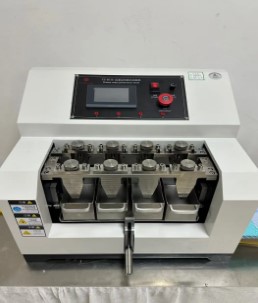
The core design of the Maeser water permeability tester is based on the dynamic bending test principle. Through the synergistic effect of mechanical motion and electrical induction, it achieves a quantitative assessment of the waterproofing performance of materials. Its workflow can be divided into three key stages:
Sample Preparation and Fixation
The test sample needs to be cut to standard dimensions (common specifications are 101.6×101.6mm or 114×114mm), folded into a U-shaped groove, and fixed at both ends in two V-shaped clamps. The clamps are designed with a closed-end structure to ensure that the sample forms a sealed space, which can hold a steel ball of standard weight (e.g., a steel ball with a diameter of 3mm and a weight of 135±5g). This design simulates the bending stress and internal pressure experienced by the shoe upper material during walking.
Dynamic Bending Test
The fixed clamp remains stationary, while the other clamp reciprocates at a constant speed of 90±5 rpm. The bending angle is divided into two modes according to the standard: Type 1 is 30±1°, and Type 2 is 32±1°. During repeated bending, microcracks gradually form on the surface and internal structure of the sample, providing channels for water penetration.
Penetration Detection and Data Recording
A conductive solution (such as deionized water) is injected into the test tank. When water molecules penetrate the sample surface, a current path is formed from the high-potential electrode through the sample to the low-potential electrode. The instrument immediately detects the current change through the electrode sensing system, automatically stops counting, and records the penetration time or number of bends. Some models also support visual observation to assist in judgment and ensure data accuracy.
Operating Procedures
To obtain repeatable test data, operators must strictly follow these steps:
Environment and Equipment Preparation
The test environment must be maintained at a temperature of 23±2℃ and a relative humidity of 50±5% to eliminate the influence of environmental factors on material properties. The equipment must be calibrated in advance, checking that parameters such as clamp radius (e.g., 7.5±0.5mm or 4mm) and swing displacement (25.4±1.3mm) meet the standards.
Sample Installation and Parameter Setting
Fold the sample and fix it to the clamp, ensuring there are no wrinkles or looseness. Select the bending angle type according to the test requirements, and set the upper limit of the number of tests (e.g., 999.999 times) or time limit. Some models support touch screen operation, allowing for intuitive monitoring of the test progress.
Test Execution and Result Reading
After starting the equipment, the clamp begins to reciprocate, and the instrument records the number of bends in real time. When the electrode senses a change in current or reaches the preset condition, the equipment automatically stops and displays the results. If water absorption needs to be analyzed, the sample mass can be weighed before and after the test to calculate the water absorption rate.
Data Recording and Report Generation
Test results must be recorded in detail, including sample number, number of bends, penetration time, environmental parameters, etc. Some models are equipped with data storage capabilities, which can export data to a computer to generate standardized reports, facilitating quality traceability and comparative analysis.
Application Scenarios
The Maeser water permeability tester has applications across multiple industries, and its dynamic testing characteristics make it a key device for assessing material durability:
Footwear Manufacturing
In the production of athletic and outdoor shoes, this instrument is used to test the waterproof performance of upper materials. For example, hiking boots need to withstand repeated impacts from rain and mud; Maeser testing can screen for high-performance materials that meet ISO 5403-2 or ASTM D2099 standards.
Leather and Synthetic Material R&D
Leather products (such as leather clothing and bags) are prone to mildew or deformation in humid environments. By simulating bending actions during daily use, the tester can assess the waterproofness of leather coatings, providing data support for formula optimization.
Flexible Fabrics and Composite Materials
Outdoor products such as tents and raincoats require long-term waterproofing. Maeser testing can quantify the permeability risk of fabrics after repeated folding, helping manufacturers select appropriate coating processes or fiber structures.
Automotive Interior Materials
Car seat fabrics undergo dynamic deformation when passengers enter and exit. The tester simulates this scenario, detecting the fabric's waterproof performance under bending conditions to ensure the cleanliness and durability of the interior.
Maintenance and Care
To ensure testing accuracy and equipment stability, daily maintenance should focus on the following aspects:
Cleaning and Rust Prevention
After each test, rinse the test tank and fixtures with deionized water to avoid salt or impurity residue. Metal parts should be regularly coated with anti-rust oil, especially the fixture contact surfaces and electrode areas.
Calibration and Verification
Calibrate the equipment quarterly using standard samples (such as reference materials with known penetration counts) to verify the accuracy of parameters such as bending angle and oscillation speed. If data deviation exceeds 5%, contact a professional organization for adjustment.
Replacement of Wear Parts
Components such as the rubber pads of the V-clamp and electrode induction wires are prone to wear due to frequent use and require regular inspection and replacement. It is recommended to keep commonly used spare parts on hand to avoid test interruptions due to component failure.
Storage and Transportation
When the equipment is not in use for extended periods, it should be covered with a dust cover and stored in a dry environment. During transportation, the clamps and test tanks must be secured to prevent vibration from causing displacement of precision components.
The Maeser water permeability tester provides a standardized solution for evaluating the waterproof performance of materials through a combination of dynamic simulation and precise testing. Its applications extend beyond quality control, driving material innovation in industries such as footwear and leather. By analyzing test data, manufacturers can specifically improve coating processes, fiber structures, or composite material formulations, ultimately enhancing the market competitiveness of their products. With technological advancements, the instrument may integrate more sensors and data analysis functions in the future, further simplifying the operation process and deepening the testing dimensions, injecting new momentum into the development of flexible materials.
Previous: What is a fabric blood penetration test?
N e x t : What is Bally Waterproofness Tester?
