





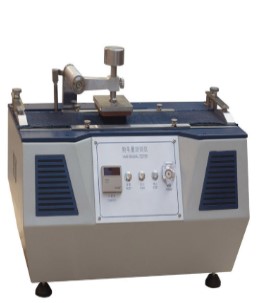
Hair Loss Tester,FZT60029
2026/01/07
Share:

Working Principle
The core design of the Hair Loss Tester is based on a closed-loop logic of "cyclic testing - signal acquisition - data output." Its technical architecture can be divided into three key modules:
Digital Counter Control Module
The instrument has a built-in high-precision digital counter that supports user-preset cycle counts (e.g., 1000 times, 5000 times). A stepper motor drives the test platform in reciprocating motion. After the cycle count is set, the counter automatically records the number of movements and triggers a stop signal when the preset value is reached, ensuring standardized testing. For example, when testing a brand of wool blanket, the user can set the number of cycles to 3000. The instrument will strictly adhere to this parameter to avoid human error.
Hall Element Signal Acquisition Module
The Hall element, as the core sensor, is mounted on the motion axis of the testing platform. When the wool blanket sheds hair during cyclic friction, the shed fibers trigger a change in the magnetic field of the Hall element, generating an electrical signal. This signal, after amplification and filtering, is transmitted to a digital counter for counting. The Hall element's sensitivity is down to the 0.1mg level, accurately capturing minute amounts of hair shed and ensuring data reliability.
LED Data Display Module
The acquired hair removal data is displayed in real time on an LED screen, supporting unit switching (e.g., "hair removal/cycle" or "mg/cycle"). For example, in a test, the LED displays "Hair removal amount: 12 hairs/1000 cycles," allowing the user to intuitively judge the wool blanket's hair removal performance. In addition, the instrument is equipped with data storage capabilities, recording multiple sets of test results for comparative analysis.
Operating Instructions
To obtain repeatable test data, operators must strictly follow these steps:
Sample Preparation and Fixation
Cut the wool blanket to be tested to a standard size (e.g., 20cm × 20cm) and fix it flat in the clamps of the testing platform. The clamps are made of silicone to avoid mechanical damage to the wool blanket and ensure that the sample does not shift during the test. For example, when testing a hand-knitted wool blanket, the operator needs to use silicone clamps to fix the four corners to prevent the edges from curling and affecting the test results.
Parameter Setting and Calibration
Set the number of cycles, movement speed (e.g., 30 times/minute), and test duration through the instrument control panel. Calibration is required before first use: Fix a blank sample (no hair removal) on the platform, run 100 cycles, and confirm that the LED displays "Hair Removal: 0 hairs". If there is an error, adjust the Hall element sensitivity.
Starting the Test and Data Recording
After pressing the start button, the testing platform begins to reciprocate, and the LED displays the amount of hair removed in real time. After the test is completed, the instrument automatically stops and saves the data. For example, in a test, the LED displays "Hair Loss: 8 hairs/2000 cycles." The operator needs to record this data and note the test conditions (e.g., ambient temperature 25℃, humidity 60%).
Multiple Tests and Result Analysis
To improve data accuracy, it is recommended to perform three sets of repeated tests on the same sample and take the average as the final result. For example, if a brand of wool blanket has three test results of 7. 9. and 8 hairs respectively, with an average of 8 hairs/2000 cycles, its hair loss performance can be determined to meet industry standards.
Practical Applications
The Hair Loss Tester's applications cover the entire textile industry chain. Its high precision and stability provide crucial support for quality control and product innovation:
Raw Material Screening and Process Optimization
In the wool raw material procurement stage, by testing the hair loss of different batches of wool, high-quality raw materials can be screened. For example, a company found that the hair loss of a certain batch of wool was 30% higher than the average. Analysis revealed that its fiber length was shorter, so the procurement standards were adjusted to improve product quality from the source. In knitting process optimization, the instrument can compare the amount of hair removed by different knitting techniques (such as plain knit and rib knit), providing data support for process improvement.
Finished Product Quality Inspection and Grading
Based on hair removal standards, wool blankets are classified into superior grade (≤5 hairs/2000 times), first grade (6-10 hairs/2000 times), and qualified grade (11-15 hairs/2000 times). A quality inspection agency used the Hair Loss Tester to conduct random inspections of wool blankets on the market and found that some products exceeded the hair removal standard. The agency promptly urged companies to rectify the issues, maintaining market order.
R&D Innovation and Performance Comparison
In the development of new wool blankets, the instrument can quantitatively evaluate the impact of different coating processes (such as silicone oil treatment and nano-coating) on hair removal. For example, a company developed a nano-coated wool blanket that reduced hair removal by 60% compared to traditional products. Using data from the Hair Loss Tester, the company successfully launched its product into the high-end market.
Maintenance and Care
To ensure long-term stable operation of the instrument, daily maintenance should focus on the following aspects:
Cleaning and Dust Prevention
After each test, use a soft brush to clean the wool fibers from the test platform and fixtures to prevent fiber accumulation from affecting the sensitivity of the Hall element. Regularly use compressed air to blow away dust from inside the instrument, especially in the gaps between the digital counter and the LED display.
Calibration and Verification
Calibrate the instrument quarterly using a standard sample (such as a wool blanket with a known amount of hair removed) to verify the accuracy of the cycle count and hair removal data. If the error exceeds 5%, contact a professional institution to adjust the Hall element parameters.
Replacement of Vulnerable Parts
Components such as silicone fixtures and stepper motor belts are prone to wear due to frequent use and need to be inspected and replaced regularly. It is recommended to keep commonly used spare parts on hand to avoid test interruptions due to component failure.
Storage and Transportation
When the instrument is not in use for a long period, it should be covered with a dust cover and stored in a dry environment (humidity ≤70%). During transportation, the test platform and fixtures must be secured to prevent vibration from causing displacement of precision components.
The Hair Loss Tester achieves high-precision automated detection of wool blanket shedding by integrating digital control and Hall effect sensing technology. Its standardized operating procedures, multi-scenario application value, and easy maintenance make it a powerful tool for quality control and product innovation in the textile industry. With technological advancements, the instrument may integrate more sensors (such as temperature and humidity sensors) in the future, further expanding its detection capabilities and injecting new momentum into the upgrading of textile quality.
Previous: What is a Multi-function Burling Machine?
N e x t : What is the difference between crease resistance and crease recovery?
