





Applications and advantages of the near-infrared spectroscopy analyzer
2026/01/08
Share:

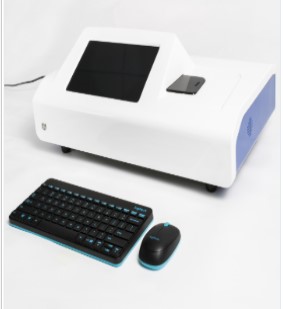
Near-infrared spectroscopy technology (NIR) utilizes near-infrared light, typically in the range of 700 nm to 2500 nm, to interact with materials and analyze their molecular structures, thereby obtaining crucial information regarding fiber composition, moisture content, density, and more. Compared to traditional chemical analysis methods, near-infrared spectroscopy offers higher efficiency and accuracy while eliminating the need for sample destruction or complex preprocessing, making it suitable for various aspects of textile production, including quality control, research and development, and beyond.
This article will delve into the working principles, application scenarios, advantages, and how to select an appropriate near-infrared spectroscopy analyzer for textile fiber composition analysis.
Basic Principles
Overview of Near-Infrared Spectroscopy Technology
Near-infrared spectroscopy technology is a method that obtains the molecular composition and physicochemical characteristics of materials by analyzing their absorption properties of near-infrared light. During near-infrared spectral measurement, a sample is exposed to a near-infrared light source. As the light penetrates the sample, it is absorbed at specific wavelengths based on the chemical bonds and molecular structures present. The absorbed light energy is captured by sensors and converted into spectral data, which is further processed by computer software to yield information about the sample's composition.
In textiles, different fiber components (such as cotton, polyester, and wool) as well as moisture, dyes, and other constituents each have their unique absorption wavelengths. By comparing the measured spectral data with known standard data, near-infrared spectroscopy analyzers can accurately identify the components within textiles and measure the content of each component.
Working Principles
The workflow of a near-infrared spectroscopy analyzer typically involves the following steps:
Sample Preparation: Place the textile or fiber sample to be tested in the measurement area of the near-infrared spectroscopy analyzer.
Light Irradiation and Data Acquisition: The instrument irradiates the sample with a near-infrared light source. The molecular structures within the sample interact with the light, causing partial absorption. The remaining light passes through the sample and is detected by sensors.
Data Processing and Analysis: The instrument analyzes the absorption characteristics of different components in the sample based on the spectral data and compares the results with standard spectra in a database to ultimately derive information about the textile fiber composition.
Result Output: The processed data is presented in the form of charts or tables through software, allowing users to clearly understand the fiber composition and other relevant information.
Applications
Precise Identification of Textile Fiber Compositions
In modern textile production, the types and proportions of fibers directly influence the final performance of fabrics. For example, blended fibers (such as cotton-polyester blends and wool-nylon blends) are widely used in clothing and bedding. To ensure textile quality, it is crucial to accurately determine the fiber composition ratios.
Near-infrared spectroscopy analyzers can rapidly and accurately identify fiber types through their unique spectral data. For instance, cotton, polyester, and wool fibers exhibit different absorption bands in the near-infrared spectrum, enabling the instrument to accurately distinguish between different fiber types and calculate the content proportions of each component. This capability significantly enhances quality control in textile production.
Real-Time Determination of Moisture Content
Moisture is an important factor affecting textile quality. Excessive moisture content can impact textile processing effects, such as uneven dyeing and poor fabric stretchability. Traditional moisture content detection methods involve heating samples and measuring weight changes, whereas near-infrared spectroscopy analyzers can rapidly determine moisture content without contacting the sample.
Water molecules have distinct absorption peaks in the near-infrared spectral region, and NIR analyzers can detect these specific absorption features to quickly determine the moisture content in textiles. This is of great significance for quality monitoring and warehouse management in textile production.
Control of the Dyeing Process
Dyeing is a key process in textile production, and the uniformity and adsorption rate of dyes directly affect the color and quality of the final products. Near-infrared spectroscopy analyzers can assist in monitoring fiber dye absorption during the dyeing process and adjusting dyeing parameters in real time to ensure the stability and consistency of the dyeing process.
By analyzing the absorption characteristics of fibers for dyes, near-infrared spectrometers can provide real-time feedback on dyeing effects, improving dyeing uniformity during production and avoiding quality issues caused by uneven dyeing.
Quality Detection and Control of Finished Products
Maintaining consistent quality of finished products is crucial in all aspects of textile production. Near-infrared spectroscopy analyzers can be used for quality detection of fabric finished products, analyzing samples in terms of fiber composition, humidity, dyeing, and other aspects to ensure that the final products meet design and production standards. For quality control, near-infrared spectroscopy analyzers offer a rapid and non-destructive detection method, avoiding human errors associated with traditional methods.
Research and Development and New Material Testing
In the research and development of textiles, the application of novel fiber materials and new processes is increasing. Near-infrared spectroscopy analyzers can be used for testing and evaluating new materials, helping researchers optimize material ratios and select appropriate processing techniques through spectral analysis of different materials, thereby improving product quality and performance.
Advantages
High Efficiency and Real-Time Detection
Traditional textile analysis methods typically require a significant amount of time and often involve complex sample preprocessing. In contrast, near-infrared spectroscopy analyzers can rapidly acquire data in real time with minimal sample loss, significantly improving analysis efficiency. This is crucial for quality control in large-scale production.
Non-Destructive Analysis
One of the greatest advantages of near-infrared spectroscopy analyzers is their non-destructive analysis capability. Traditional analysis methods, such as chemical or physical testing, often require destructive treatment of samples, whereas NIR analysis does not require any destruction of textiles, making it an ideal quality control tool in textile production processes.
High Precision and Multi-Parameter Analysis
Near-infrared spectroscopy analyzers can simultaneously analyze multiple parameters of textile fibers, including composition, humidity, and dyeing conditions, with high precision. By further processing the spectral data, the instrument can establish complex mathematical models among several parameters for multi-parameter collaborative analysis, improving the accuracy and reliability of the analysis.
Strong Adaptability
NIR analyzers exhibit strong adaptability in the textile industry and can not only analyze fibers but also monitor different types of fabrics, dyes, and processing techniques. Whether for natural fibers, synthetic fibers, or various blended materials, NIR provides effective analytical methods.
How to Select an Appropriate Near-Infrared Spectroscopy Analyzer
Analysis Range and Wavelength
When selecting a near-infrared spectroscopy analyzer, it is necessary to determine the instrument's wavelength range based on the types of samples to be analyzed and the requirements. Generally, a wider wavelength range allows the instrument to analyze a greater variety of sample types and is applicable to a broader range of scenarios.
Calibration and Data Processing Capabilities
Efficient calibration systems and powerful data processing software are key factors to consider when choosing an NIR analyzer. The instrument should be able to establish accurate calibration models for different sample types and possess strong data analysis capabilities to rapidly process spectral data and yield effective results during production.
Operational Simplicity
The simplicity of the operating interface is also an important factor to consider when selecting a near-infrared spectroscopy analyzer. The instrument should have an intuitive interface that allows technicians to quickly become proficient in its use, while also providing detailed operational guidance and technical support to minimize issues during use.
After-Sales Service and Maintenance
Selecting a brand of near-infrared spectroscopy analyzer with comprehensive after-sales service and maintenance support is crucial for ensuring the long-term stable operation of the equipment. Factors such as maintenance cycles, technical support, and upgrade services should also be considered during procurement.
As an efficient and accurate tool for textile fiber composition analysis, near-infrared spectroscopy analyzers have been widely applied in textile production, quality control, research and development, and environmental protection. By providing non-destructive, rapid, and real-time analysis of textile composition, humidity, and dyeing conditions, NIR analyzers not only improve production efficiency but also ensure the consistency and stability of product quality. As technology continues to advance, near-infrared spectroscopy analyzers will play an increasingly important role in the textile industry, becoming a vital tool for driving industry innovation and sustainable development.
Previous: Automatic Down Filling Tester,BSEN12130
N e x t : Automatic coating thickness measuring instrument,ASTM D374
