





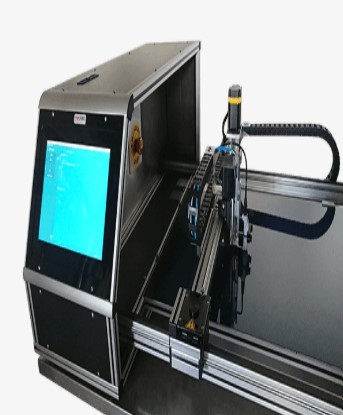
Automatic coating thickness measuring instrument,ASTM D374
2026/01/09
Share:

Definition
An Automatic Coating Thickness Gauge is an instrument used to determine the thickness of coatings. It performs non-destructive testing on coatings applied to substrates (such as metals, plastics, or alloys) and automatically outputs the thickness value. It is used to measure various types of overlays, including paint, electroplating, and powder coatings, and is widely utilized in manufacturing, testing laboratories, and engineering sites.
Working Principles
The core of an automatic coating thickness gauge lies in detecting changes in the physical characteristics between the measurement probe and the substrate, converting these into readable thickness data. Based on the target object and instrument type, common measurement principles include:
1. Magnetic Principle
Magnetic measurement is suitable for non-magnetic coatings (e.g., paint, plating) on magnetic substrates (e.g., steel, iron).
It utilizes changes in magnetic flux density between the probe and the substrate. As the probe approaches the surface, the magnetic field characteristics change relative to the distance created by the coating. The internal electronic system calculates the thickness based on these fluctuations.
2. Eddy Current Principle
The eddy current method is used for non-conductive coatings on non-magnetic metal substrates (e.g., aluminum, copper).
High-frequency alternating current in the probe coil generates an electromagnetic field, inducing "eddy currents" on the metal surface. The strength of these currents is specifically related to the coating thickness, allowing the instrument to calculate the value automatically.
3. Ultrasonic Principle
Ultrasonic measurement is ideal for scenarios where both the coating and substrate are non-metallic or for very thick coatings (e.g., on plastic, ceramics, or wood).
The probe emits a sound wave that travels through the coating and reflects off the interface. By analyzing the "time-of-flight" of the echo, the instrument determines the thickness. This is particularly effective for penetrating the coating body itself.
Implementation and Features
Modern automatic gauges are no longer simple static reading devices; they integrate intelligent functions to make the process more autonomous and data-driven.
Automatic Substrate Recognition: Many modern units can instantly detect whether a substrate is magnetic or non-magnetic upon contact, automatically switching between magnetic and eddy current modes. This minimizes manual intervention and errors.
Auto-Calibration and Data Storage: High-end gauges feature auto-calibration and zero-point adjustment. Measurements can be saved to internal memory and exported via USB or Bluetooth to computers or mobile devices for analysis.
Continuous Measurement and Statistics: Unlike manual spot-checking, automatic gauges can operate in a "scan mode," collecting data continuously as the probe slides across the surface. They provide real-time statistics such as Maximum, Minimum, and Average values.
Technical Specifications and Performance
Measurement Range: Typically covers tens of microns to several millimeters (e.g., 0–2000 μm or 0–80 mils).
Accuracy and Resolution: High-quality gauges maintain an error margin within ±(1%–3%) with resolutions as fine as 0.1 μm.
Interface: Features large LCD/TFT color screens, often with auto-rotating displays for easier reading from different angles.
Application Fields
Decorative and Protective Coatings: Used in automotive painting, furniture finishing, and architectural decoration to ensure durability and aesthetics.
Electroplating and Metal Processing: Ensuring galvanized or chrome-plated layers meet specifications on production lines.
Aerospace and Precision Manufacturing: Providing critical data support for high-stakes components where surface integrity is paramount.
Anti-corrosion and Material Inspection: Verifying coating standards for chemical pipelines, bridges, and steel structures.
Selection and Precautions
When choosing an automatic coating thickness gauge, consider the following:
Material Properties: Determine if you need a magnetic, eddy current, or "dual-function" (combination) instrument based on your substrate.
Range and Precision: Ensure the device's measurement range and resolution match your specific application requirements.
Data Management: Consider whether you need data logging, wireless export, or specialized software support.
Standards Compliance: Ensure the gauge complies with international standards (e.g., ISO, ASTM) and comes with traceable calibration shims.
The automatic coating thickness gauge is an indispensable tool in modern industry. By leveraging magnetic, eddy current, and ultrasonic technologies, it provides the data necessary for process optimization and quality assurance, driving the industry toward smarter inspection solutions.
Previous: Applications and advantages of the near-infrared spectroscopy analyzer
N e x t : What is Automatic Button Attach Machine?
