





What is Automatic Button Attach Machine?
2026/01/09
Share:

In the garment manufacturing industry, buttons are among the most common and essential apparel accessories. Traditional button sewing and attaching processes largely rely on manual operation. Especially in mass production environments, this approach is not only inefficient and labor-intensive, but also prone to quality issues such as uneven stitching and positional deviation. With the advancement of industrial automation, the Automatic Button Attach Machine has emerged. By integrating mechanical systems with intelligent control technology, it significantly improves production efficiency, ensures consistent product quality, and reduces labor costs, making it an important component of modern garment production lines.
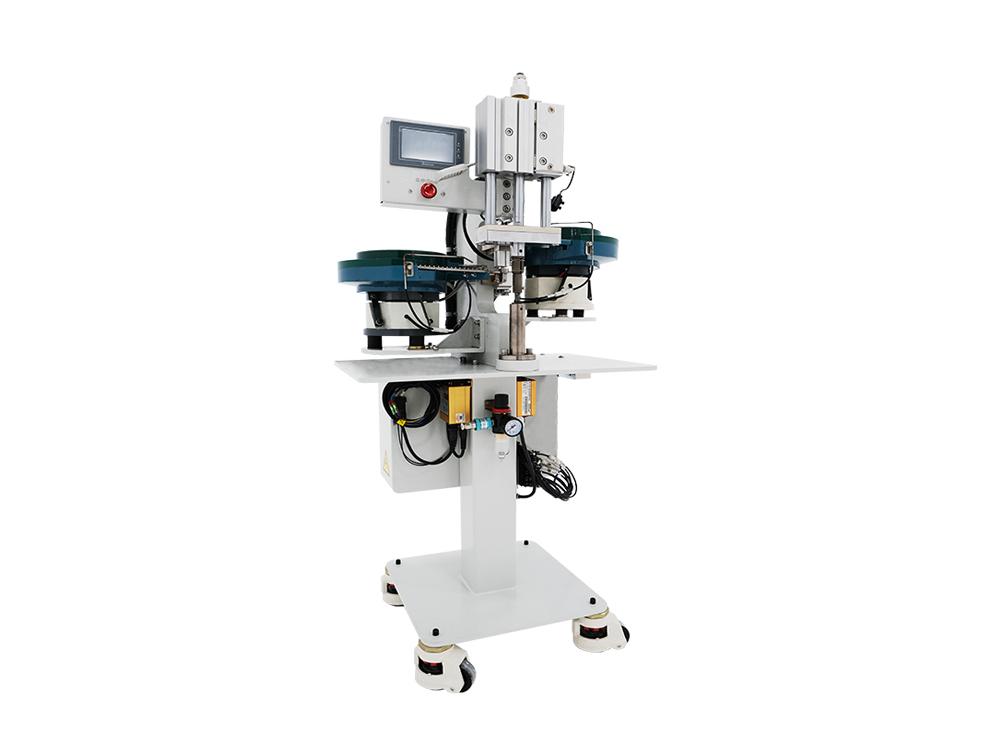
Automatic button attach machines complete the button installation process through automatic positioning, feeding, sewing, or pressing operations. Depending on the type of button, these machines can accommodate flat buttons, shank buttons, snap buttons, metal buttons, and other fasteners commonly used in garments, while also handling fabrics of varying thicknesses and fiber compositions. Such automated equipment is widely applied in complete garment manufacturing, bag production, and workwear manufacturing, becoming a key support for the automation upgrade of the apparel industry.
What Is an Automatic Button Attach Machine?
An automatic button attach machine is a type of professional garment machinery designed to automatically attach various buttons, snaps, or fasteners to garments, bags, shoes, hats, and other products. Unlike traditional manual button sewing, this equipment integrates motors, sensors, and feeding mechanisms to achieve a fully automated process encompassing feeding, positioning, attaching, and sewing or pressing. This greatly enhances production efficiency and ensures consistent quality. The machine is suitable for a wide range of buttons, including flat buttons, four-hole buttons, two-hole buttons, shank buttons, and snap buttons.
Automatic button attach machines include fully automatic models that integrate both feeding and attaching functions, as well as automatic button feeding devices that work in conjunction with a main machine. These machines play a crucial role in industrial sewing and garment production lines, especially in large-scale order manufacturing.
Working Principle of Automatic Button Attach Machines
The operation of an automatic button attach machine is based on the coordinated function of mechanical, electronic, and control systems, enabling automated operation through preset programs. The core working steps typically include the following:
1. Automatic Feeding and Identification
The machine is equipped with an automatic feeding system, commonly using vibrating bowl feeders, mechanical pushing mechanisms, or pneumatic feeding methods to transfer buttons from the hopper to the attaching position. Advanced feeding systems are capable of identifying button orientation (front and back) and automatically adjusting feeding speed, ensuring fast and stable delivery.
In fully automatic snap button machines and other high-end models, the feeding process requires no manual intervention. Operators only need to replenish the button hopper to maintain continuous production. The stability of the feeding system directly affects overall production efficiency and is an important indicator of automation level.
2. Automatic Positioning and Installation Preparation
The positioning system ensures that the button is accurately placed at the designated point before attachment, guaranteeing installation precision. Most automatic button attach machines are equipped with optical positioning, mechanical limit structures, or laser-assisted positioning technologies, achieving millimeter-level accuracy.
After positioning, the machine selects the appropriate attachment path according to preset programs, including needle position adjustment for sewing or mold adjustment for snap button installation, preparing for the next installation step.
3. Button Attaching Process
The installation method varies according to the type of button:
Sew-on Button Installation: Automatic button sewing machines attach buttons using a sewing head to form secure stitch patterns. These machines are commonly desktop or stand-type button sewing units and feature programmable stitch spacing and stitch patterns.
Press-on Button Installation: This type is mainly used for snap buttons and metal buttons. Pressure is applied to press the upper button component onto the bottom part through the fabric, completing the attachment. The process is driven by mechanical punching or servo-driven systems and is suitable for thick fabrics and industrial textiles.
Modern automatic button attach machines typically feature automatic pressure adjustment, adjustable speed, and real-time monitoring functions, enabling them to adapt to different fabric thicknesses and button types.
Technical Features and Core Advantages
As an essential piece of equipment in modern garment manufacturing, automatic button attach machines offer significant technical features and competitive advantages:
1. High Efficiency and Stable Production Rhythm
Manual button sewing is slow and easily affected by operator fatigue, whereas automatic button attach machines can maintain continuous, high-speed operation. Some models are capable of installing thousands to tens of thousands of buttons per hour, achieving several times the efficiency of manual labor.
This high and stable productivity meets the requirements of large-volume orders, helping shorten delivery cycles and improve overall production capacity.
2. High Precision and Consistent Quality
Automatic machines utilize precision sensors, positioning devices, and programmable controls to ensure uniform button positioning and stitching quality. This eliminates quality issues caused by human variability, such as misalignment or uneven stitches, improving garment appearance and durability.
Precision control also allows excellent installation results across fabrics of different materials and thicknesses.
3. Easy Operation and Labor Savings
Modern automatic button attach machines feature user-friendly control panels or touch screens for parameter setting. Operators can master operation after brief training. Compared with manual processes, repetitive and labor-intensive button attachment tasks are handled by the machine, significantly reducing dependence on skilled labor and lowering labor costs.
In addition, automatic detection and error alert functions enhance operational safety and allow production abnormalities to be identified and addressed promptly.
4. Strong Adaptability and Compatibility with Multiple Buttons and Fabrics
Most automatic button attach machines support quick mold or tool replacement, allowing them to accommodate various button specifications and installation requirements. Some multifunctional models can rapidly switch between different button shapes, such as round or square buttons. Combined with adjustable pressure settings, they can process fabrics ranging from delicate silk to heavy denim.
This adaptability makes the equipment highly practical for diversified production lines.
5. Enhanced Intelligence Level
New-generation automatic button attach machines are equipped with intelligent control systems capable of setting installation programs and recording production data. Some advanced models even support data interaction with Manufacturing Execution Systems (MES), enabling production monitoring and statistical analysis, which further optimizes efficiency and quality management.
Typical Application Scenarios
Automatic button attach machines play a vital role across multiple industries and production scenarios, particularly in the following areas:
1. Garment Production Lines
Garment manufacturing is the primary application field for automatic button attach machines. Products such as shirts, T-shirts, jeans, workwear, and children’s clothing require a large number of buttons. Automatic equipment can be integrated into the main sewing process to enable continuous production, significantly improving line efficiency and quality consistency.
2. Bags and Leather Goods Industry
Bags and leather goods involve a wide variety of fasteners with complex installation requirements. Automatic button attach machines can adapt to different fastener structures, providing efficient and professional solutions for bags, belts, and handbags.
3. Home Textile Products
Home textile items such as bed covers and sofa covers may also use snap buttons or decorative buttons. Automatic button attach machines can effectively improve processing quality and efficiency in this sector.
4. Other Light Industrial Products
Certain light industrial products, such as stationery pouches, handicrafts, and children’s items, also require fasteners. By using appropriate molds, automatic button attach machines can easily meet these requirements.
Selection and Usage Considerations
When selecting an automatic button attach machine, the following factors should be considered to ensure it meets production needs:
1. Button Types and Specifications
First, identify the types and size ranges of buttons required for production (such as two-hole, four-hole, shank, or snap buttons), and choose a machine compatible with these specifications. Multifunctional machines offer greater versatility.
2. Production Efficiency Requirements
Determine the required production speed based on order volume. Different models vary in maximum installation speed and efficiency due to differences in feeding systems and drive mechanisms.
3. Fabric Thickness and Material Compatibility
Thick and thin fabrics impose different requirements on feeding structures, positioning systems, and installation pressure. It is important to ensure the selected machine can handle the variety of materials used in actual production.
4. Operating Interface and Intelligent Control
Selecting a machine with a user-friendly interface, programmable settings, and support for data export or connection to manufacturing management systems can greatly enhance long-term operational efficiency.
As a key piece of equipment in garment manufacturing and industrial assembly automation, the automatic button attach machine realizes efficient, precise, and automated button installation through mechanical and intelligent control technologies. Compared with traditional manual operations, it offers higher productivity, consistent quality, strong adaptability, and significant labor savings, making it suitable for garments, bags, home textiles, and many other industries.
Modern automatic button attach machines integrate functions such as feeding and positioning, error alerts, and production monitoring, ensuring stable and reliable performance in practical manufacturing environments. With the advancement of intelligent manufacturing and Industry 4.0. these machines are expected to become increasingly intelligent and modular, meeting the growing demand for efficient, flexible, and high-quality production. Whether for large-scale standardized manufacturing or multi-variety small-batch production, automatic button attach machines are becoming indispensable production equipment.
Previous: Automatic coating thickness measuring instrument,ASTM D374
N e x t : Clamp Force Test Machine,ASTM D6055-2019
