





Clamp Force Test Machine,ASTM D6055-2019
2026/01/09
Share:

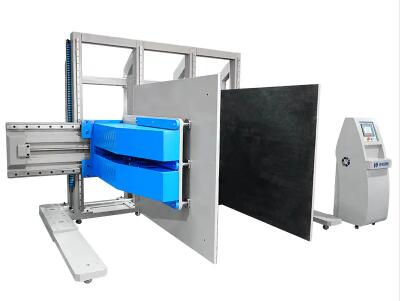
To accurately and automatically measure the clamping load applied to a test specimen under force—without relying on manual estimation or subjective judgment—the Clamp Force Test Machine was developed. Through the coordinated operation of mechanical loading systems, force sensors, and data processing units, it enables automated detection of clamping force characteristics and has become an essential piece of equipment in the field of precision mechanical testing.
What Is a Clamp Force Test Machine?
A clamp force test machine is a testing device designed to measure the clamping load applied to or sustained by a test specimen. It applies controlled forces to the test object using a loading system combined with high-precision sensors, enabling evaluation of clamping performance through parameters such as force value, displacement, and force–displacement curves.
Testing objectives vary across industries. In the packaging industry, emphasis is placed on the clamping and compressive forces experienced during transportation. In the fastener industry, accurate evaluation of preload forces generated by bolts and nuts is critical. In fixture and tooling design, sufficient and repeatable clamping force is required to ensure stability and safety. Clamp force test machines address these diverse requirements through multiple configurations and testing modes, delivering quantifiable and repeatable test results.
Depending on their application, these systems may also be referred to as packaging clamp force testers, fastener clamp force testers, or general-purpose clamping force measurement systems. Many modern units integrate digital control systems, display modules, and data analysis software, making testing processes more transparent, automated, and repeatable.
Working Principle
The primary function of a clamp force test machine is to apply a controlled force and measure the mechanical response of the test structure. A typical testing process includes the following steps:
1. Force Loading Mechanism
After the specimen is positioned between fixtures, the loading system applies force to the specimen. This force is typically generated by servo motors, hydraulic cylinders, or electric actuators. Stroke control and feedback systems ensure stable and precise force application.
The applied force may follow constant speed loading, constant force loading, or cyclic loading modes, depending on the test objective, such as evaluating slip resistance, packaging compression strength, or fastener preload.
2. Force Measurement Sensors
Clamp force test machines are equipped with high-precision load cells that convert mechanical force into electrical signals. Through real-time sampling and signal filtering, the system captures force–displacement behavior and the mechanical response of the specimen at different loading stages.
Advanced systems may also incorporate displacement sensors or strain measurement elements to enable more comprehensive mechanical analysis.
Key Technical Features
The performance of clamp force test machines is primarily characterized by the following features:
1. High-Precision Force Measurement
Force measurement systems typically utilize high-resolution load sensors, allowing precise force detection. Measurement accuracy can be maintained through standard calibration procedures, meeting the stringent requirements of engineering and laboratory testing.
2. Stable Loading Control
The reliability of the loading mechanism is critical. Servo-driven, hydraulic, or electric loading systems must ensure stable force application and accurate control of constant-speed or constant-load modes, preventing measurement errors caused by unstable dynamic loading.
3. Intelligent Testing and Data Processing
Modern clamp force test machines are often equipped with touchscreen interfaces or computer-based control software. These systems support parameter configuration, process monitoring, real-time data display, and automatic test report generation. High automation levels facilitate integration with quality management systems and ensure standardized and traceable testing processes.
4. Versatility and Expandability
Clamp force test machines can accommodate different fixtures or test jigs to suit specimens of various shapes and sizes, including flat panels, packaging units, and fasteners.
In broader mechanical testing platforms, additional testing modules—such as tensile, compression, shear, and torsion testing—can be integrated to expand overall testing capabilities.
Main Application Areas
Clamp force test machines play an important role in multiple industries, including but not limited to the following:
1. Packaging Testing and Transportation Safety Evaluation
In logistics and packaging applications, clamp force test machines simulate compressive and clamping forces experienced during stacking, handling, and mechanical loading. These tests help evaluate packaging integrity and resistance to deformation, ensuring product protection during transport.
Testing results support optimization of packaging structure, material selection, and design, reducing damage risk and improving overall transport reliability.
2. Preload Measurement of Fasteners and Joint Structures
In mechanical assembly and automotive manufacturing, the preload force of bolts and nuts is essential to structural stability. Clamp force testing verifies whether actual preload values meet design specifications, helping prevent failures caused by insufficient or excessive clamping force.
3. Fixture and Mechanical Assembly Component Testing
In manufacturing and machining processes, fixture clamping force directly affects machining accuracy and operational safety. Clamp force test machines evaluate fixture performance, ensuring stable and repeatable clamping during production.
4. Mechanical Performance Evaluation of Materials and Structural Components
In materials research laboratories and quality inspection centers, clamp force test machines are used to study the mechanical behavior of materials and structural components under compressive and applied force conditions, supporting design optimization and performance comparison.
Relevant Standards and Specifications
Clamping force testing is closely associated with various testing standards and industry specifications. In packaging testing, multiple standards define requirements for clamping and compressive force simulation to ensure packaging performance under transportation conditions.
In fastener testing, international standards specify methods for torque and clamp force measurement, providing guidance for test machine design, testing procedures, and data evaluation.
These standards establish consistent requirements for testing methods, fixture design, data processing, and reporting, enabling global consistency and comparability of test results.
Selection and Usage Recommendations
When selecting a clamp force test machine, the following factors should be carefully evaluated:
-
Clear definition of testing requirements: Identify the test objective—such as packaging compression, fastener preload, or fixture clamping—before selecting equipment and fixtures.
-
Loading capacity and measurement range: Choose appropriate force capacity based on specimen size and maximum expected load.
-
Accuracy requirements: Consider sensor precision, data acquisition rate, and software analysis capabilities.
-
Standards compatibility: Ensure the system supports relevant testing standards and parameter configurations.
-
Expandability and data management: Prioritize systems that support data integration with statistical and quality management platforms.
As a specialized mechanical testing device, the clamp force test machine enables accurate evaluation of the performance of structural components, packaging products, and mechanical fixtures under applied force conditions through controlled loading systems, high-precision sensors, and intelligent data analysis. Whether used to assess packaging compression resistance, measure fastener preload, or verify fixture stability in mechanical assembly, this equipment plays an indispensable role.
With the advancement of intelligent manufacturing and quality traceability systems, clamp force test machines are expected to further evolve toward higher levels of automation, digitalization, and standardization, providing robust technical support for product safety, design optimization, and production efficiency improvement.
Previous: What is Automatic Button Attach Machine?
N e x t : What is a Multi-function Burling Machine?
