





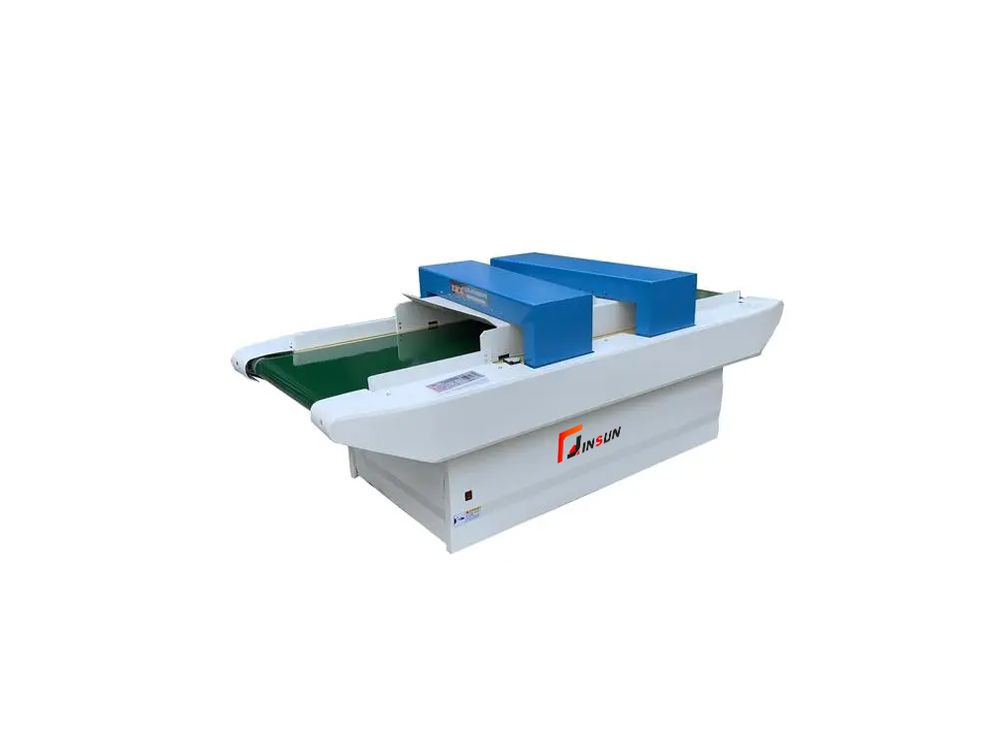
What is a conveyor needle detector?
2026/01/12
Share:

Technical Principle
The core detection technology of conveyor-belt needle detectors is based on the principle of electromagnetic induction. The equipment is equipped with highly sensitive sensors and a balanced coil design to generate a stable electromagnetic field. When garments or textile products pass through the detection tunnel, the presence of ferromagnetic metal foreign objects (such as broken needles or staples) causes a disturbance in the magnetic field. The sensors capture this change, and a digital signal processor converts the weak signal into a recognizable electrical signal, enabling precise localization and identification of metal contaminants.
Taking a certain model as an example, its detection capability can identify a ferrous ball with a diameter of 0.8 mm at a detection height of 120 mm, with sensitivity adjustable from levels 1 to 10 according to production requirements. Once a metal foreign object is detected, the system immediately activates multiple alarm mechanisms: an audible buzzer, flashing indicator lights, and automatic stoppage of the conveyor belt to prevent contaminated products from entering the packaging stage. Some high-end models also support reverse conveyor operation, allowing operators to quickly locate the problematic area.
Equipment Structure
Conveyor-belt needle detection equipment typically consists of four core modules:
1. Conveyor System
The system uses a wear-resistant, anti-static conveyor belt with a standard width of 600 mm and customizable detection heights ranging from 100 to 250 mm. It supports variable speeds of 5–40 meters per minute to match different production line rhythms. The conveyor belt material complies with food-grade standards, preventing secondary contamination of products.
2. Detection Unit
This unit includes electromagnetic induction coils and a digital signal processor. Through optimized magnetic circuit design, detection blind spots are eliminated. For example, certain models can stably detect a 1.0 mm diameter ferrous ball at a detection height of 150 mm, with a false alarm rate below 0.1%. The unit also features electromagnetic shielding to resist interference from nearby motors, frequency converters, and other equipment.
3. Control Panel
Equipped with an LCD display and touch controls, the panel supports sensitivity level adjustment, inspection data logging, and fault self-diagnosis. Some models integrate network interfaces for connection with factory MES systems, enabling real-time upload of production data. For instance, the system can record inspection time, product batch numbers, and the quantity of rejected items, providing a reliable basis for quality traceability.
4. Safety Protection
The equipment housing is made of 304 stainless steel and meets IP65 protection standards, ensuring resistance to dust and liquid ingress. Anti-pinch devices are installed on both sides of the detection tunnel to prevent operator injury. In addition, a self-check program automatically verifies sensor status at startup to ensure normal operation.
Performance Advantages
1. Ultra-High Sensitivity and Strong Anti-Interference Capability
By adopting dual-probe designs and digital filtering technology, the equipment can effectively distinguish metal foreign objects from built-in metal accessories on products (such as zippers and buttons). For example, at a detection height of 120 mm, the system can reliably detect a 0.8 mm diameter ferrous ball while ignoring non-ferromagnetic metals (such as copper and aluminum) up to 3 mm in diameter. This makes it suitable for a wide range of garments and home textile products.
2. Flexible Adaptation to Multiple Application Scenarios
The detection tunnel height and width can be customized to accommodate everything from underwear to outerwear, and from socks to bedding products. Certain models offer detection heights ranging from 100 to 250 mm, combined with a standard 600 mm width, achieving a single-pass detection area of up to 0.15 square meters. Compared with traditional handheld detectors, inspection efficiency is increased by up to 300%. The equipment can also inspect packaged finished goods, such as boxed garments, meeting safety requirements in warehousing and logistics processes.
3. Intelligent Maintenance and Calibration
To ensure long-term stability, the equipment features built-in self-calibration programs. Operators can quickly complete nine-point calibration using standard test pieces (such as a 0.8 mm diameter ferrous ball). Daily maintenance only requires periodic cleaning of the conveyor belt and detection window to prevent dust accumulation from affecting sensitivity. Some models also support remote diagnostics, allowing engineers to monitor equipment status via cloud platforms and provide early warnings of potential faults.
Application Scenarios
1. Finished Garment Inspection
After garment manufacturing is completed, conveyor-belt needle detectors can be seamlessly integrated at the end of production lines to perform 100% inspection of finished products. For example, a children’s clothing manufacturer reduced the risk of residual broken needles from 0.03% to 0.0005% after deploying such equipment, successfully passing international safety certifications and achieving a 40% increase in export orders. The equipment can also work in conjunction with automatic sorting systems to divert defective products to designated areas.
2. Inspection of Accessories and Semi-Finished Products
In addition to finished goods inspection, the equipment can be deployed earlier in processes such as cutting and sewing. For instance, after fabric cutting, conveyor-belt needle detectors can identify whether sewing needle fragments are mixed into cut pieces, preventing quality incidents caused by needle breakage in subsequent operations. The equipment can also detect metal impurities in accessories like buttons and zippers, ensuring raw material safety.
3. Final Inspection Before Packaging
Before products enter the packaging stage, the equipment can inspect entire cartons in batches. A footwear manufacturer using a dual-channel detection system can process up to 2.000 pairs of finished shoes per hour, achieving a 20-fold efficiency increase over manual sampling inspections while reducing customer complaint rates to below 0.02%. The system can also detect metal foreign objects in packaging materials (such as cartons and plastic bags), preventing contamination during the packaging process.
Industry Trends
With the development of the Internet of Things and artificial intelligence, conveyor-belt needle detection equipment is evolving toward greater intelligence and integration:
AI-Assisted Visual Detection
Some new-generation devices integrate high-speed cameras and deep learning algorithms to recognize the shapes of metal foreign objects, distinguishing broken needles from intact ones and further improving detection accuracy. For example, certain systems can identify broken needles longer than 5 mm, reducing false alarm rates by 50% compared with traditional equipment.
Multi-Metal Material Detection
By optimizing sensor materials and signal processing algorithms, equipment can expand detection capabilities to include non-ferromagnetic metals such as copper and stainless steel, meeting the stringent safety requirements of high-end markets. For instance, some systems can detect stainless steel fragments as small as 1.5 mm, making them suitable for medical textile inspections.
Modular Expansion Design
Reserved interfaces allow the equipment to connect with metal separation devices, automatic marking systems, and other peripheral equipment, enabling fully automated solutions from detection to sorting. For example, systems can be linked with laser marking machines to automatically mark defect locations on nonconforming products, facilitating subsequent rework.
In the textile and garment industry, conveyor-belt needle detection equipment has evolved from an optional configuration into a standard production requirement. It not only helps enterprises mitigate quality risks but also enhances inspection efficiency and accuracy, supporting the establishment of digital quality management systems. As technology continues to advance, such equipment will keep evolving to provide more reliable and intelligent safety assurance for the industry—ultimately safeguarding the health and trust of every consumer.
Previous: What is a Multi-function Burling Machine?
N e x t : What is a brushing machine used for?
