





What are the four types of drilling machines?
2026/01/13
Share:

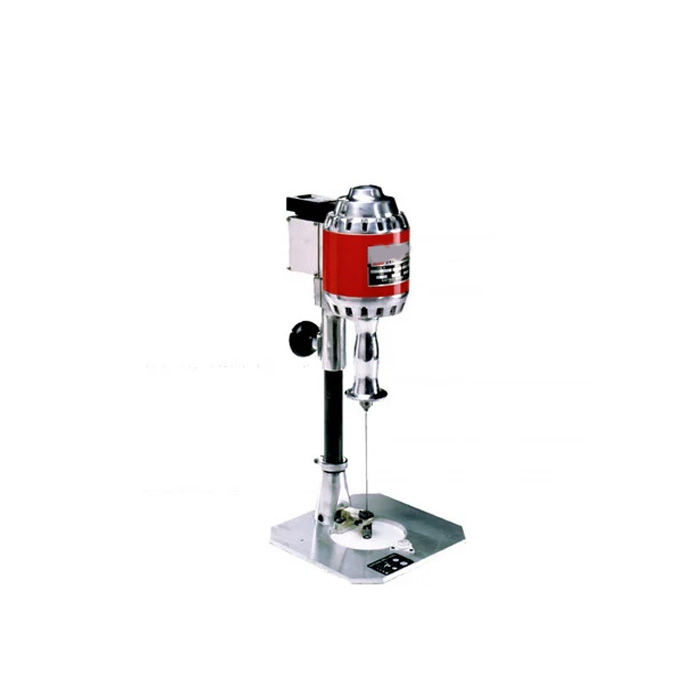
Portable Drilling Machine
1. Definition and Structure
A portable drilling machine, also known as a hand-held drill, is a compact and lightweight drilling device that can be easily carried and operated by hand. Its main features include a compact body and convenient installation, as it does not need to be fixed to a workbench or the ground. Most portable drilling machines consist of an electric motor, drill chuck, housing, and handle. Some models are powered by compressed air, making them suitable for use in flammable or explosive environments.
2. Working Principle
The operating method of a portable drilling machine is similar to that of a conventional rotary drill. The motor or air-driven mechanism rotates the spindle at high speed, driving the drill bit to cut into the workpiece surface. Since positioning and feeding are performed manually, portable drilling machines are mainly used for light-duty drilling or on-site operations.
3. Advantages
High flexibility: Can be easily moved to different locations for drilling
Convenient installation: No need for fixed mounting, enabling efficient on-site operation
Low cost: Simple structure and relatively economical price
4. Limitations
Limited accuracy: Precision depends on manual positioning and control, which is inferior to fixed drilling machines
Restricted application range: Mainly suitable for light loads or temporary processing, not ideal for large workpieces or high-precision production
5. Application Areas
Portable drilling machines are mainly used in on-site engineering, building construction, repair and maintenance, and light industrial processing, especially for rapid drilling of small-diameter holes.
Upright Drilling Machine
1. Classification and Structure
An upright drilling machine is a fixed machine tool in which the drill bit moves vertically during drilling. A lighter version is known as the sensitive drilling machine, which is typically mounted on a workbench or stand and is suitable for light-duty drilling. Another type is the traditional column or upright drilling machine, which has a stable base and a more robust structure.
Sensitive drilling machines have a simple structure consisting of a base, column, adjustable worktable, and hand-feed mechanism. The operator manually controls the feed, making them suitable for precise drilling of small holes. Column drilling machines are generally equipped with powered feed mechanisms, allowing automatic feed control and improved productivity.
2. Working Principle
The spindle of an upright drilling machine moves vertically, pressing the drill bit into the workpiece to create holes. Traditional sensitive drilling machines rely mainly on manual feed, while larger upright machines can be equipped with automatic feed and power head systems to achieve higher efficiency.
3. Characteristics
Stable structure: Suitable for medium-load machining
Easy operation: Simple to learn and suitable for beginners and small to medium-sized workshops
Wide processing range: Capable of drilling small precision holes as well as medium and large holes
4. Limitations
Upright drilling machines are not suitable for machining very large workpieces or applications requiring complex hole positioning or angular adjustments.
5. Application Scenarios
They are widely used in metal processing, component manufacturing, equipment repair, and educational laboratories, making them one of the most common basic drilling machines.
Radial Drilling Machine
1. Structure and Function
A radial drilling machine is distinguished from traditional upright drilling machines by its adjustable radial arm structure. The spindle is mounted on an arm that can rotate horizontally, move vertically, and slide along the arm. This allows the drill bit to be positioned over a large working area while keeping the workpiece stationary.
The main components of a radial drilling machine include the base, column, rotating radial arm, drilling unit, and worktable. The radial arm can rotate around the column, move up and down, and slide along its length.
2. Working Principle
The operator adjusts the position of the radial arm according to the size and shape of the workpiece so that the drill bit aligns accurately with the desired drilling location. The spindle is then activated to perform drilling. Because the arm is movable, there is no need to reposition the workpiece frequently, which improves operational flexibility.
3. Main Features
Flexible positioning: Easily adjusts the drill position, especially suitable for large workpieces
Time-saving: Multiple holes can be drilled without moving the workpiece
Wide applicability: Suitable for large components and heavy structural parts
4. Limitations
Radial drilling machines have a more complex structure and higher cost, and they require greater operator skill. They may not be economical for small-batch production.
5. Typical Applications
They are commonly used in machine tool manufacturing, shipbuilding, bridge structures, large molds, and heavy equipment components, particularly when precise drilling is required at multiple positions on large workpieces.
Multi-Spindle Drilling Machines / Special-Purpose Drilling Machines
1. Concept and Forms
Multi-spindle drilling machines are equipped with two or more spindles, allowing multiple holes to be drilled simultaneously. In addition to multi-spindle machines, this category also includes automatic drilling machines, deep-hole drilling machines, and other special-purpose drilling machines.
Main forms include:
Multi-spindle drilling machines: Multiple spindles arranged in parallel for batch hole drilling
Automatic drilling machines: Equipped with automatic feeding and drilling cycle control for unattended operation
Deep-hole drilling machines: Designed specifically for deep-hole machining with large depth-to-diameter ratios
Special-function drilling machines: Such as CNC drilling machines and magnetic base drilling machines
2. Working Principle
Multi-spindle drilling machines use multiple fixed-position spindles to drill several holes simultaneously, significantly increasing production efficiency. Automatic drilling machines integrate feeding mechanisms and control systems to complete drilling, tool retraction, and tool changing automatically, making them suitable for production lines. Deep-hole drilling machines ensure hole quality through specialized cooling systems and tool designs.
3. Features
High efficiency: Multiple holes can be machined at the same time
High level of automation: Ideal for mass production of standard holes
Stable machining accuracy: Automated control reduces human error
4. Limitations
These machines have complex structures and relatively high costs. They also require strict maintenance and programming, and must be operated by skilled personnel.
5. Typical Applications
They are widely used in electronics manufacturing, automotive parts processing, mold manufacturing, and other industrial fields requiring efficient and repetitive hole machining.
Comparison and Selection of the Four Types of Drilling Machines
| Type | Structural Characteristics | Machining Capability | Automation Level | Typical Applications |
|---|---|---|---|---|
| Portable drilling machine | Hand-held, lightweight | Small holes | Low | On-site work, light machining |
| Upright drilling machine | Fixed column structure | Medium | Medium | Workshops, maintenance |
| Radial drilling machine | Adjustable radial arm | Large workpieces | Medium | Large component machining |
| Multi-spindle / special drilling machine | Multiple spindles, automated | High-volume production | High | Mass production |
Selection Recommendations
Lightweight and on-site operations: Portable drilling machines are preferred
General workshop drilling: Upright drilling machines offer stability and reliability
Large workpiece positioning: Radial drilling machines are more suitable
Mass production and intelligent manufacturing: Multi-spindle or automatic drilling machines are more efficient
As fundamental equipment in machining, drilling machines are available in various types, each with distinct characteristics. From hand-held portable drills to highly automated multi-spindle drilling machines, different types are designed to meet different machining requirements. Understanding the classification and application range of drilling machines helps in selecting the most appropriate equipment, improving production efficiency, and ensuring machining quality. Whether in manufacturing, maintenance, or educational laboratories, drilling machines continue to play an irreplaceable role.
Previous: What is a High Speed Lockstitch Bar Tacking Machine?
N e x t : GMA Ultra-filtration Membrane Porometers,ASTM F316-2003
