





GMA Ultra-filtration Membrane Porometers,ASTM F316-2003
2026/01/13
Share:

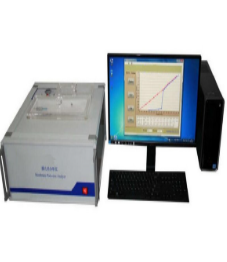
Definition
An ultrafiltration membrane porometer is a specialized instrument designed to measure pore size distribution, average pore size, maximum pore size (bubble point), and fluid permeability characteristics of membrane materials. Ultrafiltration membranes typically possess nanoscale pore structures, which are difficult to quantify accurately using conventional visual inspection or mechanical measurement methods. Therefore, dedicated measurement techniques are required for reliable characterization.
Membrane porometers operate based on principles such as the capillary flow method, liquid–liquid displacement method, or gas–liquid displacement method. By automatically collecting, analyzing, and calculating the relationship between fluid flow rate and applied pressure, the instrument determines key pore structure parameters.
GMA ultrafiltration membrane porometers primarily employ the liquid–liquid displacement method to test the pore size of ultrafiltration and microfiltration membranes. By monitoring changes in the pressure required to displace a wetting liquid from the membrane pores, the instrument calculates pore size and pore size distribution. This method enables accurate analysis of pore sizes ranging from the nanometer to micrometer scale under relatively low pressure conditions, making it an important tool in membrane material testing.
Testing Principle
The core working principle of the GMA ultrafiltration membrane porometer is based on the liquid–liquid displacement method. The basic testing procedure can be summarized as follows:
Wetting stage:
Before testing, the membrane sample is completely immersed in a suitable wetting liquid so that all pores are fully filled.
Displacement stage:
A second liquid that is immiscible with the wetting liquid (or, in some cases, a gas) is applied under controlled pressure to gradually displace the wetting liquid from the pores.
Pressure–flow measurement:
As the displacement pressure increases, the wetting liquid is expelled from the largest pores first. The instrument simultaneously records the flow rate of the displacing fluid and the corresponding pressure.
Pore size calculation:
Based on the relationship between displacement pressure and pore size, mathematical models such as the Washburn equation are used to calculate pore size distribution, average pore size, and maximum pore size (bubble point).
Key Features
As a specialized pore characterization instrument, the GMA ultrafiltration membrane porometer offers several notable technical features:
1. Wide Measurement Range
The instrument is capable of measuring pore sizes from approximately 8 nanometers to 200 nanometers. Through pressure control and system configuration, it can also support measurements extending to pore sizes of up to several hundred micrometers, covering a broad range from fine to medium pores.
2. High Automation and Data Processing Capability
Equipped with an automated pressure control system and data acquisition module, the instrument automatically records pressure and flow rate changes. Integrated software performs data analysis and calculates pore size distribution curves, average pore size, and bubble point values, significantly reducing human error and improving repeatability and data reliability.
3. Flexible Working Media
Common test media include water, ethanol, and other organic solvents. The instrument allows appropriate selection of wetting and displacement liquids according to membrane material properties, making it suitable for a wide variety of membrane types.
4. Strong Environmental Adaptability
The instrument is designed for laboratory use and operates within a controlled temperature range, typically from 4 °C to 40 °C. It offers stable performance and high measurement repeatability under standard laboratory conditions.
Core Functions
Using an ultrafiltration membrane porometer, the following key information can be obtained:
1. Pore Size Distribution Curves
Pore size distribution curves describe the relative proportion and distribution of pores across different size ranges. These curves are essential for analyzing membrane separation performance, permeability, and fouling resistance.
2. Average Pore Size and Maximum Pore Size (Bubble Point)
The average pore size reflects the overall pore structure of the membrane, while the maximum pore size, often referred to as the bubble point, indicates the largest pore that opens under pressure. This parameter is critical for evaluating membrane integrity and retention performance.
3. Permeability and Flow Characteristics
During testing, the instrument also provides data on flow rate variations under different pressure conditions, enabling analysis of membrane permeability behavior and supporting membrane module design and process optimization.
Practical Applications
Ultrafiltration membrane porometers are widely used, particularly in membrane material development, manufacturing, and quality control. Typical application areas include:
1. Membrane Material Research and Performance Evaluation
During the research and development stage, porometers provide precise measurements of pore size distribution and bubble point characteristics, supporting material selection and formulation optimization.
2. Production Quality Control
In membrane manufacturing, pore size and distribution are critical factors affecting filtration performance. Porometers are used for batch inspection and quality assurance to ensure consistency and reliability of membrane products.
3. Filtration System Evaluation and Failure Analysis
In operating filtration systems, membrane fouling or structural changes can affect performance. Porometers can be used to analyze membrane samples after operation to identify contamination, degradation, or damage.
4. Advanced Research and Education
In universities and research institutions, pore size testing is a fundamental experimental step in studies of membrane separation mechanisms and structure–performance relationships, contributing to theoretical and applied advancements in membrane science.
Data Interpretation and Standards
Pore size test results are typically interpreted in accordance with relevant international or industry standards, such as ASTM F316. ASTM D6767. and ASTM E1294. These standards define testing procedures, data processing methods, and reporting formats for pressure displacement–based pore size measurements, ensuring consistency and comparability of results across different laboratories.
Selection and Implementation Considerations
When selecting an ultrafiltration membrane porometer, several factors should be considered:
Measurement range: Ensure the instrument covers the target pore size range of the membrane material, particularly for nanoscale pores requiring high precision.
Automation and software capability: Automated data acquisition, analysis, and reporting improve efficiency and reduce operator-induced errors.
Sample compatibility: The instrument should accommodate various membrane formats, such as flat-sheet membranes and hollow fiber membranes.
Standards compliance: Preference should be given to instruments capable of testing and reporting results in accordance with commonly used ASTM or ISO standards.
As a core analytical tool for membrane pore structure characterization, the GMA ultrafiltration membrane porometer has become an indispensable instrument in the field of membrane separation technology due to its accurate liquid–liquid displacement testing principle, automated data processing, and broad applicability. By quantitatively measuring key parameters such as pore size distribution, average pore size, and bubble point, it supports membrane research, production quality control, and filtration system performance analysis. With the continued advancement of membrane separation technologies, the application of ultrafiltration membrane porometers in both research and engineering practice is expected to expand further.
Previous: What are the four types of drilling machines?
N e x t : 10kN Universal Testing Machine, ASTM D5587
