





Protective Clothing Vertical Flame Spread Tester,BS EN ISO 15025:2002
2026/01/16
Share:

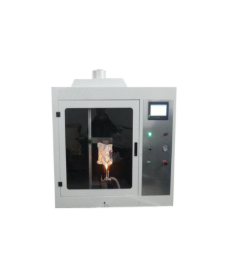
Definition
The Protective Clothing Vertical Flame Spread Tester is specifically designed to measure the flame spread performance of textiles and protective materials in a vertical orientation. The instrument conducts flame exposure tests in accordance with international standards such as ISO 15025. ISO 6941. and ISO 6940. examining how materials respond after contact with a flame and quantitatively evaluating their flammability and protective capabilities.
The objective of the test is to simulate real-world scenarios in which protective clothing may encounter flames or heat sources, helping researchers, engineers, and quality control teams determine whether a material or finished product possesses the necessary flame resistance and safety performance. This type of testing plays a critical role in the design and evaluation of fire-resistant garments, heat-insulating clothing, and firefighting suits.
Testing Principle
The core principle of vertical flame spread testing is to expose a vertically mounted specimen to a controlled flame source under standardized laboratory conditions. The material’s combustion behavior is then assessed based on flame exposure time, flame spread distance, afterflame time, and afterglow time.
A standardized burner is used to generate a flame with controlled height, position, and angle relative to the specimen. The flame is typically applied to either the surface or lower edge of the sample for a specified duration (commonly 10 seconds). Observations are then made regarding how quickly the flame travels to designated reference points and how long the material continues to burn or glow after flame removal.
1. Flame Application and Specimen Mounting
Specimens are securely mounted in a vertical position on a test frame. The burner is positioned according to the relevant standard, and the flame is applied for a predetermined time. The procedure may be repeated multiple times to ensure consistency and reproducibility of results.
2. Key Performance Indicators
Major evaluation parameters include:
Flame Spread Time: The time required for the flame to propagate from the ignition point to a marked reference point on the specimen.
Afterflame Time: The duration for which the material continues to burn after the flame source is removed.
Afterglow Time: The period during which the material remains glowing or smoldering after visible flames have ceased.
These indicators are used to assess the flammability and flame resistance of the tested material.
Standard Framework
To ensure accuracy, repeatability, and comparability of test results, vertical flame spread testing follows a range of international standards that define testing conditions, equipment requirements, and evaluation criteria.
ISO Standards
ISO 15025 is one of the most widely recognized standards for evaluating flame spread behavior in protective clothing. It outlines methods for assessing both surface ignition and edge ignition, and specifies how to measure afterflame time, afterglow time, and char length.
This standard is often used alongside ISO 6940 and ISO 6941. which provide additional methodologies for analyzing material behavior under different flame exposure conditions.
Other Standards
In addition to ISO standards, other international and regional standards such as ASTM (e.g., ASTM D2863) may also be referenced depending on industry requirements and application scenarios.
Instrument Structure
A modern Protective Clothing Vertical Flame Spread Tester typically consists of the following components:
1. Support Frame and Specimen Holder
The tester features a sturdy frame that supports the specimen and mounting apparatus. Adjustable pins or clamps are used to secure the sample at a precise height and orientation to ensure standardized testing conditions.
2. Burner and Gas System
The burner is a critical component that produces a stable flame with controlled height and temperature. Many systems allow adjustable burner angles to meet different testing requirements. Common fuel sources include propane or compressed air-gas mixtures.
3. Control and Data Recording System
Advanced models incorporate automated control systems such as PLC units or touchscreen interfaces, enabling users to set flame exposure time, record afterflame and afterglow durations, and automatically store test results.
4. Display and Data Output
Most testers are equipped with digital displays or LCD screens that provide real-time information on test duration, flame behavior, and other key parameters for easier monitoring and analysis.
Technical Specifications
Although specifications may vary depending on model and configuration, typical technical features include:
Flame height specifications such as 25 ± 2 mm horizontally and 40 ± 2 mm vertically (depending on standard).
Standardized nozzle diameter to ensure flame stability.
High-precision timing system with resolution of 0.1 seconds.
Power supply typically rated at 220–230V AC, 50/60Hz.
Testing conducted under controlled environmental conditions as specified by standards.
These features ensure reliable, repeatable, and comparable test results while minimizing human error through automation.
Application Fields
The Protective Clothing Vertical Flame Spread Tester is widely used in several key areas:
Material Development and Selection
During the design phase of new protective garments, the tester helps engineers identify materials with superior flame resistance and optimize garment structure.
Quality Control and Certification
Manufacturers must conduct flame spread testing before releasing products to ensure compliance with safety standards. Test results serve as critical evidence for certification and regulatory approval.
Standards Compliance Evaluation
The tester is used to verify whether materials meet ISO, EN, and other relevant safety standards.
Risk Assessment and Accident Prevention
By analyzing flame behavior, safety professionals can better predict material performance in real fire scenarios and develop improved protective strategies.
Development Trends
With ongoing advancements in material science and testing technology, vertical flame spread testers are evolving in several directions:
Higher Automation
Modern systems increasingly feature digital control, automated data collection, and integrated reporting functions.
Multi-Standard Compatibility
Interchangeable fixtures and adjustable burners allow a single instrument to comply with multiple international standards.
Enhanced Data Analytics
Software integration enables trend analysis, database storage, and improved traceability for long-term quality monitoring.
The Protective Clothing Vertical Flame Spread Tester plays an essential role in evaluating the fire performance of protective materials. Through standardized and quantitative testing methods, it allows researchers and engineers to accurately assess flame behavior, supporting material innovation, product certification, and workplace safety. As technology continues to advance, these instruments will become even more intelligent and efficient, contributing to safer industrial environments and improved protective equipment worldwide.
Previous: Fabric Friction Charging Charge Tester,JIS L-1094
N e x t : What is a Mask Visual Field Tester?
