





Medical Face Mask Differential Pressure Tester,YY 0469-2011
2026/01/22
Share:

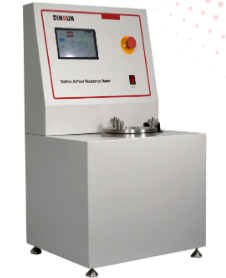
Differential pressure directly reflects a mask’s air permeability and wearing comfort, making it an indispensable indicator in the performance evaluation of medical face masks and related protective products. This article provides a systematic introduction to the definition, working principle, applicable standards, instrument components, testing procedures, application value, and maintenance considerations of the differential pressure tester.
What Is a Differential Pressure Tester?
A differential pressure tester is an instrument designed to measure the pressure difference generated on both sides of a material or mask specimen when gas flows through it at a specified flow rate. Under controlled laboratory conditions, the instrument generates a constant airflow that passes vertically through a defined test area of the specimen. A high-precision differential pressure sensor then detects the pressure before and after the specimen, allowing the pressure difference to be calculated.
This pressure difference value is a key indicator used to assess the air permeability of mask materials. Commonly referenced standards include EN 14683 and ASTM F2100. both of which clearly specify test methods, test area, airflow rate, and environmental conditions. In addition to mask testing, differential pressure testers are also widely used for evaluating the air permeability of textile materials and other porous structures.
Significance of Differential Pressure
In mask performance evaluation, parameters such as filtration efficiency and bacterial filtration efficiency (BFE) are critical, but wearing comfort and ease of breathing are equally important. Differential pressure testing evaluates the resistance encountered when air flows through the material at a defined rate.
A higher differential pressure indicates greater airflow resistance, making breathing more difficult and reducing comfort. Conversely, a lower differential pressure suggests better air permeability and improved breathing comfort during normal use.
In standards such as EN 14683. differential pressure (Delta P) is defined as a core parameter for evaluating breathing resistance. It is closely related to airflow rate, specimen thickness, and material structure, and is a mandatory performance item in both production quality control and regulatory compliance testing.
Basic Working Principle
The fundamental concept of differential pressure testing is to allow constant airflow to pass through a mask specimen and then measure the pressure difference across the material using a differential pressure sensor. The typical test process includes the following steps:
Specimen preparation: Circular specimens of a specified diameter, commonly 25 mm, are cut according to standard requirements and used as the test area.
Airflow setting: A constant airflow source, usually a suction-type pump, generates a stable airflow. Standard test flow rates are commonly set at 8 L/min.
Pressure measurement: As air passes through the specimen, the differential pressure sensor measures the pressure on both sides of the sample and converts the difference into a numerical value.
Data recording: Test results are recorded and compared with standard limit values to determine compliance with air permeability requirements.
Compared with subjective or non-standard airflow assessments, this method provides excellent repeatability and standardization, making it an indispensable quantitative laboratory test.
Differential Pressure Testing and International Standards
The use of a differential pressure tester must comply with relevant international and national standards to ensure test accuracy, comparability, and regulatory acceptance. Although detailed requirements vary slightly among standards, the core test parameters are generally consistent.
EN 14683
EN 14683 is one of the primary European standards for medical face masks. It clearly defines the differential pressure test method for evaluating airflow resistance and air permeability.
ASTM F2100
ASTM F2100 is a key U.S. standard that includes differential pressure testing as part of its mask performance requirements, with particular emphasis on balancing filtration efficiency and breathing resistance.
Domestic Standards
Standards such as YY 0469 and YY/T 0969 also specify differential pressure test methods for medical masks, imposing strict testing requirements for manufacturers and testing laboratories.
Although these standards differ in details such as test area, airflow control, and maximum allowable pressure limits, they all emphasize the importance of differential pressure testing in assessing comfort and safety.
Main Components of a Differential Pressure Tester
A complete differential pressure tester typically consists of the following key components:
Constant Airflow System
This system provides a stable airflow source, most commonly a suction-type air pump capable of delivering continuous and constant airflow regardless of laboratory conditions.
Flow Control Unit
To meet standard test requirements, the instrument is equipped with a flow meter and flow control system to ensure that the airflow remains stable and adjustable during testing.
Differential Pressure Sensor
The high-precision differential pressure sensor is the core measurement component. It detects pressure changes before and after the specimen and converts them into accurate digital signals.
Specimen Clamping Device
Professional specimen holders ensure that samples are securely fixed and properly sealed during testing. Good sealing prevents air leakage and minimizes measurement errors.
Display and Control Interface
Modern instruments typically feature digital displays or touchscreens for parameter setting, real-time data display, and result output. Some models also support data storage and test report printing.
Together, these components enable high-precision, standardized, and automated differential pressure testing in laboratory environments.
Testing Procedure
Although operating interfaces may vary among different models, the basic testing procedure is generally consistent:
Specimen preparation and installation
Specimens are prepared according to standard requirements and mounted securely in the sample holder. Sealing elements must be properly engaged to prevent edge leakage.
Parameter setup
Test parameters such as airflow rate (e.g., 8 L/min) and test duration are set via the control interface. The specified airflow and test area jointly define the test conditions.
Test execution
The airflow system and sensors are activated, allowing air to pass through the specimen at a constant rate. The instrument continuously records pressure data and calculates the differential pressure value.
Result reading and evaluation
After testing, the final differential pressure value is displayed. This value is recorded and compared against the relevant standard limits to determine compliance.
This procedure provides a reliable quantitative evaluation of mask air permeability and breathing comfort.
Practical Applications
Differential pressure testing plays a critical role not only in product development and manufacturing but also in regulatory assessment and third-party testing:
Product Development
During mask design and material selection, differential pressure testing allows comparison of different material structures and layer combinations, supporting informed design decisions.
Production Quality Control
Manufacturers can integrate differential pressure testing into routine quality inspection processes to ensure batch consistency and reduce non-conforming products.
Third-Party Testing and Compliance
Independent laboratories use differential pressure testers to evaluate submitted samples and issue test reports for regulatory approval and market access.
Differential Pressure Values
Differential pressure represents the pressure loss per unit area of a specimen under standardized airflow conditions and is typically expressed in Pa or mmH₂O/cm². Lower values indicate lower airflow resistance and better breathability, while higher values suggest increased resistance that may negatively affect wearing comfort.
In standards such as EN 14683. maximum allowable differential pressure limits are defined to ensure an appropriate balance between protective performance and breathing comfort, making this parameter a critical compliance indicator.
Selection and Use Considerations
When selecting a differential pressure tester, several factors should be carefully considered:
Standard compatibility
The instrument should support major standards such as EN 14683. ASTM F2100. YY 0469. and YY/T 0969 to meet different regulatory requirements.
Measurement accuracy
The differential pressure sensor should provide sufficient resolution and accuracy, particularly in low-pressure measurement ranges.
Specimen holder and sealing performance
A well-designed clamping and sealing structure minimizes leakage and improves measurement repeatability.
Operational convenience
Instruments with digital interfaces, touchscreen controls, data storage, and printing functions improve laboratory efficiency and data management.
The Medical Face Mask Differential Pressure Tester is a vital instrument for evaluating mask air permeability, breathing resistance, and wearing comfort. By controlling constant airflow and measuring the pressure difference across a specimen, the tester provides accurate and objective data on mask performance under standardized conditions. International standards such as EN 14683 and ASTM F2100 ensure the authority and comparability of test results.
These measurements not only support product performance evaluation and regulatory compliance but also provide a scientific basis for material selection and mask design. As demand for respiratory protection continues to grow, the role of differential pressure testers as core testing equipment will become increasingly important.
Previous: Medical Surgical Masks Air Exchange Pressure Difference Tester,EN 14683:2014
N e x t : What is a Medical Face Mask Bacterial Filtration Efficiency (BFE) Tester?
