





What is a Medical Face Mask Bacterial Filtration Efficiency (BFE) Tester?
2026/01/22
Share:

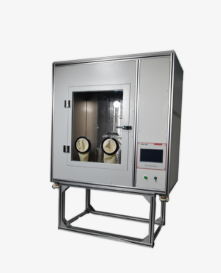
The Medical Face Mask Bacterial Filtration Efficiency Tester is the key instrument for assessing this parameter. It combines standardized bioaerosol testing methods with quantitative measurement and quality control, providing foundational data for regulatory compliance, production management, and scientific research. This article provides a comprehensive overview of the principles, standards, instrument structure, testing procedures, applications, and significance of BFE testing.
What Is Bacterial Filtration Efficiency (BFE)?
Bacterial Filtration Efficiency (BFE) is a quantitative measure of a material’s ability to filter airborne bacteria-containing particles. During testing, a bioaerosol containing a known bacterial strain is passed through a mask specimen under standardized airflow conditions. The number of bacterial colonies upstream and downstream of the specimen is measured, and the ratio is expressed as a percentage representing the BFE.
A higher BFE value indicates that the material is more effective at blocking bacteria-laden aerosols. Standards typically require medical masks to meet a minimum BFE, such as ≥95%, ensuring that the mask provides basic protective capability.
From a standards perspective, BFE testing does not assess overall mask protection, such as viral filtration or facial fit. It is a quantitative evaluation of a single material property—the ability to filter bacterial aerosols.
Testing Principle of BFE
The basic principle of BFE testing is to challenge the material with a controlled bioaerosol. A specialized bioaerosol generator aerosolizes a specific bacterial strain (typically Staphylococcus aureus) into bacterial-laden droplets. These droplets pass through the mask specimen under a constant airflow, and a sampling device records the number of colonies that penetrate the material.
Key steps include:
Bioaerosol generation: Bacteria are aerosolized into droplets with a controlled size of approximately 3 ± 0.3 μm, similar to typical respiratory droplets.
Specimen placement: Mask material is fixed in a test fixture, and the bioaerosol is delivered at the standard flow rate.
Six-stage microbial sampling: A cascade impactor collects upstream and downstream aerosol samples across different stages.
Culture and colony counting: Collected samples are incubated to allow colony formation. BFE is calculated based on the ratio of colonies upstream and downstream.
This method accounts for both biological properties and aerodynamic behavior, making it the internationally accepted quantitative approach for BFE assessment.
International and National Standards
BFE testing is not included in all mask performance standards, but it is a core metric in medical protective standards. Common standards include:
ASTM F2101: The American standard specifies the method for evaluating BFE of medical mask materials. Efficiency is calculated from the ratio of bacterial aerosol concentrations upstream and downstream, and filtration efficiency can reach up to 99.9%. This method is widely used for pre-market performance evaluation.
EN 14683: The European standard for surgical masks includes BFE testing, specifying aerosol generation, sampling, and calculation procedures to ensure that masks sold in Europe meet minimum bacterial barrier requirements.
YY 0469 and other domestic standards: Chinese standards specify detailed BFE testing requirements, including bacterial strains, aerosol generation, sample dimensions, and culture analysis.
While variations exist in airflow rates, sample handling, and calculation methods, all standards share the same goal: to evaluate the material’s ability to filter bacterial aerosols and ensure basic protection in medical settings.
Instrument Components
A BFE tester consists of several key systems designed to meet standard requirements:
Bioaerosol generation system: A specialized nebulizer converts bacterial culture into micron-scale aerosols. Flow and nebulization parameters are adjusted to provide a consistent test challenge.
Aerosol chamber and transmission system: Aerosols enter a chamber and are delivered to the specimen holder. A coordinated negative-pressure system ensures uniform aerosol distribution.
Negative-pressure sampling system: Draws aerosol through the specimen at a controlled flow while preventing biohazard exposure in the laboratory.
Six-stage cascade impactor: Separates and collects aerosols into different stages for precise colony counting after incubation.
Control and display system: Modern testers feature computer-based control for automated aerosol generation, airflow regulation, data acquisition, and test process management, with real-time monitoring on a display interface.
The integration of these systems ensures safe, accurate, and repeatable testing, providing laboratories with reliable quantitative measurement capabilities.
Testing Procedure
Although interfaces vary among brands, the core workflow is consistent:
Specimen preparation and conditioning: Mask samples are prepared according to standards, typically multi-layered to reflect actual mask construction. Samples are preconditioned under standard temperature and humidity to minimize environmental impact.
Aerosol challenge and sampling: The bioaerosol system is activated, and aerosol passes through the specimen at the specified flow rate (e.g., 28.3 L/min). Downstream aerosol is collected in the six-stage cascade impactor.
Culture and data analysis: Collected samples are incubated for colony growth. BFE is calculated using the ratio of upstream to downstream colonies.
Because incubation requires time, the entire test from exposure to result may take several days.
Applications and Significance
BFE testers are critical in several areas:
Production quality control: Manufacturers test each batch to ensure compliance with standards and consistency across products.
Third-party testing and regulatory compliance: Independent laboratories verify mask performance, providing data for certification and market oversight.
Research and development: BFE testing is essential for evaluating new materials, mask structures, or protective technologies.
Compared with other filtration metrics, such as Particle Filtration Efficiency (PFE), BFE specifically evaluates the material’s ability to block bacterial aerosols, which directly impacts infection control in medical environments.
Relationship to Mask Performance
BFE depends on mask material and structure. High-efficiency filtration materials often have higher airflow resistance, so design must balance protection and breathability. Standards typically recommend evaluating BFE alongside differential pressure (breathing resistance) and other metrics.
Studies indicate that materials with high PFE also generally meet BFE standards, but because the two metrics use different particle sizes and methods, they should be assessed independently.
Common Misconceptions
BFE does not guarantee viral protection: It measures bacterial aerosol filtration. Viruses are much smaller than bacteria, so a high BFE does not automatically indicate protection against viruses.
BFE assesses material performance only: It does not account for mask fit or design, which significantly affect real-world protection.
Instrument Maintenance and Data Quality
To ensure accurate and repeatable results:
Regularly calibrate aerosol generators and samplers to maintain consistent aerosol output and sampling sensitivity.
Maintain negative-pressure system integrity to ensure stable airflow and sampling accuracy.
Strictly manage culture conditions and data with careful colony counting and documentation.
Robust quality control procedures enhance data reliability and support regulatory compliance and product improvement.
The Medical Face Mask Bacterial Filtration Efficiency Tester is a precision instrument for quantitatively evaluating mask materials’ ability to block bacterial aerosols. Using standardized bioaerosol generation, constant airflow, six-stage sampling, and culture analysis, it provides the BFE metric—a core indicator in medical mask performance evaluation.
BFE testing is vital for production quality control, product certification, and research and development, offering reliable data to ensure that masks meet minimum protective requirements. Through rigorous, standardized procedures and instruments compliant with international standards, BFE testers support quantitative evaluation of existing mask materials and the development of new protective technologies.
Previous: Medical Face Mask Differential Pressure Tester,YY 0469-2011
N e x t : How to measure filtration efficiency?
