





How to measure filtration efficiency?
2026/01/22
Share:

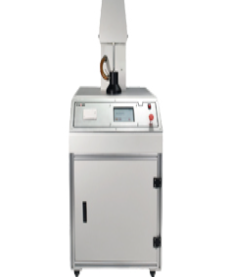
Basic Concept
Filtration efficiency refers to the ability of a filter material, filter, or filtration system to remove target pollutants, such as particles or microorganisms. It is usually expressed as a percentage, with higher values indicating greater effectiveness at blocking the target contaminant. In most tests, filtration efficiency is calculated by comparing pollutant concentrations upstream and downstream of the filter medium.
Physical Principles of Filtration Efficiency Measurement
The core principle of filtration efficiency testing is to generate a stable, controlled pollutant stream and measure its concentration before and after passing through the sample. Specifically:
Pollutant source: Common challenge agents include standard particle aerosols (e.g., polystyrene latex spheres), salt aerosols (e.g., NaCl), microbial aerosols, or environmental dust.
Upstream and downstream measurement: Particle counters, mass analyzers, or biological samplers measure pollutant concentrations on both sides of the filter. Accurate and sensitive instruments are essential to avoid distorted results.
Controlled test conditions: Factors such as airflow, temperature, humidity, and sample area affect results. Standards typically define these conditions to ensure consistency.
Through these steps, the filter’s ability to block contaminants of specific sizes can be quantified.
Common Filtration Efficiency Measurement Methods
Different applications and target pollutants require different methods. Typical approaches include:
1. Particle Counting Method
This is the most common method, suitable for measuring air filters, mask materials, and indoor air purification systems. It involves:
Counting particles upstream (before filtration)
Counting particles downstream (after filtration)
Filtration efficiency is calculated from these two measurements. Testing can focus on specific particle sizes (e.g., 0.3 µm or larger) and is a standard method for evaluating high-efficiency filters such as HEPA or ULPA.
2. Bioaerosol Testing Method
Used for medical masks and protective filter materials, this method evaluates bacterial filtration efficiency (BFE) or viral filtration efficiency (VFE) using actual microbial aerosols:
Generate bacteria- or virus-laden aerosols
Pass the aerosol through the sample and collect downstream using a sampler
Incubate and count colony-forming units (CFU) to calculate efficiency
This approach reflects real-world performance against biological contaminants and is particularly relevant for medical protective products.
3. Mass Measurement Method
In some industrial or standard evaluations, filtration efficiency is determined by measuring the mass of particles upstream and downstream of the filter. For example, in testing bag filters under EN 779 standards, the dust mass before and after filtration is weighed to calculate the overall efficiency. This method is effective for larger particles or solid dust.
General Testing Procedure
Although procedures vary slightly between methods, typical steps include:
Sample preparation: Prepare specimens according to standards, ensuring correct size, area, and edge sealing. Accuracy here directly affects test validity.
Pollutant source setup: Generate a stable, reproducible challenge aerosol or particle stream in a laboratory environment.
Measurement device setup: Use particle counters, light-scattering instruments, or other detectors to measure upstream and downstream pollutant concentrations. Instruments must be calibrated and sufficiently sensitive for accurate readings.
Data acquisition and analysis: Collect continuous data and calculate filtration efficiency using standard formulas. Efficiency is often analyzed for different particle sizes and reported as total or size-specific efficiency.
Standardized Testing Guidelines
Filtration efficiency measurement is subject to strict international standards, such as:
ASTM Standards: Multiple ASTM standards, including F2299 and F2100. specify methods for testing particle filtration efficiency (PFE) of medical masks. They involve counting standard particles (e.g., polystyrene latex spheres) upstream and downstream under defined airflow conditions. Other ASTM standards set parameters such as airflow rates for mask and filter testing.
Key Factors in Test Design
Filtration efficiency results are influenced by several factors:
Airflow velocity: Affects particle penetration. Different standards or applications specify particular flow rates, e.g., 28.3 L/min for medical masks, simulating normal breathing conditions.
Particle size range: Efficiency depends strongly on particle size; for example, 0.3 µm is critical for HEPA filters.
Particle properties: Shape, density, and charge can affect filtration and detection. Neutralized particles are often used to eliminate static effects.
Typical Applications
Air purification and HVAC systems: Efficiency testing ensures indoor air quality standards are met, including for cleanroom filters and building air systems.
Medical protective products: Masks, respirators, and surgical masks are evaluated for bacterial, dust, and viral aerosol filtration performance.
Industrial filtration equipment: Mechanical filters and oil mist filters are tested for particle capture to ensure safe operation of equipment.
Interpreting Test Results
Filtration efficiency data usually include:
Overall efficiency percentage: Average contaminant removal ability of the material
Size-specific efficiency: Performance against different particle sizes
Pressure drop or airflow resistance: Evaluates combined performance with efficiency
These results allow comprehensive assessment of filter performance and inform design improvements.
Controlling Measurement Errors
Cross-laboratory studies show that results can vary between labs. Consistency in testing procedures, instrument calibration, and sample handling is critical. Minor variations in test conditions or equipment can lead to measurement deviations, so standardized operations must be maintained.
Relationship to High-Efficiency Filters
High-standard filters such as HEPA (High-Efficiency Particulate Air) and ULPA (Ultra-Low Penetration Air) are expected to achieve extremely high filtration efficiencies at specific particle sizes. For example, HEPA filters remove >99.97% of 0.3 µm particles, meeting the requirements of clean air applications.
Filtration efficiency is a fundamental and critical performance metric. Accurate measurement is essential for air quality control, personal protection, industrial production, and research. Strict adherence to standardized testing protocols ensures reliable and reproducible data, providing a scientific basis for filter design, quality control, and certification. Understanding the measurement methods and influencing factors is key to fully evaluating and optimizing filter system performance.
Previous: What is a Medical Face Mask Bacterial Filtration Efficiency (BFE) Tester?
N e x t : Yarn Appearance Board Winder,ASTM 2255
