





Wire Torsion and Winding Tester,ISO 9649:1990
2026/01/26
Share:

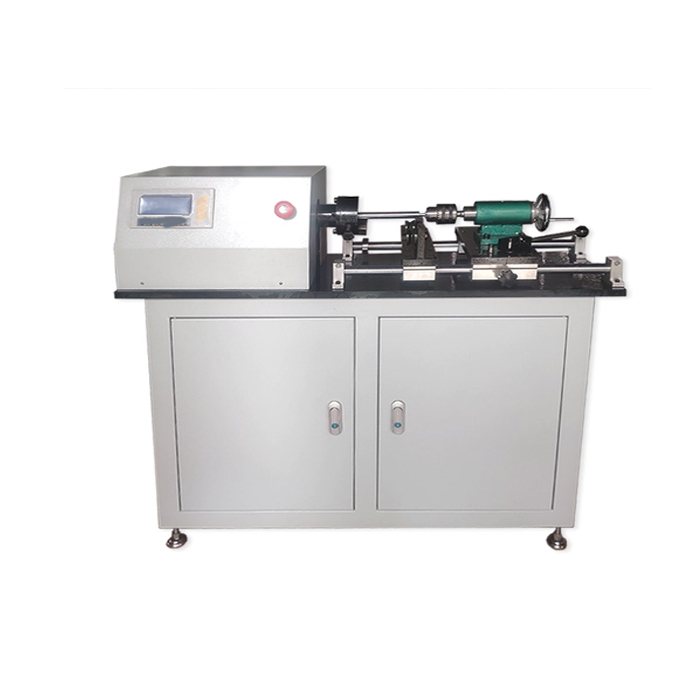
This article provides a systematic overview of wire torsion and winding testers from the perspectives of equipment configuration, working principles, testing standards, operating procedures, technical features, and industry applications, helping readers gain a comprehensive understanding of the role and value of this type of testing equipment in modern industrial systems.
Equipment Overview and Working Principles
Basic Equipment Configuration
A wire torsion and winding tester typically consists of the following main components:
Loading system: Driven by a motor or servo mechanism to apply torsional or winding loads to the specimen, enabling controlled rotation angles and speeds.
Transmission and control system: Uses precision transmission components to accurately deliver motor output to the gripping fixtures, while the control system precisely regulates torsion cycles, rotational speed, and angular range.
Gripping fixtures: Specialized fixtures are used to secure one or both ends of the test specimen and transmit the applied load, ensuring that the sample does not slip during torsion or winding.
Measurement and display system: Includes angle sensors, revolution counters, display panels, or digital interfaces for real-time monitoring of torsion angle, number of turns, applied load, and other relevant parameters.
Data acquisition and processing module: In digital systems, computer software is used for data recording, analysis, and output of test results.
The overall structure of the equipment is robust and stable, featuring a high-rigidity frame and precise speed control to meet the testing requirements of wires with different specifications.
Working Principle
The primary purpose of a wire torsion and winding tester is to evaluate plastic deformation behavior and fatigue performance under torsional and winding loads. The basic principles are as follows:
Torsion testing: After one end of the specimen is secured in the fixture, the drive system applies rotational loading, causing the wire to rotate about its own axis in a single direction or in alternating directions until a specified angle or number of turns is reached. Changes in torsion angle, fracture behavior, and torsion cycles are key indicators of material performance.
Winding testing: During winding tests, the wire is wound around a specified mandrel while the loading system applies controlled rotation, simulating actual winding conditions. By observing surface defects, damage, or fatigue behavior, the durability and reliability of the wire material can be evaluated.
Throughout the test, the equipment executes pre-programmed torsion or winding actions automatically and records relevant data for subsequent analysis.
Standards and Testing Principles
Wire torsion and winding tests are governed by established national and international standards that define test parameters, procedures, and evaluation criteria to ensure scientific validity and consistency of results.
1. Metal Wire Torsion Test Standards
Commonly used torsion testing standards in material mechanics include:
GB/T 239.1-2012: Metallic materials — Wire — Single-direction torsion test method, used to evaluate plastic deformation capacity under unidirectional torsion.
GB/T 239.2-2012: Metallic materials — Wire — Reverse torsion test method, suitable for assessing fatigue behavior under alternating torsional loads.
ISO 7800:2003 and ISO 9649:1990: International standards corresponding to single-direction and reverse torsion test methods, based on principles consistent with domestic standards.
These standards clearly define key parameters such as torsion angle, rotation speed, specimen clamping method, and data recording requirements, serving as the basis for equipment design and result evaluation.
2. Bare Wire Winding Test Standards
For winding performance evaluation, commonly referenced standards include:
GB/T 4909.7-2009: Test methods for bare electric wires — Winding test, used to assess deformation, surface defects, and fatigue behavior after winding around a mandrel.
GB/T 4909.4-2009: Test methods for bare electric wires — Torsion test, specifying procedures for evaluating wire behavior under torsional loading.
These standards help testers reasonably simulate mechanical load conditions encountered during manufacturing and service, and determine whether materials meet specific performance requirements.
Testing Procedure
In practical applications, the operation of a wire torsion and winding tester generally includes the following stages:
1. Sample Preparation
Test specimens are prepared according to standard requirements, including cutting to specified length, cleaning the surface, and checking for visible defects. Different standards specify detailed requirements for specimen diameter range, length, and initial condition.
2. Fixture Installation
One or both ends of the specimen are secured in the machine fixtures, ensuring sufficient clamping force and proper axial alignment. The fixtures must prevent slippage or unintended bending during loading.
3. Test Parameter Setup
Test parameters such as torsion angle, number of turns, rotation speed, and test cycles are set via the control system. For winding tests, mandrel diameter, number of winding turns, and loading mode must also be specified.
4. Test Execution
Once the test starts, the equipment automatically performs the preset actions while continuously monitoring key parameters such as torsion angle and number of turns. Data can be viewed in real time via the display panel or computer-based data acquisition system.
5. Result Recording and Analysis
After completion, test data are saved or exported and evaluated according to applicable standards. Key evaluation criteria include fracture turns, torsion angle, and surface defect conditions. For winding tests, instability behavior and residual deformation along the winding direction are also examined.
Technical Features
With increasing industrial automation, modern wire torsion and winding testers continue to evolve in technical sophistication.
Automation and Digital Control
Many systems employ digital control platforms that allow test programs to be preset, executed automatically, and recorded, significantly improving accuracy and efficiency.
Adjustable Test Parameters
The equipment supports flexible parameter adjustment, including torsion speed, torsion angle, number of winding turns, and rotation direction switching, enabling testing of various wire types and specifications.
Multi-Function Integration
Some models integrate both torsion and winding test modes into a single machine, allowing multiple mechanical behavior evaluations to be conducted on one platform.
Data Acquisition and Analysis Capability
Modern testers are equipped with real-time data acquisition modules or computer-based analysis software, facilitating test report generation and performance comparison across different material samples.
Industry Applications
Wire torsion and winding testers are widely used across multiple industries.
Wire Manufacturing and Quality Control
Manufacturers use this equipment for in-process quality monitoring and batch inspection to ensure products meet standard requirements and enhance market competitiveness.
Cable and Wire Industry
For power cables, electrical wires, and communication conductors, torsion and winding performance directly affects durability and safety. These testers play a critical role in pre-delivery testing.
Research and Academic Laboratories
In material science, mechanical engineering research, and university laboratories, this equipment is used to study mechanical behavior, develop new materials, and optimize structural design.
Quality Certification and Standards Evaluation
Results from torsion and winding tests are often used as key evidence in product certification and compliance evaluation, supporting access to higher-level markets.
As a specialized mechanical testing instrument, the wire torsion and winding tester provides scientific and reliable data by simulating wire behavior under torsional and winding loads. By combining standardized testing procedures with advanced control technology, it enables accurate evaluation of plastic deformation capacity, fatigue characteristics, and overall reliability. As such, it remains an essential testing solution for modern industrial production and scientific research.
Previous: Battery impact tester,IEC 62133
N e x t : What is the reverse bend test of wire?
