





Battery Nail Penetration Tester, IEC 62133
2026/01/26
Share:

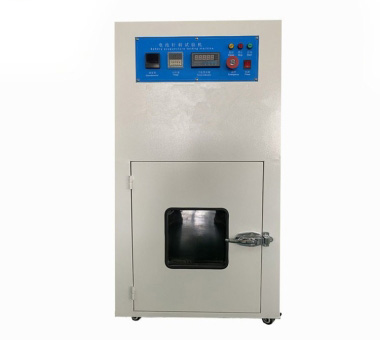
What is a Battery Nail Penetration Tester?
A battery nail penetration tester is specialized equipment designed to perform mechanical nail penetration experiments on batteries. It evaluates whether a battery may experience internal short circuits, thermal runaway, fire, or explosion when subjected to external puncture forces. This test is a form of battery abuse testing. Using sharp tools such as high-temperature resistant steel nails, the tester penetrates the battery to simulate real-world situations in which a battery might be pierced, thereby assessing the battery’s safety performance.
Typically, the tester consists of a test chamber, a penetration system (including a controllable drive and steel nail), safety enclosures, and a measurement and control system. It allows precise execution of the penetration action in a controlled environment, monitoring the battery’s response while recording voltage, temperature, and force data. A battery that does not ignite or explode during the test is considered to exhibit good safety performance under extreme conditions.
Test Principle and Scientific Basis
The basic principle of battery nail penetration testing is to vertically insert a hard steel nail—typically 2–8 mm in diameter—into the battery, piercing the separator between the positive and negative electrodes and causing an internal short circuit. Under normal conditions, the separator prevents contact between the electrodes. Once pierced, the electrodes may touch directly, generating a short circuit. This results in a rapid release of current, Joule heating within the battery, chemical reactions in the electrolyte, generation of flammable gases, and potentially thermal runaway, smoke, fire, or explosion.
The test is scientifically valid because it closely replicates dangerous scenarios that could occur in real life, such as a battery being pierced during a traffic accident, damaged during transport, or otherwise misused. By analyzing the battery’s behavior after penetration, manufacturers can understand safety limits under extreme stress and use the results to guide design improvements and safety control measures.
Purpose and Significance of Nail Penetration Testing
The primary purpose of the battery nail penetration test is to verify whether a battery will react dangerously when subjected to a sharp puncture. Its significance includes:
Evaluating internal short-circuit tolerance
When a battery experiences an internal short circuit, current flows along the shortest path, generating significant heat that may lead to thermal runaway. Nail penetration testing artificially induces internal short circuits, allowing observation of voltage drops, temperature changes, and other behaviors, reflecting the battery’s internal safety design.
Simulating real-world abuse conditions
Batteries in practical scenarios are subjected to complex combinations of impacts, punctures, compression, and collisions. Nail penetration testing provides a simple, repeatable way to simulate one of these abuse modes, enabling manufacturers and testing agencies to understand battery behavior under specific conditions.
Informing safety design improvements
Comparing performance across different designs, materials, and battery structures under penetration tests can identify critical factors that contribute to safety failures, such as separator durability or electrode arrangement. This evidence-based analysis supports design optimization to enhance overall safety.
Meeting standard and certification requirements
International and national standards, including IEC62133 and UN38.3. specify battery abuse testing requirements. Nail penetration testing is a key safety verification test and serves as an important reference for product certification and market approval. Passing the nail penetration test is often a critical step in battery safety certification.
Typical Nail Penetration Test Procedure
Although specific parameters may vary by equipment and standard, the typical process involves:
Preparation
The battery is brought to its nominal charge and standard laboratory temperature (e.g., 20 °C ±5 °C). Temperature sensors and monitoring devices are attached to capture data in real time during the test.
Positioning and fixing
The battery is secured in the tester’s fixture, ensuring accurate alignment with the intended penetration point. Fixtures prevent battery movement due to impact forces.
Executing the penetration
A steel nail (usually 2–8 mm diameter) is driven vertically into the battery center at a controlled speed (typically 10–40 mm/s), maintaining penetration for a set time (e.g., 5 s) to observe instantaneous reactions.
Data recording and safety observation
During penetration, the system monitors battery voltage, temperature, and visual signs of smoke, flames, or rupture. Complete data logging is crucial for evaluating safety performance.
Judgment and analysis
After the test, the battery is judged based on whether it ignited or exploded within a defined time. If no hazardous events occur, the battery is considered to meet basic safety requirements. Additional analysis of temperature rise, voltage drop, and other parameters provides detailed insight into the battery’s safety performance.
Composition and Structural Features of a Battery Nail Penetration Tester
A professional tester typically includes:
Safety enclosure
To protect personnel from violent battery reactions, the test is performed inside a fully enclosed metal chamber with fireproof, explosion-proof, and corrosion-resistant properties. Observation windows or monitoring ports allow data collection.
Penetration mechanism and drive system
The core system uses pneumatic, electric, or hydraulic drives to control the nail’s speed and force. Advanced systems allow precise adjustments of speed, force, displacement, and nail diameter and angle.
Measurement and control system
Monitors penetration speed, force, temperature, voltage, and other parameters in real time, transmitting data for recording and analysis.
Auxiliary safety facilities
Include ventilation systems, flame suppression devices, and electrical protections to minimize risks during violent reactions. Ventilation removes hazardous gases and prevents pressure buildup.
Comparison with Other Battery Abuse Tests
Other common abuse tests include compression, drop, and external short-circuit tests:
Compression and impact tests: Apply continuous pressure or impact to induce casing rupture or internal short circuits. Nail penetration specifically focuses on puncture by sharp objects.
Drop tests: Simulate impact from height, stressing the entire battery structure rather than localized penetration.
Short-circuit tests: Externally short-circuit the battery to mimic electrical faults. Nail penetration simulates internal short circuits, which are more unpredictable and hazardous.
Together, these tests form a multi-dimensional battery safety evaluation system.
Standards and Guidelines
Battery nail penetration tester design and test procedures follow international and national standards, such as IEC62133. UN38.3. and GB/T series. These standards specify test parameters, sample preparation, and pass/fail criteria, ensuring reproducibility and scientific reliability. The inclusion of nail penetration testing highlights its importance in the battery safety assessment framework.
Data Analysis and Safety Assessment Indicators
Data collected during testing typically include:
Voltage variation over time
Surface and internal battery temperatures
Force and displacement curves of the nail
Occurrence of smoke, fire, or rupture
Analysis of these parameters allows quantification of energy release rates, thermal runaway thresholds, and voltage decay, providing detailed safety performance metrics. These results are critical for battery design improvement, material selection, and certification.
Application Areas and Industry Value
Power battery R&D and mass production
In electric vehicles and energy storage systems, nail penetration testing is essential for evaluating the safety of battery cells and modules with different designs and materials.
Consumer electronics and mobile devices
Lithium-ion batteries in smartphones and laptops also face puncture risks. Nail penetration testing helps assess battery safety during assembly, transport, and user handling.
Third-party testing and certification labs
Provides objective data to verify battery compliance with safety standards, supporting product certification.
Transportation safety regulation
Evaluates battery packaging safety under local impact conditions, supporting compliance with national transport regulations.
Future Trends
As batteries become larger and higher in energy density, safety demands increase. Nail penetration testers are evolving toward:
Higher automation
More precise penetration control
Enhanced safety monitoring systems
Integration with virtual simulation technologies
Combining multiple abuse tests in a single platform and improving repeatability and data precision will enhance the overall battery safety assessment capability.
The battery nail penetration tester is an essential tool in battery safety testing. By simulating extreme internal short-circuit scenarios caused by sharp object penetration, it enables controlled, realistic evaluation of battery behavior under hazardous conditions. This provides critical data for R&D, safety certification, and production quality control. With continued advances in battery technology and expanding applications, battery safety testing—and nail penetration testing in particular—will play an increasingly central role in ensuring safe, reliable energy storage solutions.
Previous: Metal Wire Wrap Tester,ISO 4101
N e x t : What is an STD Battery short-circuit tester?
