





What kind of machine can simulate the natural environment?
2026/01/27
Share:

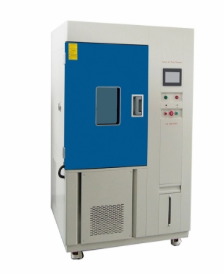
Technical Principles
The core of the xenon test chamber lies in its full-spectrum light source system and dynamic environmental control technology. The equipment uses a long-arc xenon lamp as the light source, whose spectral distribution covers ultraviolet (UV), visible (VIS), and infrared (IR) light, highly matching the solar spectrum. By equipping different types of optical filters, specific environmental conditions can be simulated:
Sunlight Filter: Simulates direct outdoor sunlight, suitable for testing building exterior coatings, photovoltaic modules, etc.
Window Glass Filter: Simulates sunlight filtering through glass indoors, used for testing automotive interiors, textiles, etc.
UV Enhanced Filter: Enhances ultraviolet radiation, accelerating the photodegradation process of materials.
Regarding illumination control, the equipment employs a closed-loop feedback system. A light sensor monitors the irradiance intensity in real time, automatically compensating for light intensity attenuation caused by xenon lamp aging, ensuring irradiance stability better than ±5% throughout the testing period. Comparative testing by a research institution showed that the test chamber using this technology exhibited an irradiance fluctuation range of only 2.3% after 1000 hours of testing, far exceeding the industry average.
Humidity and temperature control is another key module. The equipment integrates a steam jet humidification system and an electric heating module, enabling:
Humidity range: 10%RH-95%RH, supporting continuous or periodic humidity cycling
Temperature range: Ambient temperature +5℃ to 90℃, with a black-label thermometer accurately monitoring sample surface temperature
Condensation simulation: Simulating nighttime condensation by lowering the sample surface temperature below the dew point
An automotive coating supplier used this technology to test vehicle body coatings and found that traditional acrylic coatings blistered after 200 hours at 40℃/85%RH, while modified fluorocarbon coatings remained intact under the same conditions, providing crucial data support for product upgrades.
Core Functions
1. Accelerated Photoaging Test
The xenon lamp aging test chamber significantly shortens the testing cycle by enhancing light intensity and the proportion of ultraviolet light. Taking the ISO 4892-2 standard test as an example, the equipment can simulate 5 years of outdoor natural exposure in 500 hours. A building materials company, when testing exterior wall insulation boards, found that traditional polystyrene boards had a surface powdering rate of 18% after 300 hours of testing, while graphite polystyrene boards only had 2%, directly driving material upgrades in the industry.
2. Humidity and Heat Cycling Test
The equipment supports customizable temperature and humidity cycling programs to simulate day-night cycles and seasonal changes. In the ASTM D4587 standard test, the test chamber accelerates the corrosion of metal materials and the hydrolysis of polymer materials through alternating cycles of a 40℃/85%RH high humidity environment and a 25℃/50%RH normal temperature environment. An electronic component manufacturer found that unprotected circuit boards short-circuited after 200 cycles, while samples with conformal coatings passed 500 cycles, verifying the effectiveness of the protective process.
3. Condensation Simulation Test
By precisely controlling the sample surface temperature and air humidity, the equipment can simulate nighttime condensation. In the ISO 6270-2 standard test, the test chamber is maintained at 40℃/95%RH for 2 hours, then the sample surface temperature is lowered to below 20℃ to induce condensation, and this cycle is repeated after 2 hours. A supplier of automotive interior materials found that ordinary PVC materials showed significant color differences after 50 cycles, while modified TPU materials passed 200 cycles, meeting the stringent requirements of high-end models.
Industry Applications
1. Automotive Industry
With the trend towards lightweighting in automobiles, the application of non-metallic materials is becoming increasingly widespread. Xenon lamp aging test chambers have become a key tool for evaluating the weather resistance of these materials:
Exterior trim testing: Testing the colorfastness and gloss retention of components such as front and rear bumpers and grilles.
Interior trim testing: Evaluating the UV aging resistance of seat fabrics and dashboard surfaces.
Coating testing: Verifying the salt spray, damp heat, and condensation resistance of vehicle body coatings.
A new energy vehicle manufacturer used this equipment to test battery pack casing materials and found that traditional ABS materials experienced a 42% decrease in impact strength after 1000 hours of testing, while modified PC/ABS materials only experienced an 8% decrease, providing data support for battery safety design.
2. Building Materials
With increasingly stringent green building standards, the weather resistance of materials directly affects the lifespan of buildings. Test chambers are widely used in:
Exterior wall materials: Testing the gloss retention and color difference changes of aluminum panels, ceramic panels, stone, etc.
Roofing materials: Evaluating the UV resistance and thermal cycling resistance of waterproof membranes and tiles.
Sealing materials: Verifying the resistance to damp heat and UV aging of silicone sealants.
A curtain wall company's test found that ordinary silicone sealant increased in hardness by 15% after 500 hours of testing, while modified sealant only increased by 3%, significantly improving the reliability of curtain wall sealing.
3. Textile Industry
Outdoor textiles must simultaneously meet functional and durability requirements. Test chambers simulate different climatic conditions to evaluate:
Color fastness: Testing the degree of fading of fabrics under the combined effects of light and humidity.
Strength retention: Evaluating the change in tensile strength of fabrics under humid and hot environments.
Functional durability: Verifying the aging resistance of waterproof, UV-resistant, and other coatings.
A sports brand's test found that ordinary polyester fiber fabrics experienced a 35% decrease in tear strength after 300 hours of testing, while fabrics treated with UV-resistant finishes only decreased by 8%, meeting the stringent standards of professional sports equipment.
Technological Evolution
Currently, xenon lamp aging test chambers are developing in two directions:
1. Intelligent Control
The new generation of equipment integrates IoT technology to achieve:
Remote Monitoring: Real-time viewing of test progress and equipment status via mobile phone or computer
Automatic Data Acquisition: Built-in sensors automatically record parameters such as irradiance, temperature, and humidity
Fault Early Warning: Predicting equipment maintenance needs based on big data analysis
A laboratory used an intelligent test chamber to test photovoltaic modules. The system automatically generated a test report containing parameters such as spectral distribution and energy accumulation, reducing data processing time from 4 hours to 10 minutes.
2. Multi-Factor Coupled Testing
To more realistically simulate complex environments, the equipment is integrating more environmental parameter control modules:
Salt Spray Simulation: Evaluating the corrosion resistance of materials in marine climates through atomization systems.
Ozone Aging: Testing the aging characteristics of rubber materials under the combined effects of ozone and light.
Mechanical Stress: Evaluating the durability of materials under dynamic environments by combining tensile, bending, and other mechanical loads.
An aerospace company, while developing a new sealing material, used a multi-factor coupled test chamber and found that the material's lifespan was shortened by 60% under the combined effects of light, humidity, heat, and vibration compared to single-factor testing, providing a key direction for material optimization.
Challenges and Prospects
Despite significant technological advancements, the industry still faces two major challenges:
Spectral Matching Accuracy: Differences still exist between existing xenon lamp spectra and solar spectra, especially in the short-wave ultraviolet region.
Long-Term Stability Verification: Further research is needed on the correlation between accelerated test results and natural exposure data.
In the future, with the development of materials science, xenon lamp aging test chambers will evolve towards greater specialization. It is projected that by 2030. test chambers equipped with atomic layer deposition (ALD) filtering technology will become mainstream. These chambers achieve precise spectral control through nanoscale coatings, increasing the correlation between accelerated testing and natural exposure results to over 95%. Simultaneously, the introduction of artificial intelligence algorithms will enable automatic optimization of test parameters, further shortening the R&D cycle and propelling materials weathering testing into a new era of intelligent technology.
From the laboratory to the production line, xenon lamp aging test chambers are continuously driving progress in materials science with their precise simulation capabilities and high testing efficiency. In addressing the global challenges of climate change and sustainable development, this "artificial climate simulator" will play an increasingly important role in extending material lifespan and reducing resource consumption.
Previous: Battery combustion tester,IEC 62281:2004
N e x t : What are three types of dry cleaning?
