





Battery combustion tester,IEC 62281:2004
2026/01/27
Share:

Basic Principle
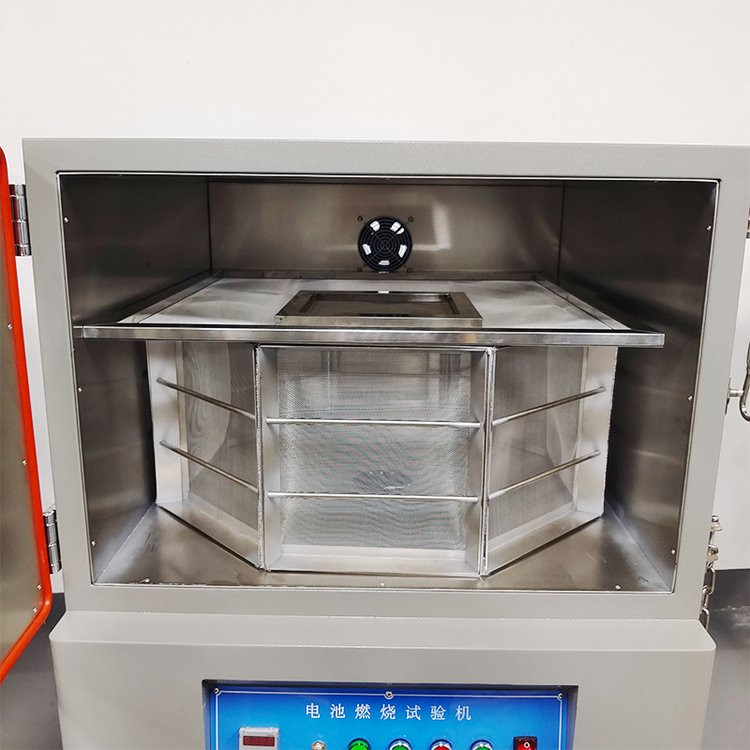
A Battery Combustion Tester is designed to simulate combustion or explosion behavior that may occur when batteries are exposed to open flames or fire environments. During testing, a flame source is applied beneath a battery or battery pack specimen, which is secured on a high-temperature-resistant wire mesh. The tester allows for continuous observation of whether the battery ignites, explodes, or is completely consumed by fire, while recording the duration and condition of the entire combustion process. This enables evaluation of the battery’s combustion characteristics and fire resistance.
The fundamental principles of combustion testing include:
Placing the battery specimen on a heat-resistant wire mesh with a defined aperture and wire diameter, ensuring that the combustion process occurs under standardized geometric conditions.
Igniting a burner beneath the specimen at a specified distance from the mesh so that the battery is directly exposed to flame.
Observing and recording key events during combustion, such as ignition, burn duration, and whether an explosion occurs.
This testing method can be applied not only to individual battery cells but also to battery packs, helping engineers assess battery behavior and safety performance under extreme abuse conditions.
Importance of Battery Combustion Testing
The significance of battery combustion testing extends far beyond simple observation of burning phenomena. It is an indispensable component of the overall battery safety framework for several reasons:
Prevention of Thermal Runaway Fire Risks
Lithium-ion batteries are prone to thermal runaway when subjected to overheating, short circuits, or overcharging. Combustion testing allows observation of heat release, ignition of surrounding materials, and potential explosion behavior, providing valuable reference data for fire protection and safety design in real-world applications.
Compliance with Safety Standards and Regulations
Many international and national standards, such as UL1642 and GB31241. require batteries to pass combustion or flame exposure tests and define clear acceptance criteria. Conducting combustion tests supports compliance certification and enables battery products to enter target markets.
Enhancement of Product Design and Material Selection
Test results help R&D teams evaluate the influence of materials, battery structures, and electrolyte formulations on combustion behavior, thereby promoting the development of safer materials and more robust battery designs.
Test Procedure
Although specific details and automation levels vary among instruments, most battery combustion testers follow a similar testing process:
Sample Preparation
Place the battery specimen on a flame-resistant, high-temperature wire mesh and verify its initial condition.
Burner Setup
Adjust the burner height to achieve the specified distance from the wire mesh. Standard flame sources, such as Bunsen burners, are commonly used.
Ignition of Flame Source
Ignite the burner and apply the flame to the specimen while monitoring test conditions.
Observation, Timing, and Recording
Continuously observe and time the combustion process until the battery is fully burned, explodes, or the predefined test endpoint is reached.
Data Analysis
Compile data on burn duration, destruction level, and explosion occurrence to support subsequent safety evaluations.
These steps highlight the systematic and scientific nature of combustion testing within the overall safety validation process.
Industry Application Scenarios
Battery combustion testing is widely applied across multiple industries and product categories, including:
Battery Manufacturing and Quality Control
Manufacturers conduct regular combustion tests to verify fire safety performance, ensuring batch consistency and product reliability.
Consumer Electronics and Portable Devices
Due to their compact size and high energy density, batteries used in smartphones, laptops, and other portable devices pose elevated fire risks. Combustion testing helps ensure user safety during normal and abnormal use.
Electric Vehicles and Energy Storage Systems
Large-scale power battery systems installed in vehicles or energy storage facilities can cause severe consequences if a fire occurs. Combustion testing verifies the effectiveness of fire-resistant designs and flame-retardant strategies.
International Certification and Testing Laboratories
Third-party laboratories perform combustion testing to help manufacturers meet regulatory requirements in different global markets and obtain product certifications.
Safety Standards
Common standards governing battery combustion testing include, but are not limited to:
UL1642
An internationally recognized lithium battery safety standard that includes flame exposure tests to evaluate battery reactions under high-temperature external fire conditions. It specifies that batteries must not penetrate the protective wire mesh after testing, thereby preventing fragment ejection.
GB31241 Series
China’s national standards for portable lithium-ion battery safety, defining combustion, explosion, and leakage tests that are mandatory for market access.
SJ/T and IEC Series
Additional industry and international standards, such as SJ/T11170 and IEC60086-4. define combustion behavior assessment methods under various conditions for specific battery types or applications.
Key Equipment Structure
A typical battery combustion tester generally includes the following components:
High-temperature-resistant wire mesh and support platform for holding test specimens during flame exposure
Standardized flame source devices, such as Bunsen burners or gas burners, providing controlled and repeatable fire conditions
Timing systems and observation windows for monitoring and recording combustion behavior
Safety protection features, including protective enclosures and automatic flame shutdown mechanisms
These structural designs ensure that the test process is controlled, safe, and capable of producing comparable and verifiable results.
Safety Precautions
Battery combustion testing involves inherent risks such as open flames, high temperatures, explosions, smoke, and hazardous gas emissions. Strict environmental control and safety measures are therefore essential, including:
Conducting tests in well-ventilated laboratory environments to prevent accumulation of smoke and gases
Using protective enclosures or observation windows to keep personnel at a safe distance from flames
Regular inspection of burners and equipment structures to prevent leaks or structural failures
Ensuring the availability of fire suppression equipment and emergency shutdown systems
These measures help safeguard personnel and facilities during extreme-condition testing.
As a core instrument within the battery safety testing framework, the Battery Combustion Tester evaluates battery combustion behavior under direct flame exposure and extreme environments. It plays a vital role in improving product safety, ensuring compliance with international and national standards, and providing robust safety assurance for end-use applications.
With ongoing advancements in battery technology, combustion testing equipment is also evolving toward higher efficiency, greater intelligence, and increased automation. These developments will further enhance testing accuracy, repeatability, and safety, providing strong technical support for the continuous improvement of global battery safety standards.
Previous: What is an STD Battery short-circuit tester?
N e x t : What kind of machine can simulate the natural environment?
