





Xenon Arc Weathering Test Chamber,AATCC TM169
2026/01/29
Share:

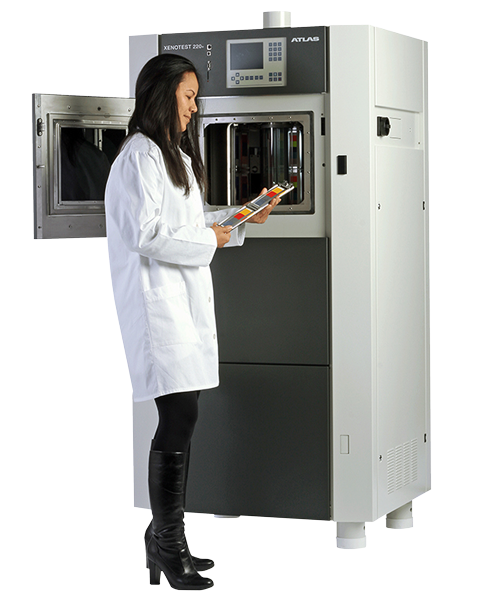
This article provides a comprehensive introduction to xenon arc weathering chambers, covering their working principles, technical features, key parameters, testing standards, practical applications, and considerations, helping readers understand their significance in modern materials testing.
A xenon arc weathering chamber is an accelerated aging device capable of simulating factors such as light exposure, temperature, humidity, and water cycles found in natural environments. Its core light source is a xenon arc lamp, which emits full-spectrum radiation, including ultraviolet (UV), visible, and infrared (IR) light—typical components of natural sunlight. The device uses this full-spectrum radiation to replicate real solar exposure, allowing materials to undergo aging processes in the laboratory similar to long-term outdoor conditions.
These chambers are usually equipped with programmable control systems that allow the user to set various testing parameters, including irradiance, black panel temperature, humidity cycles, and water spray. By adjusting these parameters, different environmental conditions can be accurately simulated, enabling precise control over testing cycles and evaluation of material weather resistance.
Working Principle
The core principle of a xenon arc weathering chamber is to simulate multiple aging factors present in natural environments and accelerate aging through controlled parameter combinations. The main technical aspects include:
Light Source Simulation
The xenon arc lamp is the core light source of the chamber, with a spectral distribution closely approximating natural sunlight. The emitted spectrum covers UV, visible, and IR light, with UV being a major factor in material degradation. The chamber may include various filters to adjust the spectrum for specific testing purposes, such as:
Daylight Filter: replicates direct natural sunlight.
Window Glass Filter: simulates sunlight passing through glass.
Extended UV Filter: enhances the UV portion of the radiation for more rigorous testing.
Irradiance, the intensity of light per unit area, is a critical parameter. By adjusting irradiance, materials can be tested under strong or weak sunlight conditions to evaluate their weather resistance.
Temperature Control
The chamber also controls environmental temperature to simulate thermal effects on samples. Temperature can be monitored and adjusted based on black panel temperature (BPT) or air temperature. BPT reflects the actual surface temperature of the material, which is important for evaluating heat-induced aging.
Typical aging test temperatures range from room temperature up to 100°C or higher. Some test cycles also include temperature fluctuations to simulate daily temperature variations affecting material performance.
Humidity and Water Cycles
Humidity and rainfall significantly influence material aging. Xenon arc chambers are equipped with humidity control systems and water spray mechanisms:
Humidity Control: simulates variations in relative humidity using humidifiers or humidity cycling systems.
Water Spray System: provides timed or cyclical water exposure to simulate rainfall or dew formation, which is critical for testing water resistance of sealants, coatings, and textiles.
By combining these factors, different accelerated aging cycles can be designed to closely replicate a variety of real-world climate conditions.
Key Technical Parameters
A complete xenon arc weathering chamber features adjustable parameters that directly affect the accuracy and comparability of test results. Key parameters include:
Lamp Power and Spectral Range: Lamp power determines radiation intensity, typically ranging from several hundred watts to several kilowatts depending on chamber size and testing requirements. Irradiance can be adjusted, for example, in the 340 nm band from 0.3–1.5 W/m², or across the full spectrum (300–800 nm) from 30–150 W/m². Filter selection helps target specific UV exposure levels.
Black Panel Temperature (BPT): Reflects the actual heat stress on material surfaces rather than just air temperature. BPT is generally adjustable between 30–90°C or higher, simulating high surface temperatures under direct sunlight.
Humidity Control Range: Typically adjustable from 30% to 98% RH, often combined with light cycles to simulate dew and rainfall conditions.
Water Spray Cycles: Programmable spray intervals and sequences between light and dark periods help assess water-related degradation such as peeling, cracking, or blistering.
Testing Standards
Results from xenon arc testing are designed to align with international and industry standards to ensure comparability and reliability:
ISO Standards: ISO 4892-2 specifies methods for exposing plastics and other materials to laboratory light sources, including xenon arc lamps. It defines testing conditions, cycles, and reporting requirements for consistency across laboratories.
ASTM Standards: ASTM publishes standards such as ASTM D7869 (guidelines for xenon arc accelerated aging), ASTM D3424 (photostability testing for printed materials), and ASTM G155 (accelerated weathering test methods). These provide detailed requirements for testing conditions, cycle arrangements, and evaluation criteria.
OEM/Industry Standards: Some industries, such as automotive, may define custom testing protocols based on ISO/ASTM standards to ensure material reliability under specific real-world conditions.
Functions and Applications
Xenon arc weathering chambers accelerate material aging by simulating multiple environmental factors. Key applications include:
Material Weathering Evaluation: Used for polymers, coatings, pigments, composites, adhesives, and other materials to observe discoloration, cracking, chalking, or strength reduction over time, guiding material development and improvement.
Automotive Testing: Exterior and interior components, seals, and coatings are exposed to sunlight and outdoor conditions; xenon arc chambers evaluate long-term durability and reliability.
Construction and Coatings: Assessing exterior building materials and coatings under sunlight, humidity, and temperature variations helps predict premature aging risks.
Textiles and Printing Materials: Evaluates UV resistance and color stability for outdoor fabrics and printed materials through accelerated simulations.
R&D and Quality Control: Rapid screening of formulations and processes reduces development cycles and costs while ensuring production consistency.
Data Recording and Analysis
Modern xenon arc chambers feature intelligent control systems and data logging capabilities, monitoring irradiance, temperature, humidity, and BPT in real time. Data can be exported for further analysis.
Analysis methods include:
Visual Assessment: Observing color changes, cracking, or chalking.
Physical Testing: Measuring changes in strength, elasticity, or other mechanical properties.
Chemical Analysis: Using spectroscopy or thermal analysis to detect chemical changes.
Comparison with Natural Aging: Validates accelerated tests by comparing results with real-world outdoor exposure.
Usage Considerations and Challenges
Standard Compliance: Testing parameters must strictly follow relevant standards to maintain data validity and comparability.
Light Source and Filter Maintenance: Xenon lamps degrade over time, altering spectral output. Regular calibration and filter replacement are essential.
Environmental Control Maintenance: Components such as humidity control, water spray systems, and temperature sensors require routine checks to ensure stability.
Cost and Complexity: Acquisition and maintenance are expensive, and operation involves multiple parameter settings, requiring trained personnel.
Xenon arc weathering chambers integrate light, temperature, humidity, and water cycle simulation into a single advanced testing platform, making them indispensable in material weathering evaluation. By replicating natural climatic conditions and enabling accelerated aging, they provide reliable data for materials science research, product quality control, and innovation.
In automotive, construction, coatings, textiles, and new material development, xenon arc chambers have become standard testing tools, playing a vital role in ensuring product quality and enhancing performance reliability.
Previous: What is the best fiber optic splicer?
N e x t : New-Generation Xenotest 440 Xenon Arc Weathering Test Chamber,ISO 4892-2
