





What is a High-Temperature Aging Chamber?
2026/02/02
Share:

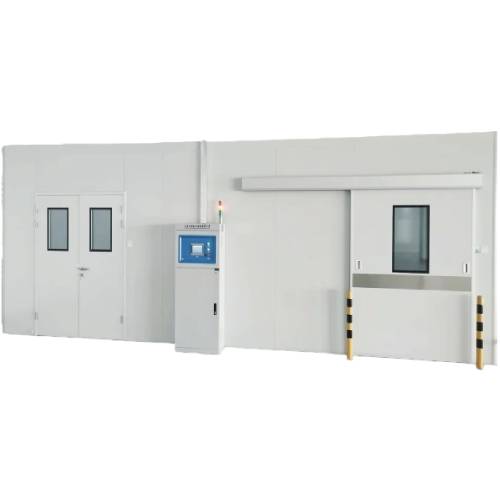
With continuous technological advancement and increasingly stringent quality requirements in manufacturing, high temperature aging chambers have become indispensable tools in the development, quality control, reliability assessment, and scientific research of electronic components, automotive parts, plastic materials, rubber products, and other industrial goods.
This article begins with definitions and principles and provides an in-depth discussion of the purposes, testing mechanisms, typical applications, test procedures, design considerations, data interpretation, and relevant industry standards of high temperature aging chambers, helping readers systematically understand their role in modern engineering.
What Is a High Temperature Aging Chamber
A high temperature aging chamber is a laboratory testing device designed to simulate the long-term effects of high-temperature environments on materials, components, and finished products. Through precise temperature control and time settings, it enables accelerated aging tests that reveal performance trends that would normally appear after extended periods of real-world use.
The core concept of this testing method is to use elevated temperatures to accelerate chemical reactions and physical changes within the test specimens, allowing potential long-term degradation behaviors to emerge in a much shorter timeframe. One of the primary objectives of high temperature aging testing is to identify potential failure modes under extreme conditions at an early stage, thereby providing scientific evidence for product design optimization, material improvement, process refinement, and quality control. This method is a typical form of environmental accelerated aging testing.
Working Principles
A high temperature aging chamber simulates aging conditions by precisely setting and maintaining elevated temperatures for defined durations. Its fundamental principles can be summarized as follows:
Accelerated Aging Mechanism
High temperatures significantly accelerate chemical reactions, molecular structural changes, and physical property degradation within materials. For example, elevated temperatures may cause chemical bond breakage, cross-linking, or oxidation. Plastics and rubber materials may soften, degrade, discolor, or become brittle, while electronic components may experience internal electrical performance changes due to thermal stress. By accelerating these processes, high temperature aging tests reproduce long-term aging effects within a short period.
Temperature Control System
High temperature aging chambers are typically equipped with precise temperature controllers, such as PID (Proportional–Integral–Derivative) control systems. These systems continuously monitor and adjust the internal temperature to maintain it close to the set value, ensuring test accuracy and repeatability. The temperature range generally extends from moderately elevated temperatures above ambient to several hundred degrees Celsius or higher, depending on the design.
Temperature Uniformity and Distribution
Internal air circulation systems or forced-air convection structures ensure uniform temperature distribution throughout the chamber. This guarantees that all samples are subjected to consistent thermal stress and prevents localized overheating or cooling from affecting test results.
Data Monitoring and Recording
Modern chambers are commonly equipped with sensors and data acquisition systems that record temperature profiles, stability indicators, and operating conditions, facilitating post-test analysis and result comparison.
Purposes of High Temperature Aging Testing
High temperature aging chambers are widely used across nearly all stages of industrial product development and quality assurance. Their main purposes include the following:
Evaluation of Heat Resistance and Long-Term Performance
High-temperature exposure is a common stress factor in many real-world applications. Prolonged exposure can lead to material degradation, structural aging, or functional failure. High temperature aging tests help identify materials or products with insufficient heat resistance and assess performance trends under normal or extreme thermal conditions. The resulting data support material selection, product design, and service life prediction.
In electronic equipment, for example, high temperatures can affect the stability of chips, capacitors, and resistors, leading to oxidation, changes in electrical characteristics, or sudden failure. Aging tests provide early insight into long-term thermal behavior.
Support for Quality Control and Batch Inspection
In manufacturing, quality risks may arise during production. High temperature aging chambers play a key role in quality control processes by enabling aging tests on production batches to verify consistency and stability. This helps ensure that each batch meets performance requirements under high-temperature conditions and reduces field failures and return rates.
Such testing is particularly important in electronics manufacturing, automotive component production, and large-scale plastic product manufacturing, where it aids in identifying manufacturing defects, material inconsistencies, or design weaknesses.
Material Aging Research and Scientific Study
In materials science, high temperature aging chambers are used to investigate thermal stability, heat-induced chemical reactions, and physical property changes. Studies on polymers, composites, rubber, and plastics often focus on fracture behavior and mechanical property degradation under long-term thermal exposure.
These experiments help researchers understand internal structural evolution and degradation mechanisms, supporting the development of improved materials with enhanced thermal stability.
Product Reliability Testing and Lifetime Prediction
High temperature aging tests are frequently applied in reliability engineering. By subjecting materials or products to thermal stress under accelerated conditions, failure modes that may appear after years of normal use can be revealed. Based on statistical analysis and predictive models, test data can be used to estimate product lifetime and reliability.
Such lifetime predictions are critical for defining warranty periods, usage recommendations, and product improvement strategies.
Compliance Testing and Standard Verification
High temperature aging chambers are also widely used to verify compliance with industry standards. In sectors such as defense, aerospace, and automotive manufacturing, specific high temperature aging standards ensure that components maintain performance under extreme thermal conditions. Standardized testing provides comparable results and serves as evidence for certification or factory acceptance.
Test Objects and Industries
High temperature aging testing is applicable across industries where thermal stress must be considered. Typical applications include:
Electronics and Electrical Products
Electronic components such as circuit boards, capacitors, resistors, and integrated circuits require verification of stability and reliability at elevated temperatures. Aging tests help identify electrical performance degradation, solder joint failures, and structural changes caused by thermal stress.
Automotive and Transportation Equipment
Automotive components such as sensors, connectors, and plastic parts near engines operate in high-temperature environments. Aging tests help detect risks of material degradation, deformation, and performance loss, improving overall vehicle reliability.
Plastics and Rubber Materials
Plastics and rubber often lose elasticity, discolor, crack, or fracture under high temperatures. High temperature aging tests allow engineers to evaluate the thermal stability of polymers, additives, and formulations, supporting material optimization.
Aerospace Components
The aerospace industry has extremely strict requirements for heat resistance. High temperature aging tests are used to evaluate engine components, structural materials, and electronic systems under extreme thermal conditions to ensure stable performance during flight.
Other Fields
Medical devices, household appliances, communication equipment, and research materials may also operate in elevated-temperature environments. High temperature aging tests help ensure compliance with safety and reliability requirements.
Typical Test Procedure
A high temperature aging test generally follows these steps:
Sample Preparation
Test specimens are prepared according to relevant standards or design requirements, including quantity, geometry, and installation. Initial performance data are recorded prior to testing.
Parameter Setting
Aging temperature, exposure duration, and test cycles are defined based on the test objective. Different materials and products require different temperature ranges and time settings.
Test Execution
Samples are placed inside the chamber, and the test is conducted according to the programmed parameters. The control system regulates temperature and records process data.
Condition Monitoring
During aging, sample conditions such as temperature response, appearance changes, and performance indicators are monitored and documented for later analysis.
Data Analysis
After testing, pre- and post-aging performance data are compared to evaluate heat resistance, estimate service life, and identify potential failure mechanisms.
Interpretation of Test Results
The significance of high temperature aging test data is reflected in several aspects:
Performance Degradation Trends
By analyzing performance changes at specific temperatures and durations, degradation trends such as hardness reduction or tensile strength loss can be identified.
Reliability Assessment
Comparing sample behavior under different temperature conditions enables quantification of thermal stress effects on product lifetime and supports the formulation of rational usage guidelines and warranty policies.
Design Improvement Guidance
Test results provide valuable input for product development, such as selecting more heat-resistant materials, improving thermal management structures, or optimizing component design.
Differences from Other Aging Tests
Compared with other aging tests such as ultraviolet aging, damp heat aging, or thermal cycling, high temperature aging tests focus specifically on the effects of elevated temperature. While combined testing may be used in some cases, high temperature aging emphasizes the acceleration of chemical reactions and structural changes driven primarily by thermal stress.
A high temperature aging chamber is a powerful and versatile environmental testing device designed to simulate the aging behavior of materials and products under elevated temperatures. It helps manufacturers and researchers:
Evaluate performance changes under high-temperature conditions
Optimize material formulations and product designs
Improve product quality and reliability
Predict service life and define warranty strategies
As industrial requirements for performance and reliability continue to increase, high temperature aging chambers will play an increasingly critical role across a wide range of engineering and research fields.
Previous: What is a Flat-Panel Air-Cooled Xenon Lamp Weathering Test Chamber?
N e x t : Photovoltaic Module Dust and Sand Blowing Test Chamber,IEC 61300-2-27
