





Ultraviolet Aging Test Chamber,IEC 61646
2026/02/03
Share:

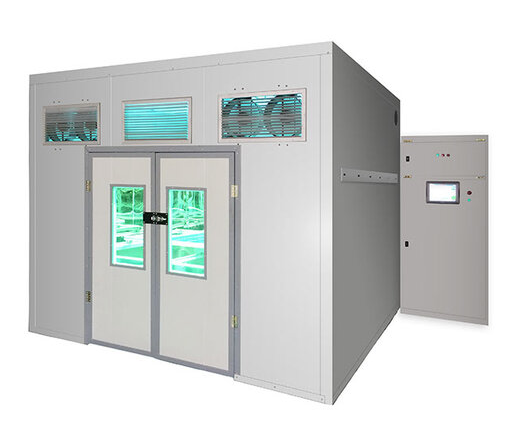
Definition and Core Function
The UV aging test chamber (also referred to as a UV weathering test chamber) is designed to simulate the effects of ultraviolet radiation on materials. It accelerates the aging process by reproducing outdoor environmental conditions through artificial light sources, temperature control, and humidity regulation. This allows for the assessment of material weather resistance, light stability, and physical-chemical property changes. Typical applications include quality testing, formulation development, and performance evaluation of plastics, rubber, coatings, inks, textiles, composites, automotive parts, and other industrial materials or products.
Modern UV aging chambers can simulate UV light, temperature, humidity, and cycles of dew or rain. Programmable test cycles allow automatic alternation between UV exposure and high-humidity condensation, replicating day-night environmental cycles. As a result, damage that might occur over months or years outdoors can be reproduced in days or weeks, providing critical insights for research, development, and quality control.
Working Principle
UV Light Source Simulation
The core of the UV aging test chamber is its light source system, which uses fluorescent UV lamps or other ultraviolet radiation sources to mimic sunlight. Common lamp types include UVA and UVB tubes, corresponding to different wavelength ranges to replicate various components of solar UV radiation. Typically, fluorescent lamps provide UV light within the 290–400 nm range, simulating the irradiance characteristics of natural sunlight.
The distance between the lamps and samples is strictly controlled to ensure uniformity and reproducibility. For example, some chambers position samples approximately 50 mm from the lamps, while a radiometer continuously monitors UV intensity to maintain standardized test conditions.
Temperature and Humidity Control
UV aging is influenced not only by light exposure but also by temperature and humidity cycles. The chamber includes a heating system capable of adjustable temperatures from room temperature up to approximately 70–90°C, simulating high-temperature conditions that accelerate material aging. Humidity is regulated via condensers or water spray systems, simulating dew or rain, with many chambers supporting relative humidity up to 95% RH to realistically replicate outdoor moisture effects.
Through programmed control, UV irradiation, temperature, and humidity cycles can operate automatically, reproducing environmental alternations such as sunlight exposure and nighttime condensation. This accelerates aging while allowing evaluation of long-term material performance.
Cycle Control and Automation
Modern UV aging chambers feature precise control systems that allow programmable cycles for UV irradiation, temperature, humidity, and test duration. For instance, a cycle may include 8 hours of UV exposure at elevated temperature, followed by a wet condensation phase. Automation improves experimental accuracy and minimizes human error.
Common Testing Standards
The scientific validity and comparability of UV aging tests rely heavily on standardized procedures. Widely used international and industry standards include:
ISO Standards
ISO 4892 series: Specifies methods for artificial light weathering tests of plastics and other materials, including UV exposure. ISO 4892‑1 outlines general test methods, while ISO 4892‑3 focuses specifically on fluorescent UV light source weathering tests.
ASTM Standards
ASTM G154 and ASTM D4329: Provide testing protocols for fluorescent UV light exposure, detailing irradiation parameters, temperature control, humidity cycles, and test conditions. ASTM G154 is commonly used for non-metallic materials. Other ASTM standards, such as ASTM G151 and ASTM D3794. are applied for specialized aging and weathering assessments.
These standards define experimental conditions, cycle protocols, and evaluation procedures, ensuring comparability and reproducibility across laboratories.
Test Parameters and Evaluation Indicators
Irradiance and Spectral Characteristics
UV Irradiance: Typically controlled within 0.3–1.5 W/m² at 340 nm wavelength to simulate varying sunlight intensity.
Wavelength Range: 280–400 nm, covering UVA and UVB components. Different lamp types can be selected to match material-specific testing requirements.
Temperature, Humidity, and Black Panel Temperature (BPT)
Temperature Range: From slightly above room temperature to ~80°C, simulating thermal aging under sunlight.
Humidity Range: Usually ≥90% RH, replicating wet or humid conditions.
Black Panel Temperature: Reflects the actual surface temperature under UV exposure, typically controlled between 35–80°C to ensure valid results.
Sample Capacity and Mounting
Chambers accommodate multiple samples for parallel testing. Sample racks are made of corrosion-resistant materials and ensure consistent distance from light sources, enhancing reproducibility.
Applications
UV aging test chambers have broad applications in material development, quality control, and performance verification, including:
Plastics, Polymers, and Rubber: Evaluate UV-induced fading, embrittlement, or cracking, supporting formulation optimization.
Coatings and Surface Treatments: Assess durability and resistance to color change, chalking, or gloss loss.
Construction and Engineering Materials: Test exterior building panels and decorative materials for outdoor weather resistance.
Automotive and Aerospace Materials: Examine plastic trims, seals, and composites for light stability and weathering.
Electronics, Packaging, and Textiles: Assess sun-exposure resistance for device housings, plastic packaging, fabrics, and outdoor materials.
Evaluation of Test Results
After testing, UV aging effects are assessed through multiple dimensions:
Appearance: Color change, fading, chalking, or cracking, quantified by colorimeters or microscopes.
Physical Properties: Mechanical strength, flexibility, and toughness measured pre- and post-test.
Chemical Structure: Spectroscopic or thermal analysis to detect UV-induced chemical changes.
Industry Significance
Accelerated R&D and Quality Improvement
Artificial environmental simulation significantly shortens testing time, enabling comparative evaluation of materials and designs, thus speeding product development.
Risk Control and Lifetime Prediction
Standardized testing allows early detection of potential durability issues, supporting lifespan estimation and reducing field failures.
Support for Certification and Market Competitiveness
UV aging tests are often required for international certifications and quality standards. Strong weathering performance enhances product competitiveness and market acceptance.
In summary, the UV aging test chamber is a core tool for assessing material durability under simulated solar radiation, temperature, and humidity cycles. It provides a scientific, reproducible, and accelerated testing methodology applicable to plastics, rubber, coatings, construction materials, automotive, electronics, and textiles. Systematic UV aging testing allows evaluation of long-term outdoor performance, guides design optimization, supports process improvement, and strengthens product competitiveness. With ongoing advancements in control systems and automation, UV aging chambers continue to play a critical role in precise testing and intelligent environmental simulation.
Previous: Photovoltaic Module Dust and Sand Blowing Test Chamber,IEC 61300-2-27
N e x t : What is the difference between dry heat test and damp heat test?
