





What is the difference between dry heat test and damp heat test?
2026/02/03
Share:

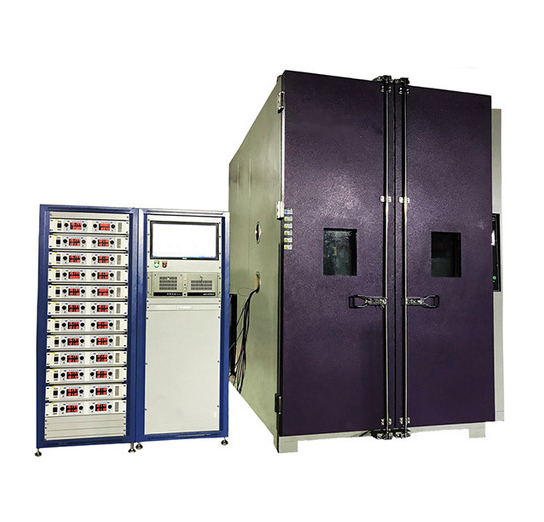
Dry Heat Test: Definition and Purpose
Definition
A Dry Heat Test exposes products, components, or materials to high-temperature conditions under minimal or controlled humidity, creating a “dry” environment. The aim is to study the effects of thermal stress alone without interference from moisture. By elevating temperature while keeping water vapor at a very low level, this test focuses on measuring thermal effects on the sample.
Purpose
Dry heat tests are used to evaluate:
High-temperature tolerance: Assess whether products can maintain performance and structural integrity under elevated temperatures.
Thermal stability: Examine whether materials deform, degrade, or fail during prolonged exposure to high heat.
Reliability verification: Confirm that electronic components, PCBs, mechanical parts, or assemblies can withstand expected storage or operational conditions.
Typical Parameters and Implementation
Temperature: Set according to the test requirements, ranging from tens to several hundred degrees Celsius.
Humidity: Maintained at very low levels to prevent water from affecting thermal conduction or material degradation.
Duration: Determined by testing standards or validation needs, often lasting hours or even tens of hours.
Environmental test chambers for dry heat use air circulation and heating systems to ensure uniform, stable temperatures while minimizing humidity disturbance.
Damp Heat Test: Definition and Purpose
Definition
A Damp Heat Test exposes samples to high temperature and high humidity simultaneously, simulating real-world conditions where heat and moisture coexist. Samples experience thermal stress while absorbing moisture, which can penetrate materials or interfaces, potentially affecting performance.
Damp heat testing reproduces realistic environmental stress, particularly for regions with tropical or monsoon climates, where high temperature and high humidity often occur together.
Purpose
Key objectives include:
Evaluation of moisture-heat resistance: Determine whether products can operate or be stored safely under combined heat and humidity conditions.
Assess moisture impact on materials: Examine corrosion or degradation of connectors, seals, metals, plastics, and electronic components.
Identify structural or material failure modes: High humidity can reveal delamination, corrosion, insulation failure, or other defects, enabling early design optimization.
In industries such as photovoltaics, damp heat testing often requires long-term exposure (e.g., 85°C / 85% RH) to evaluate moisture and heat resistance.
Typical Parameters and Implementation
Temperature: High-temperature settings such as 40°C, 65°C, or higher.
Humidity: Controlled via steam or humidification systems, typically 85–95% RH.
Mode: Can be constant or cyclic to simulate diurnal moisture variations.
Specialized constant temperature and humidity chambers ensure uniform distribution and long-term stability of environmental conditions.
Core Differences Between Dry Heat and Damp Heat Tests
1. Environmental Stress Nature
Dry Heat: Focuses solely on temperature effects. Evaluates thermal expansion, material aging, deformation, and heat-induced changes.
Damp Heat: Combines high temperature with high humidity, examining moisture penetration, adsorption, condensation, and their impact on material structure, seals, and electrical properties.
2. Failure Modes
Dry Heat: Typical failures include material deformation, plastic aging, adhesive hardening, and thermal expansion mismatch.
Damp Heat: In addition to thermal aging, moisture-induced failures such as delamination, metal corrosion, insulation breakdown, poor contact, or microcrack propagation can occur.
3. Standards and Application Scenarios
Dry Heat: Typically based on IEC 60068-2 series high-temperature methods (e.g., IEC 60068-2-2) for operational or storage evaluation in dry heat.
Damp Heat: Based on IEC 60068 series damp heat standards (e.g., IEC 60068-2-78) or industry-specific requirements, such as long-term 85°C / 85% RH testing for photovoltaic modules.
Test Objectives
Dry Heat: Assess the effect of high temperature alone.
Damp Heat: Assess combined effects of heat and humidity on material, structure, and electrical performance.
In short, dry heat tests focus on a single environmental factor, whereas damp heat tests simulate the combined action of two stressors.
4. Industry Applications
1. Electronics Reliability Testing
Dry Heat: Evaluates PCBs, chips, capacitors, and other components under high-temperature operational or storage conditions.
Damp Heat: Evaluates insulation performance, connector reliability, and material sealing under humid heat. Water vapor-induced corrosion and conductivity changes are key considerations.
2. Automotive Industry
Dry Heat: Assesses high-temperature tolerance of in-vehicle materials (e.g., garage heat).
Damp Heat: Evaluates durability of seals, internal electrical connectors, and plastic parts exposed to humid and hot environments.
3. Materials and Weathering
Dry Heat: Plastic, rubber, and coatings may show thermal discoloration, brittleness, or degradation.
Damp Heat: Moisture absorption can cause swelling, delamination, or chemical changes.
Related Environmental Tests
Dry heat and damp heat tests are often part of a broader environmental stress test suite, including:
Cold Tests: Simulate low-temperature conditions.
Thermal Cycling: Evaluate rapid temperature change effects.
High/Low Temperature Shock: Assess durability under extreme temperature swings.
Combining multiple stress tests provides a comprehensive reliability assessment of materials and products under extreme conditions.
Test Result Evaluation
Dry Heat:
Evaluate pre- and post-test functionality, material properties, and visual degradation. Passing is indicated if performance and structural integrity remain intact under high temperature.
Damp Heat:
Evaluation is more complex, including:
Electrical insulation changes.
Internal corrosion or moisture ingress.
Delamination or interface failure.
Long-term exposure tests (e.g., 1000 hours) are often required for applications such as photovoltaic modules to assess durability trends.
Summary Comparison
| Comparison Aspect | Dry Heat Test | Damp Heat Test |
|---|---|---|
| Environmental Conditions | High temperature + low humidity | High temperature + high humidity |
| Main Objective | Evaluate thermal stress effects | Evaluate combined heat and moisture effects |
| Typical Failures | Thermal aging, deformation | Moisture-induced delamination, corrosion |
| Standards | IEC 60068-2-2 | IEC damp heat standards (e.g., IEC 60068-2-78) |
| Application Areas | High-temperature reliability | Humid environment durability |
| Stress Mechanism | Thermal stress dominant | Combined thermal + moisture stress |
Dry heat and damp heat tests represent different dimensions of environmental reliability evaluation. Dry heat focuses on thermal stress, forming a fundamental environmental test, while damp heat incorporates humidity to simulate complex, realistic conditions. Understanding their differences helps engineers select appropriate tests and predict product performance under actual operating conditions. Mastery of both test types is essential for engineers and quality managers aiming to ensure reliable product performance in diverse environments.
Previous: Ultraviolet Aging Test Chamber,IEC 61646
N e x t : Wet Leakage Current Test System,IEC 61215
