





Wet Leakage Current Test System,IEC 61215
2026/02/03
Share:

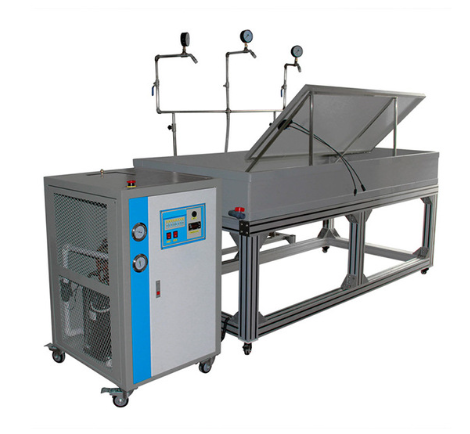
This article provides an in-depth discussion of wet leakage current test systems, covering their background and significance, basic definitions and test principles, standard requirements, system composition and test procedures, typical application scenarios, and interpretation of test results.
Background and Significance
When electrical equipment or components are exposed to humid environments for extended periods, moisture may penetrate along the surface or into the interior of insulating materials. Under high voltage or strong electric field conditions, this moisture can form conductive paths, resulting in leakage current (also referred to as residual or leakage current). Such phenomena are very common in real-world environments, including exposure to rain, dew, fog, melting snow, or high humidity. These conditions can significantly degrade electrical insulation performance and increase the risk of leakage.
Once leakage occurs, it can lead not only to electric shock hazards and equipment malfunction but also to serious safety risks such as fire. Therefore, to ensure product safety under wet conditions, wet leakage current testing must be conducted during the design phase or prior to shipment. This test is a vital method for verifying electrical safety and environmental durability. By simulating real humid conditions and measuring insulation performance and current leakage levels, manufacturers can ensure compliance with safety standards and regulatory requirements. For equipment intended for long-term outdoor operation, such as photovoltaic modules, wet leakage current testing is a mandatory item in certification processes, including those defined by IEC standards.
Definition
What Is Wet Leakage Current Testing?
Wet leakage current testing is an electrical safety test method used to evaluate the insulation performance and leakage current behavior of electrical equipment or components under humid operating conditions. Its core objective is to verify whether the enclosure and insulation design of a device can withstand exposure to rain, fog, dew, and other moisture conditions without causing leakage that could endanger personal safety or damage equipment.
For outdoor equipment such as photovoltaic modules, wet leakage current testing typically involves immersing the entire module in a water tank under specified conditions and applying a defined test voltage to measure leakage current and insulation resistance, thereby determining whether the module’s insulation performance meets acceptance criteria.
Basic Test Principles
The test principle of a wet leakage current test system is based on insulation resistance measurement and leakage current monitoring, combined with the influence of a water environment on electrical insulation.
1. Simulation of a Humid Environment
The test system uses a water tank or shallow basin of specified dimensions to immerse the device under test (such as a photovoltaic module) to a certain depth, simulating real environmental exposure to rain, dew, fog, or meltwater. The combined air-and-water environment produces humidity conditions similar to those found in nature. During immersion, the insulation parts of the device are exposed to water, while components not designed for submersion—such as connectors or terminals—may remain above water unless otherwise specified.
2. Application of Test Voltage
During testing, a specified test voltage is applied to the output terminals or circuit of the device. This voltage is typically the maximum operating voltage of the equipment or a value defined by relevant industry standards. The purpose of applying voltage is to subject the device to actual or more severe electric field conditions under wet environments to assess the withstand capability of its insulation.
In the case of photovoltaic module testing, the module is first immersed in water (unless certain parts are explicitly excluded), after which the test voltage is gradually increased to the module’s maximum system voltage and maintained for a specified duration, such as two minutes. During this period, leakage current and insulation resistance are continuously monitored.
3. Insulation Performance Evaluation
One of the key indicators in wet leakage current testing is insulation resistance or leakage current magnitude, which reflects whether conductive paths have formed within or along the insulation under humid conditions. Higher insulation resistance indicates better insulation performance, while lower leakage current signifies higher electrical safety. Since water conductivity, temperature, and immersion conditions all influence test results, these parameters are usually controlled to ensure consistency and repeatability.
This method enables the detection of insulation degradation, leakage paths, and potential short circuits that may occur under wet conditions, providing valuable input for product design, manufacturing processes, and material selection.
International and Industry Standard Requirements
Wet leakage current testing is a mandatory test item specified in many international standards and industry regulations, particularly for insulation and safety certification of photovoltaic modules.
Wet Leakage Current Testing in Photovoltaic Standards
Photovoltaic modules are representative products that require wet leakage current testing. Relevant standards include:
IEC 61215 (Terrestrial photovoltaic modules – Design qualification and type approval), which includes wet leakage current testing to verify insulation performance under humid conditions.
IEC 61730 (Photovoltaic module safety qualification), which covers wet electrical testing, including insulation resistance and leakage current evaluation.
Other regional certifications and standards, such as UL and EN, also include similar wet leakage current test requirements.
These standards specify not only the test conditions—such as water conductivity, test voltage, and temperature—but also the acceptance criteria, including minimum insulation resistance or maximum allowable leakage current. Only products meeting these criteria are considered compliant.
For example, according to IEC 61215. after immersion in water and application of test voltage, the measured insulation resistance of a module must exceed a specified minimum value (such as ≥40 MΩ·m²) to pass the test.
System Composition and Equipment Architecture
A complete wet leakage current test system consists of several key components that work together to perform wet-state leakage testing.
1. Water Tank or Bath
The water tank is the core element for wet condition simulation. Its size must be sufficient to accommodate the device under test, such as large photovoltaic modules. Tanks are typically made of transparent or non-conductive materials to allow observation and ensure electrical safety.
The water conductivity within the tank is controlled within a specified range to ensure repeatable and standard-compliant test conditions.
2. Test Voltage Generation and Measurement System
The system must include a power supply capable of applying adjustable and stable test voltages. This power supply works in conjunction with measurement instruments—such as ammeters and insulation resistance meters—to monitor leakage current and insulation resistance in real time.
3. Control and Data Acquisition System
Modern wet leakage current test systems are often equipped with automated control units and data acquisition software, enabling centralized control of test sequences, voltage parameters, environmental conditions, and test data recording.
4. Safety Protection Devices
Because wet testing involves both high voltage and water, comprehensive safety protection measures are essential. These include grounding of enclosures, short-circuit protection, and residual current protection devices to ensure operator and equipment safety.
Test Procedure
A complete wet leakage current test typically consists of the following stages:
Preparation Stage
Inspection of the device under test: Ensure there are no visible defects and remove surface contaminants such as dust or debris.
Adjustment of water tank conditions: Set water volume, conductivity, and temperature according to the applicable standard.
Installation of the device: Place the product horizontally in the water tank, ensuring that only the required parts are immersed.
Voltage Application and Test Stage
Connection setup: Connect the test power supply to the output terminals of the device, with the water acting as one test electrode.
Voltage application: Gradually increase the voltage to the specified test value and maintain it for the required duration.
Data acquisition: Continuously record leakage current and insulation resistance throughout the test.
Result Evaluation Stage
Comparison with standard limits: Compare measured values with the minimum insulation resistance or maximum allowable leakage current specified in the standard.
Pass/fail determination: If the test results meet the requirements, the product passes; otherwise, it is deemed non-compliant and requires further analysis and corrective action.
Application Scenarios
Photovoltaic Module Insulation Verification
In the photovoltaic industry, wet leakage current testing is used to verify insulation performance under outdoor humid conditions and to prevent risks such as electric shock, short circuits, and corrosion caused by moisture ingress. This test is a key component of IEC 61215 and IEC 61730 certification and directly affects whether a module can be approved for market use.
Safety Testing of Household and Commercial Electrical Equipment
Wet leakage current testing is also applicable to household appliances and industrial equipment used in humid environments, such as washing machines, electric water heaters, and power tools. The test helps identify leakage risks in advance and ensures user safety.
Industrial Control Systems and Outdoor Installations
Industrial control equipment installed outdoors or in damp environments must maintain reliable electrical insulation. Wet leakage current testing is used to assess the insulation integrity of control panels and enclosed electrical equipment under humid conditions.
Differences from Other Electrical Safety Tests
Although wet leakage current testing is closely related to insulation resistance testing and high-voltage withstand (HiPot) testing, each has a different focus:
Wet leakage current testing: Evaluates insulation performance and leakage current under humid conditions.
Insulation resistance testing: Typically conducted under dry conditions to measure insulation resistance.
High-voltage withstand testing: Determines whether insulation breaks down under high voltage.
Wet leakage current testing more closely reflects real operating conditions in humid environments and can reveal latent insulation defects that may not appear under dry testing conditions.
Analysis and Significance of Test Results
The primary data obtained from wet leakage current testing include insulation resistance values and leakage current levels. When analyzing results, the following aspects should be considered:
Compliance with Minimum Requirements
Test results must be evaluated against the minimum insulation resistance or maximum leakage current limits specified in the applicable standards.
Component and Structural Integrity
Failure to meet test criteria may indicate deficiencies in insulation materials, encapsulation structures, or connector sealing, requiring further investigation and design or process optimization.
Long-Term Reliability Assessment
Wet leakage current test results can also be used to assess long-term reliability, helping to predict product lifespan and potential failure modes in real operating environments.
Conclusion
As a critical device for simulating electrical insulation performance under humid conditions, the wet leakage current test system is an indispensable component of electrical product safety evaluation and quality control. Especially in fields such as photovoltaic modules, household appliances, and outdoor electrical control systems, wet leakage current testing effectively prevents leakage hazards, safety incidents, and system failures caused by moisture exposure.
By simulating wet conditions such as rain, dew, and fog while applying voltage and monitoring leakage current and insulation resistance, the system evaluates the moisture resistance of electrical insulation and ensures compliance with safety standards. Standard systems such as IEC 61215 and IEC 61730 provide authoritative requirements for wet leakage current testing, forming the foundation for product certification and global market access.
Previous: What is the difference between dry heat test and damp heat test?
N e x t : What is the purpose of damp heat test?
